PÓNGASE EN CONTACTO CON NOSOTROS AHORA PARA RECIBIR UN PRESUPUESTO RÁPIDO, SOPORTE DE MUESTRAS Y GARANTÍA DE SERVICIO DE INGENIERÍA.








Todo lo que hay que saber sobre los techos con deflectores acústicos y su rendimiento
In modern commercial buildings, acoustic comfort has become a key priority. Open-plan offices, airports, hotels, restaurants, and educational facilities often face challenges such as excessive noise, echo, and poor speech intelligibility, which can affect productivity, communication, and occupant satisfaction. Ceiling design plays a critical role in managing sound while maintaining an aesthetically pleasing environment.
Acoustic baffle ceilings have emerged as a highly effective solution. Unlike continuous ceiling systems, baffle ceilings use vertically suspended panels to reduce reverberation, control sound reflection, and enhance speech clarity. The open configuration also allows for integration with lighting, HVAC, and fire protection systems. By addressing both acoustic and aesthetic requirements, baffle ceilings have become a widely adopted solution for contemporary commercial spaces.
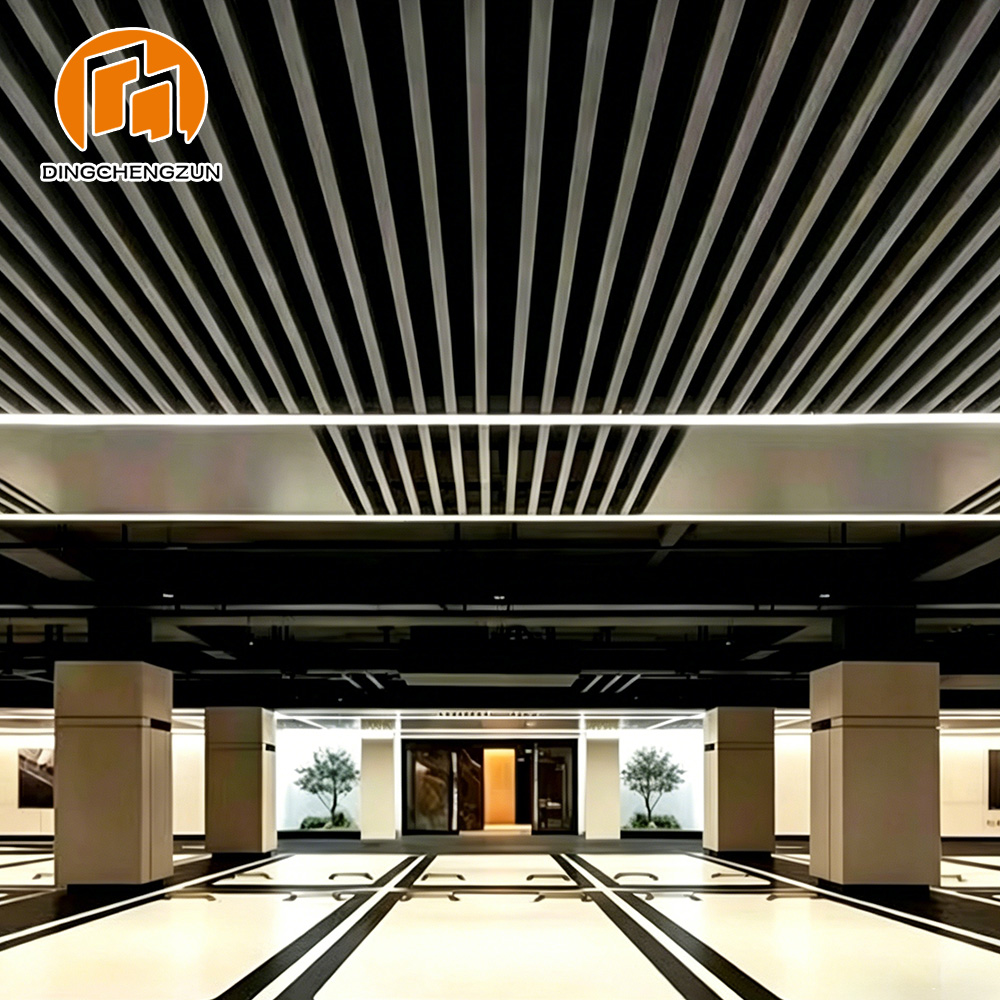
U‑Baffle Aluminum Ceiling System for Underground Parking Lot
Designed specifically for underground parking structures, this U‑baffle aluminum ceiling system offers excellent durability, corrosion resistance, and easy maintenance in harsh environments. Its open baffle layout improves ventilation, lighting integration, and overall safety signage visibility.
- Material: High‑Quality Aluminum Alloy
- Tipo de techo: U‑Baffle Ceiling System
- Acabado superficial: Recubrimiento en polvo / PVDF / Colores personalizados
- Características: Corrosion Resistant, Fire Rated, Easy Installation
- Aplicaciones: Underground Parking Lots, Garage Structures, Vehicle Tunnels
Common Acoustic Problems in Commercial Buildings
Commercial and public buildings face unique acoustic challenges depending on their function and occupancy. Addressing these problems is essential to create comfortable, functional environments.
Oficinas diáfanas
Open-plan offices encourage collaboration but often experience high noise levels from conversations, phones, and office equipment. Without proper acoustic control, speech privacy and concentration are compromised. Acoustic baffle ceilings help reduce reflections and improve speech clarity. In modern office projects, systems like the Office Baffle Ceiling Project demonstrate how panel arrangement and spacing can balance acoustic performance with a contemporary open-ceiling design.
Aeropuertos y centros de transporte
Airports and transit hubs are large, high-traffic environments with hard surfaces that amplify sound. Excessive reverberation can make announcements difficult to understand, affecting traveler experience. Acoustic baffle ceilings absorb sound and manage reverberation while maintaining openness. Transit Hub Ceiling Projects show how perforated panels and acoustic backing improve public address clarity and occupant comfort without obstructing mechanical systems.
Hotels and Restaurants
High ceilings, glass, and stone surfaces in hotels and restaurants often generate excessive background noise during peak periods. Baffle ceilings reduce sound reflections while enhancing interior design aesthetics. Convention Center Ceiling Projects illustrate how panels can be customized to match design themes while maintaining acoustic performance, creating a comfortable environment for guests and patrons.
Educational and Public Facilities
Classrooms, lecture halls, and libraries require clear speech intelligibility for effective learning. Reverberation and background noise can interfere with comprehension. Acoustic baffle ceilings with perforated panels and backing materials minimize noise and enhance focus. School Classroom Ceiling Projects demonstrate how these systems combine modern design with practical acoustic solutions for educational spaces.
How Baffle Ceilings Improve Acoustic Performance
Acoustic baffle ceilings improve sound quality by addressing reflection, reverberation, and speech intelligibility while enhancing occupant comfort.
Reducing Sound Reflection
Hard surfaces reflect sound waves, causing echoes and increasing background noise. Baffle ceilings intercept these waves through vertical panels, which absorb sound or redirect it toward acoustic backing materials. This reduces overall reflections and creates a calmer environment.
Controlling Reverberation
Reverberation occurs when sound continues to bounce after the source stops, producing echo. Large commercial spaces like conference centers or airport halls are prone to high reverberation. Baffle ceilings add absorbing surfaces throughout the space, breaking up sound waves and controlling reverberation without closing off the ceiling visually.
Improving Speech Intelligibility
Clear communication is essential in offices, schools, and public buildings. Excessive noise reduces comprehension and increases frustration. Baffle ceilings minimize competing reflections and ambient noise, allowing spoken words to be heard clearly, improving collaboration and learning outcomes.
Enhancing Occupant Comfort
Excessive noise contributes to fatigue, stress, and reduced productivity. By controlling reflections, reducing reverberation, and lowering overall noise levels, baffle ceilings create a more comfortable environment. Occupants in offices, hotels, airports, and educational facilities benefit from a quieter, more balanced acoustic setting.

Factors Affecting Acoustic Performance
Several factors determine how well a baffle ceiling performs acoustically.
Perforation Patterns
Perforation size, shape, and distribution control how sound waves pass through the panels to reach backing materials. Custom perforation patterns can target specific frequencies or noise sources, balancing sound absorption and aesthetics.
Acoustic Backing Materials
Mineral wool, acoustic fleece, and fiberglass are commonly used behind panels to absorb sound energy. Choosing the right backing depends on space type, noise level, and reverberation goals. Higher-quality backing improves overall NRC (Noise Reduction Coefficient) performance.
Panel Height and Spacing
Ceiling height and baffle spacing influence acoustic efficiency. Closer panels intercept sound more effectively, while spacing affects sound diffusion. Adjusting these parameters ensures optimal performance without compromising visual openness.
NRC Ratings and Acoustic Expectations
NRC ratings indicate a ceiling system’s ability to absorb sound. Higher NRC values improve speech clarity and reduce noise. Designers must balance acoustic targets with budget, aesthetics, and functional requirements to select the appropriate panels.
Why Architects Prefer Baffle Ceilings for Acoustic Design
Baffle ceilings are favored by architects for their combination of functionality, aesthetics, and ease of integration.
Open and Modern Appearance
The vertical arrangement of panels creates depth and openness, making spaces feel larger and visually appealing.
Easy Integration with HVAC and Lighting
Open plenum spaces allow lighting, ventilation, and fire protection systems to be integrated without disrupting acoustic performance.
Flexible Customization Options
Panels can be sized, spaced, perforated, and finished to match interior designs while maintaining acoustic efficiency.
Long-Term Maintenance Advantages
Aluminum panels are durable and easy to clean, and the open layout allows simple access for maintenance, minimizing long-term costs.


