CONTACTEZ-NOUS DÈS MAINTENANT POUR RECEVOIR UN DEVIS RAPIDE, UN SUPPORT D'ÉCHANTILLONNAGE ET UNE GARANTIE DE SERVICE D'INGÉNIERIE.






Produits
Panneaux de faux-plafond en aluminium pour l'intérieur des stations de métro
A metro station ceiling answers to a stricter authority than most interior finishes ever have to. It's underground, it's part of an enclosed public space with no natural ventilation to fall back on in an emergency, and its fire and smoke performance is governed by transit safety codes that treat the ceiling as part of the evacuation and smoke-control system, not just a decorative surface. Dingchengzun's aluminum false ceiling panels for metro station interiors are specified as non-combustible, low-smoke-emission components first, with everything else — finish, acoustic treatment, lighting integration — built around that baseline requirement rather than added as an afterthought.
This system covers station platforms, concourse levels, ticket halls, entrance vestibules, and connector passages within underground metro station interiors. Because a single metro line typically includes anywhere from a dozen to several dozen stations built to the same design standard, the ceiling specification here is less about a one-off architectural statement and more about a repeatable system that can be rolled out consistently across every station on the line, often across multiple construction contracts and phases spanning years.
Underground environments also expose materials to conditions a surface-level building rarely faces — persistent humidity from tunnel ventilation systems, dust from train operations, and in some transit systems, stray electrical current from the traction power system that can accelerate corrosion in metal building components if the material isn't selected with that specifically in mind.

Vous recherchez des plafonds et des façades en aluminium sur mesure ? Parlons-en


Vitrine d'application des produits
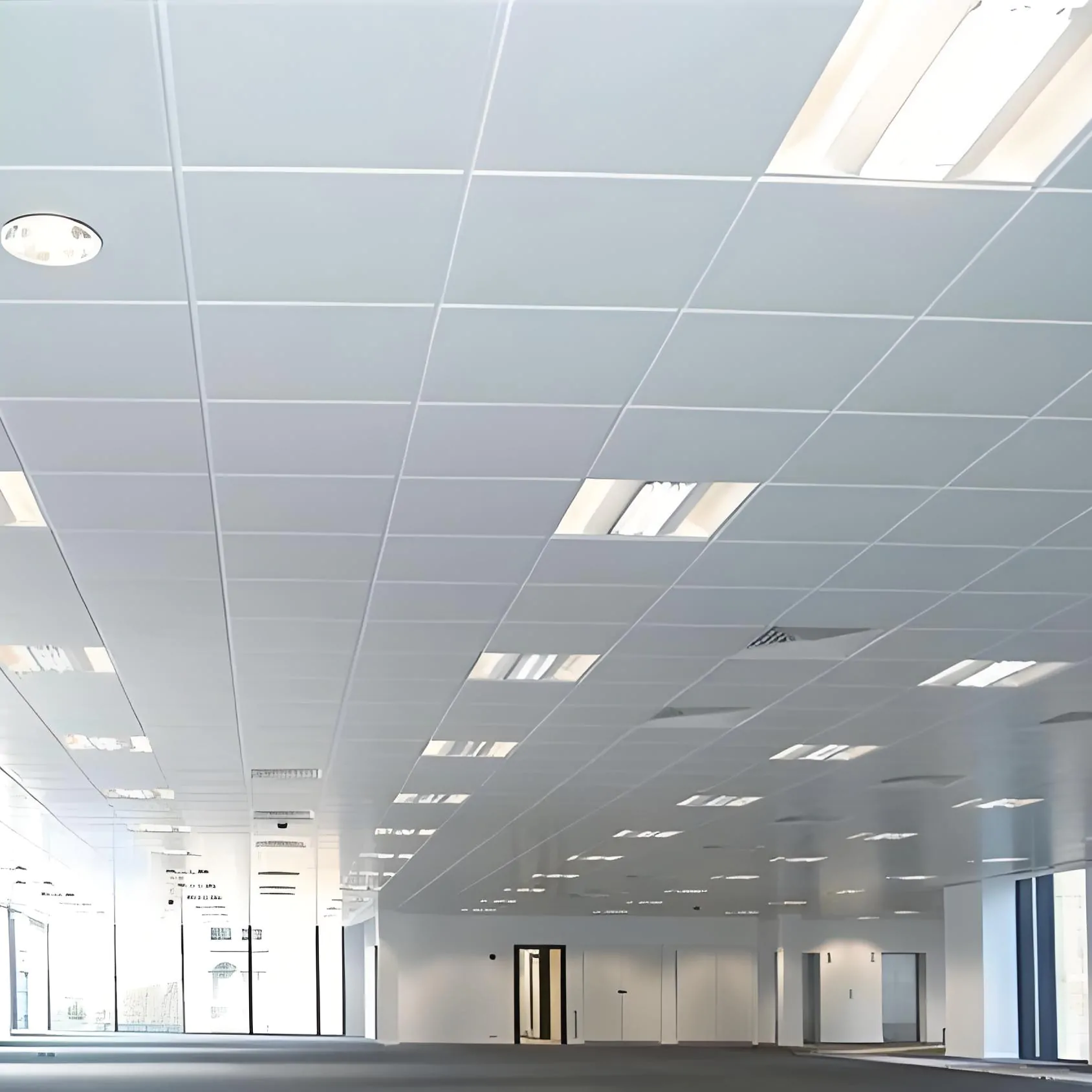
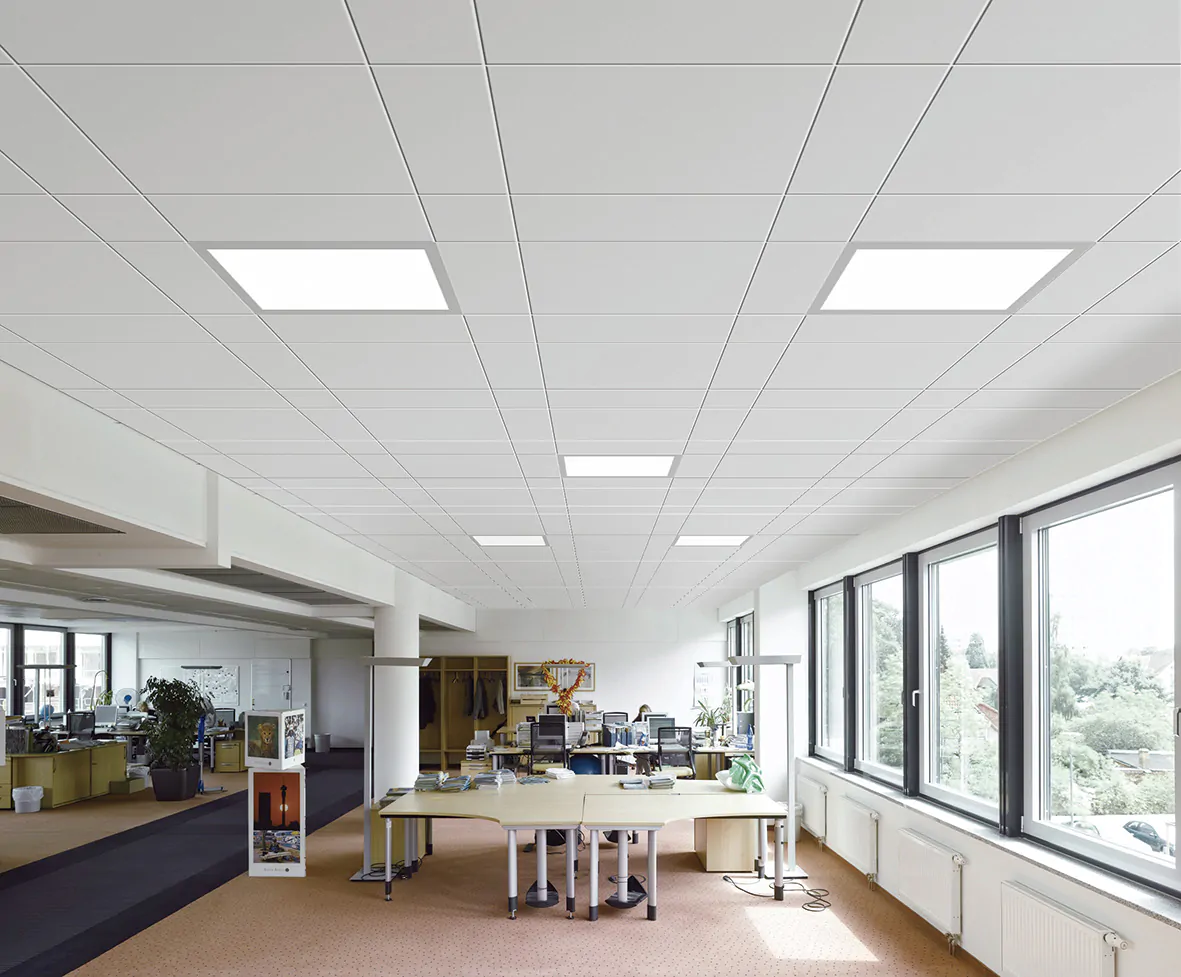
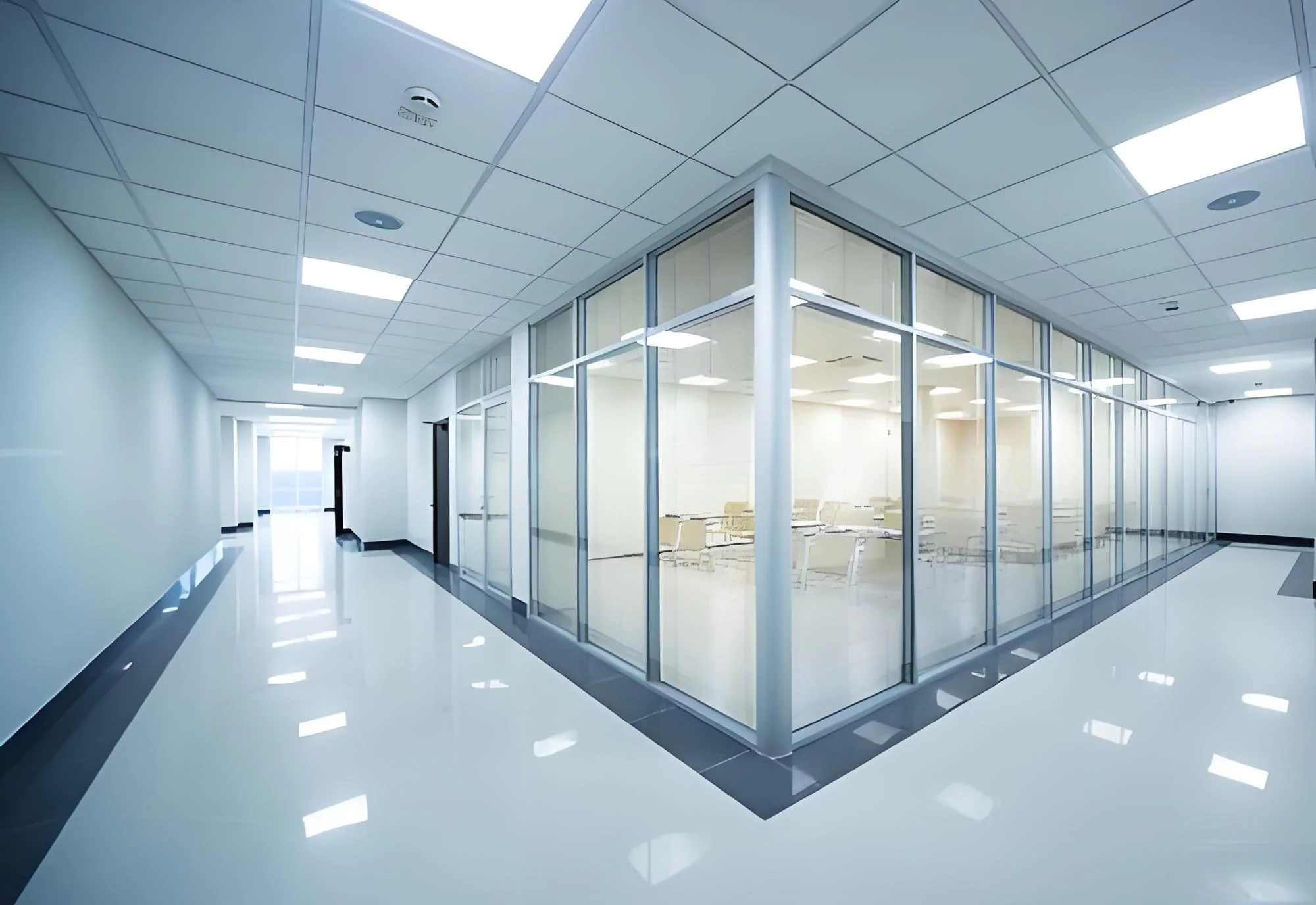
Within the false ceiling panel system, metro station applications are specified with fire rating and smoke-emission performance as the non-negotiable baseline, verified against the transit authority’s specific code requirements before any finish or acoustic customization is considered. Corrosion-resistant coatings are selected with tunnel humidity and, where relevant, stray current exposure in mind, since panel failure in an underground public transit environment carries safety implications that a typical commercial ceiling failure doesn’t.
Panel layout is coordinated with platform screen door systems, emergency signage and lighting, smoke extraction vents, and public address systems at the specification stage, and because the same design typically repeats across many stations on a line, the specification is documented for consistent reproduction across every station in the project rather than customized station by station.
Installation du produit
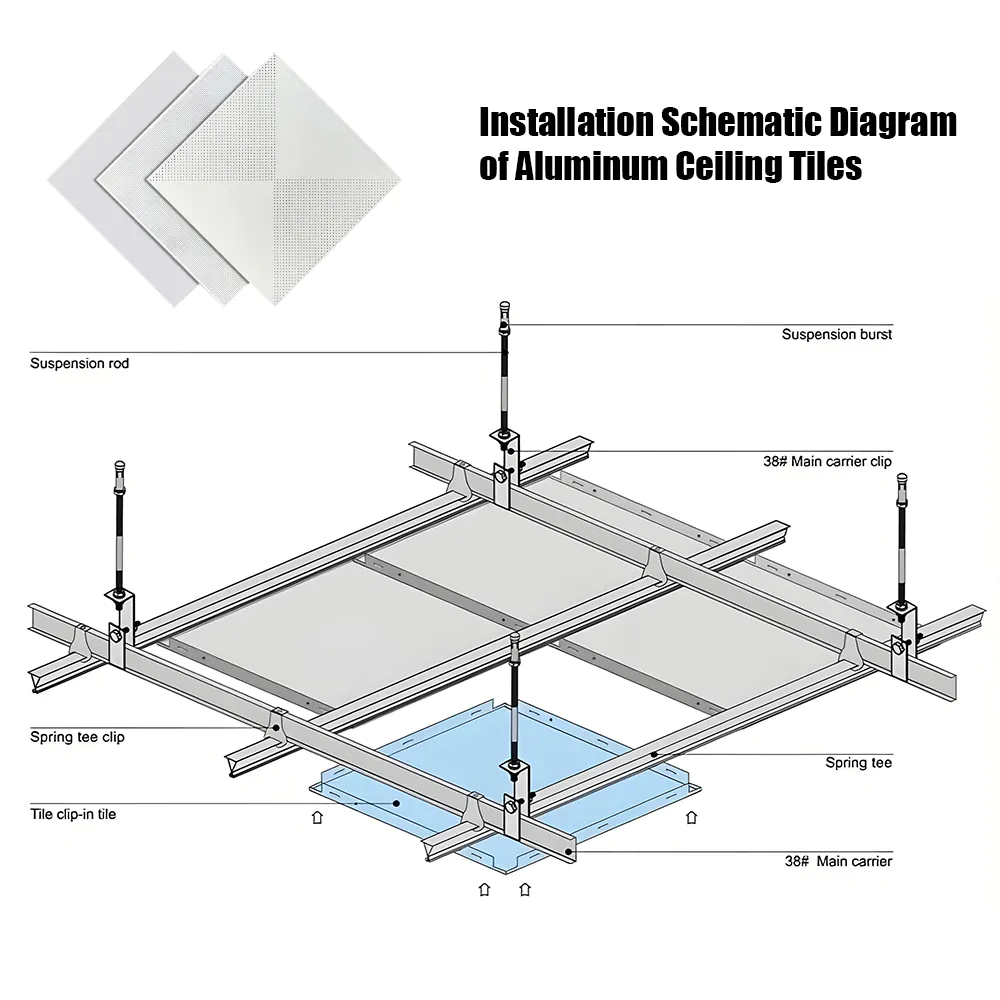
Instructions d'installation du plafond aluminium à clipser
- Installez les tiges de suspension en fonction de la disposition du plafond et veillez à ce que tous les points de suspension soient maintenus au même niveau horizontal.
- Fixez solidement les rails principaux, puis installez les supports à clipser en fonction de la taille des panneaux de plafond et des exigences de disposition. L'espacement du système de support doit être ajusté correctement pour assurer un support stable.
- Vérifiez et ajustez l'ensemble du cadre pour vous assurer que le système porteur est de niveau et aligné avant d'installer les panneaux.
- Clipsez les panneaux de plafond en aluminium dans le système de support, un par un et dans le bon ordre. Veillez à ce que chaque panneau soit solidement fixé et que les joints soient nets et réguliers.
- Pour les éclairages, les diffuseurs d'air, les sprinklers ou les ouvertures d'accès, préparez les découpes nécessaires et les positions réservées avant ou pendant l'installation.
- Une fois tous les panneaux installés, vérifiez la surface du plafond, l'alignement des panneaux et la stabilité des raccordements afin de garantir une finition plane, propre et sûre.




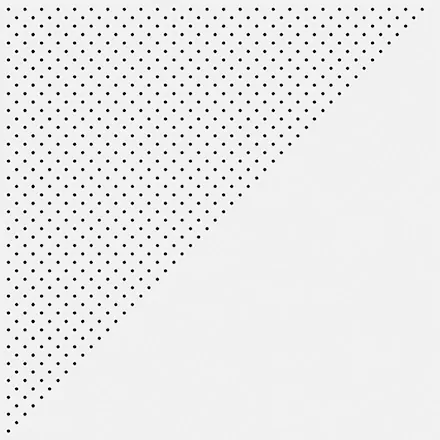

Les motifs présentés ici ne sont qu'une partie de l'offre de Dingchengzun. Nos panneaux de plafond en aluminium sont disponibles dans différentes options de motifs, y compris des panneaux plats, des panneaux perforés, des motifs micro-perforés, des motifs carrés, des motifs linéaires, des surfaces gaufrées, des textures décoratives, des finitions métalliques et des motifs de panneaux personnalisés.
Ces options peuvent répondre aux différents besoins du projet en matière de décoration du plafond, de performance acoustique, de ventilation, de coordination de l'éclairage, de facilité d'entretien et de style intérieur général. Les panneaux de plafond en aluminium de Dingchengzun peuvent être personnalisés en ce qui concerne la taille des panneaux, les motifs de perforation, la couleur, la finition de surface, le type de bord et le système d'installation en fonction des dessins du projet et des exigences de la conception.




Les couleurs présentées ici ne représentent qu'une partie des options de couleurs disponibles pour les systèmes de panneaux de plafond en aluminium Dingchengzun. Nous proposons une large gamme de couleurs standard et personnalisées pour répondre aux différents styles d'aménagement intérieur, des bureaux modernes et épurés aux espaces commerciaux, publics et décoratifs.
Les couleurs de nos panneaux de plafond en aluminium sont conçues pour améliorer l'aspect visuel, s'harmoniser avec l'éclairage et les finitions murales, et répondre aux besoins pratiques de différents projets de plafond. Que le projet nécessite un blanc classique, un noir, un gris, des tons métalliques, des finitions en grain de bois ou des couleurs personnalisées, Dingchengzun peut fournir des solutions de couleurs adaptées à divers scénarios d'application.
Cliquez sur le bouton ci-dessous pour découvrir d'autres options de couleurs. Dingchengzun prend en charge la sélection et la personnalisation des couleurs des panneaux de plafond en aluminium en fonction du projet, aidant ainsi les concepteurs, les entrepreneurs et les développeurs à harmoniser les différents styles architecturaux, les dispositions des plafonds et les exigences en matière d'aménagement intérieur.
Panels are specified to meet non-combustible, low-smoke-emission requirements appropriate for underground transit environments. Please share your transit authority's specific code reference so we can confirm compliance against your project's exact standard.
Yes. This is a common requirement for metro projects — the specification is documented for consistent reproduction across multiple stations, even when construction happens across different contracts or phases over several years.
Yes. Coatings are selected with tunnel humidity and, where relevant, stray current exposure from traction power systems in mind, since standard commercial coatings aren't always adequate for this specific underground condition.
Yes. Panel layout is coordinated with platform screen door systems, smoke extraction vents, emergency signage, and public address systems at the specification stage, based on your station's mechanical and life-safety drawings.
Fire rating and smoke performance are treated as the non-negotiable baseline, but finish and acoustic customization can still be specified within that constraint — we can confirm what's achievable once your code requirements are established.
