CONTACTEZ-NOUS DÈS MAINTENANT POUR RECEVOIR UN DEVIS RAPIDE, UN SUPPORT D'ÉCHANTILLONNAGE ET UNE GARANTIE DE SERVICE D'INGÉNIERIE.


Produits
Plafond linéaire en aluminium résistant à l'humidité pour les centres de natation
Le secteur des piscines présente un mode de défaillance bien connu qui n’est pas abordé aussi souvent qu’il le devrait en dehors des cercles spécialisés : le gaz de chloramine — un sous-produit de la réaction du chlore avec les matières organiques présentes dans l’eau de la piscine — se dégage dans l’air au-dessus de la piscine et se dépose sur tout ce qui se trouve au-dessus, y compris le plafond et ses éléments de suspension. Si rien n’est fait, cela entraîne un lent processus de corrosion qui attaque les fixations métalliques et les éléments structurels dans un environnement auquel la plupart des matériaux de construction n’ont jamais été conçus pour résister en permanence. Il ne s’agit pas d’une préoccupation hypothétique : c’est précisément la raison pour laquelle le choix des matériaux du plafond et du système de suspension des piscines fait l’objet d’une attention plus minutieuse lors de la conception des installations aquatiques que dans presque tout autre type de bâtiment, et pourquoi la simple mention " résistant à l’humidité " ne constitue en réalité pas une spécification suffisante pour le plafond d’un complexe aquatique.
Le système de plafond linéaire en aluminium résistant à l’humidité de Dingchengzun, destiné aux centres aquatiques, est conçu pour répondre directement à ce risque d’exposition aux chloramines, et non pas simplement pour offrir une résistance générale à l’humidité. L’aluminium lui-même présente des performances raisonnablement bonnes dans cet environnement par rapport à certains autres métaux, mais le revêtement, le matériau des fixations et les éléments de suspension doivent tous être choisis pour former un système coordonné : un panneau en bande résistant à la corrosion suspendu à une fixation dont la résistance n'est pas suffisante ne résout en réalité pas le risque sous-jacent, car le point de défaillance se déplace simplement vers le composant qui n'a pas été conçu selon la même norme.
Ce système est utilisé dans les salles de compétition de natation, les espaces de loisirs et de détente autour des bassins, les zones périphériques des bords de piscine et les auvents des tribunes — des zones qui sont toutes exposées en permanence à une humidité élevée et aux émanations de chloramine, bien que l'intensité de cette exposition varie en fonction de la proximité de la surface de l'eau et de la conception du système de ventilation de l'installation.

Vous recherchez des plafonds et des façades en aluminium sur mesure ? Parlons-en


Vitrine d'application des produits


L’ensemble du système de suspension — et pas seulement les panneaux profilés visibles — doit répondre à des spécifications anti-corrosion adaptées à un bassin de natation : de l’acier inoxydable ou des fixations spécialement homologuées, des matériaux pour les rails de support sélectionnés pour résister à la même exposition à la chloramine que les panneaux eux-mêmes, ainsi qu’un revêtement chimique sur la bande d’aluminium qui résiste à la fois à l’absorption d’humidité et à l’exposition aux produits chimiques pendant toute la durée de vie de l’installation. Demandez à votre fournisseur si les recommandations concernant le revêtement et les fixations reposent sur une résistance générale à l’humidité ou spécifiquement sur les normes d’exposition propres aux piscines couvertes et à la chloramine — ces spécifications ne sont pas interchangeables, et les considérer comme équivalentes constitue une lacune courante mais évitable dans les projets de plafonds destinés aux installations de natation.
La conception du système de ventilation influe également sur les spécifications à retenir pour le plafond, car un bassin de natation doté d’un système de déshumidification et de renouvellement d’air bien conçu réduit la concentration en chloramine à hauteur de plafond par rapport à une installation qui repose sur une ventilation passive — une concertation avec votre ingénieur en CVC sur les conditions de qualité de l’air attendues au niveau du plafond permet de déterminer le revêtement et la qualité des fixations appropriés, plutôt que d’opter systématiquement pour les spécifications les plus élevées (et les plus coûteuses).
Installation du produit
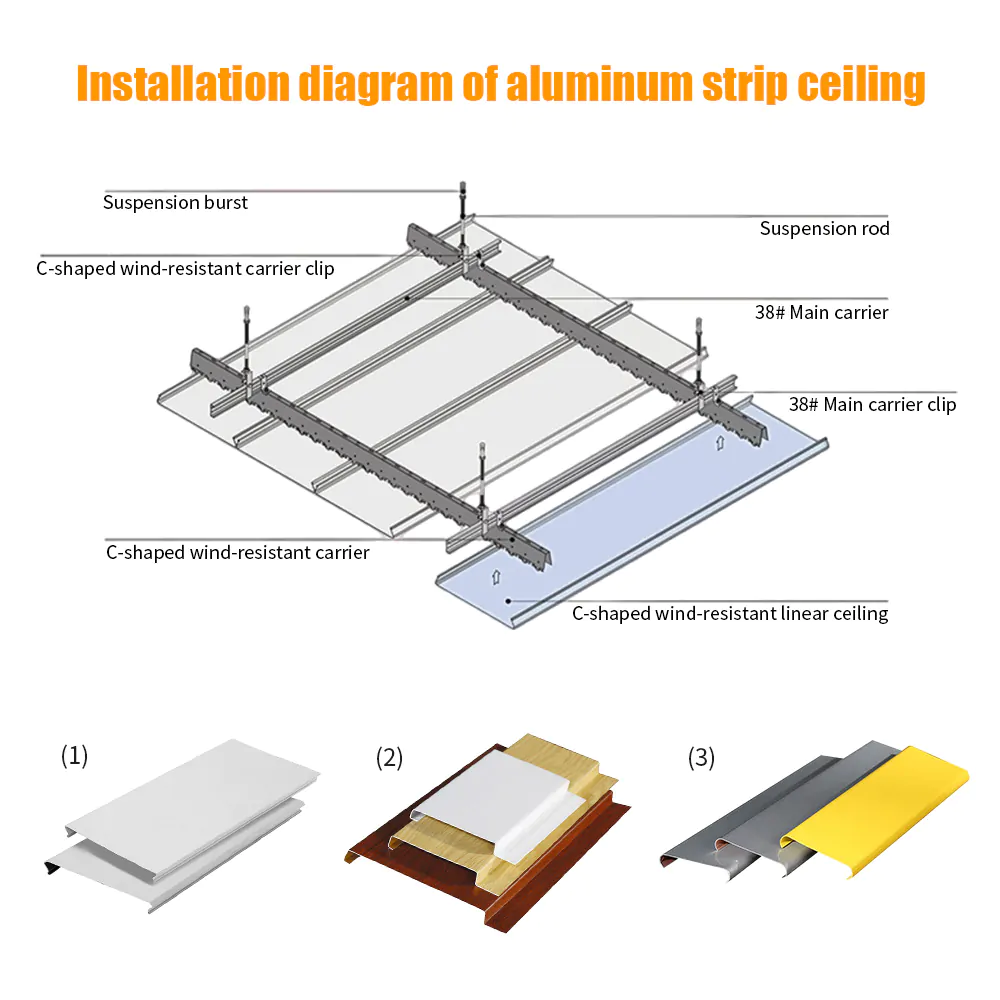
Instructions d'installation des bandes d'aluminium pour plafond
- Installez les tiges de suspension en respectant la disposition du plafond, en veillant à ce que tous les points de suspension se trouvent au même niveau horizontal afin d'éviter que la ligne de bande ne s'affaisse ou ne se torde sur toute sa longueur.
- Fixez solidement les rails principaux, puis positionnez les rails de support (ou traverses) en respectant l'espacement entre les bandes et la largeur des modules indiqués sur le plan d'implantation.
- Vérifiez et ajustez l'ensemble de l'ossature afin que le système de fixation soit à niveau, droit et d'équerre avant de poser les lames, car tout désalignement à ce stade sera clairement visible sur toute la longueur d'une ligne continue.
- Insérez les bandes d'aluminium dans le rail de support une par une, en respectant l'ordre indiqué, de manière à ce que chaque bande s'emboîte parfaitement contre la suivante et que la largeur de l'espace reste constante sur toute la longueur.
- Préparez les découpes et les emplacements réservés pour les luminaires, les diffuseurs d'air, les sprinklers ou les trappes d'accès avant ou pendant la pose, et utilisez des moulures ou des bandes de finition assorties au niveau de ces ouvertures afin de préserver l'uniformité du revêtement.
- Une fois toutes les bandes posées, inspectez l'ensemble de la longueur pour vérifier que les écarts entre les bandes sont réguliers, que l'alignement est droit et que les fixations sont solides, afin de vous assurer que la ligne de plafond est plane, continue et correctement finie.
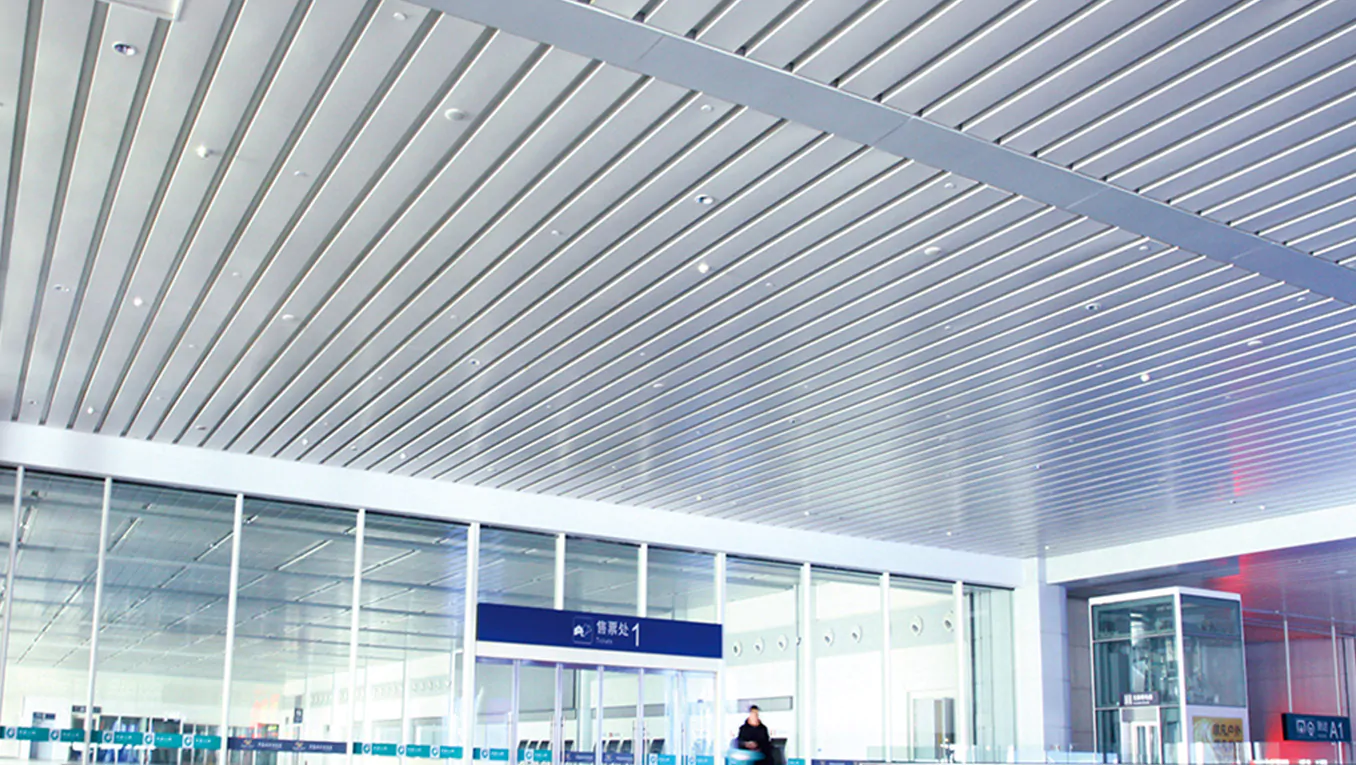

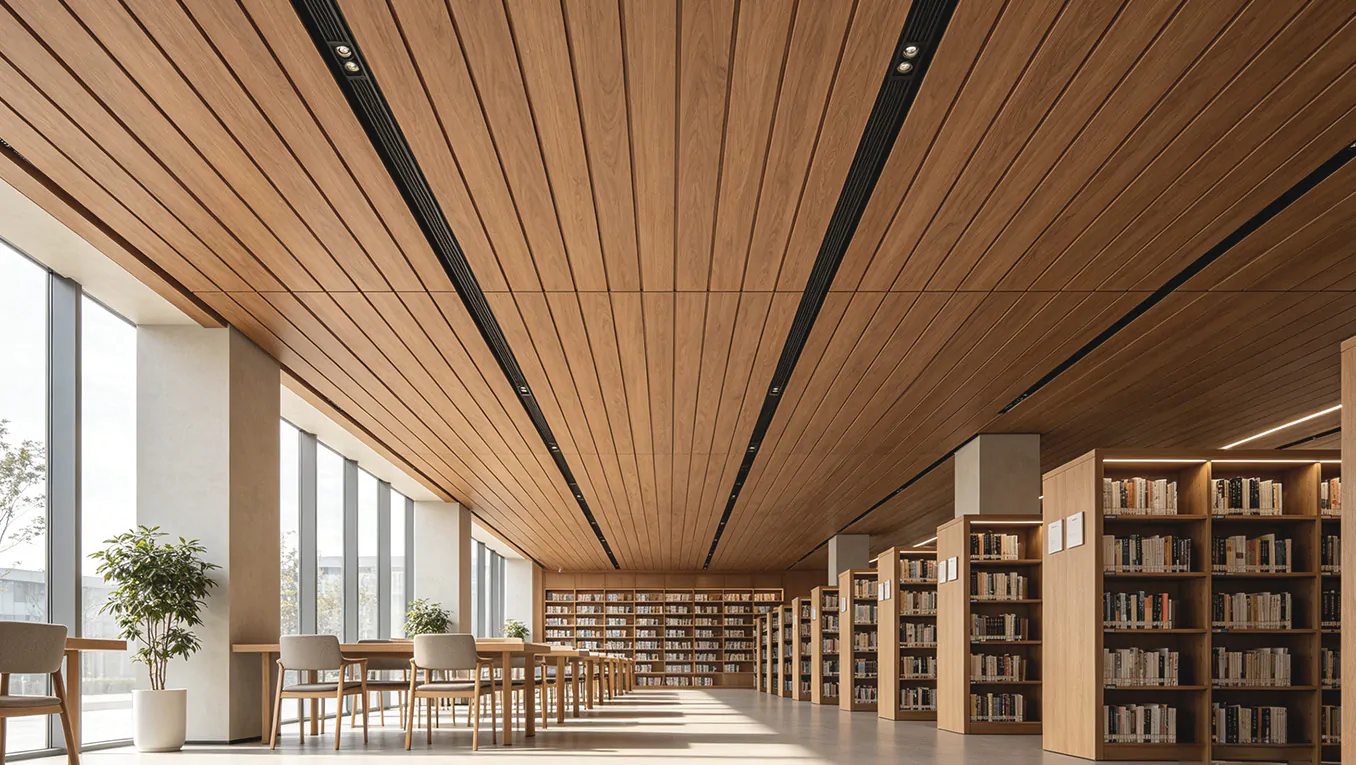
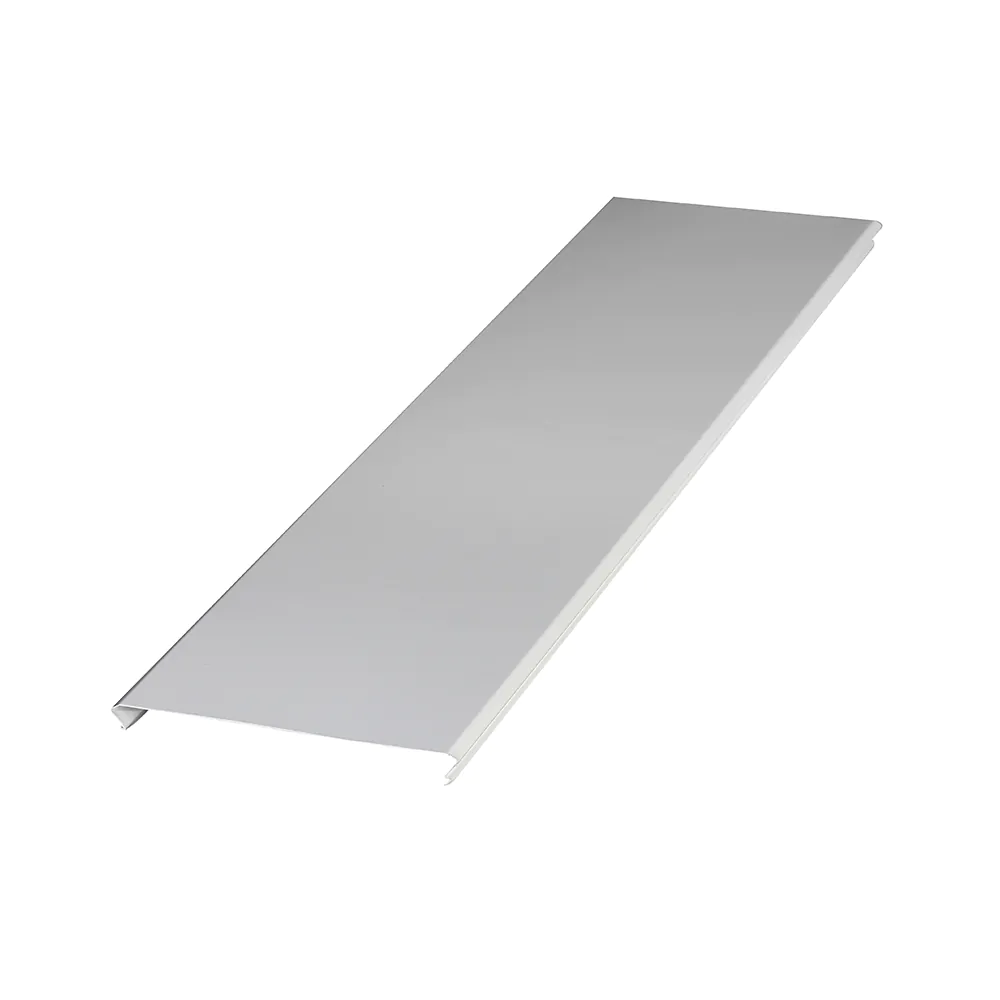
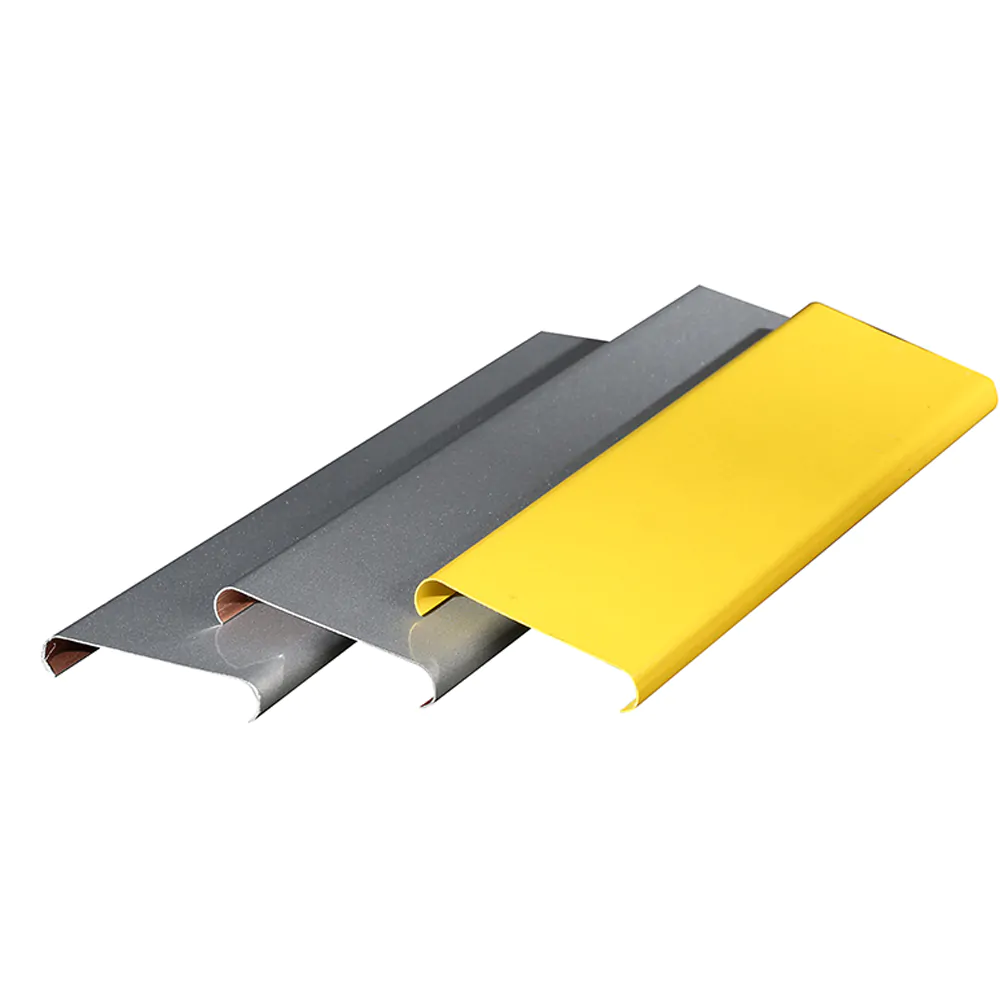
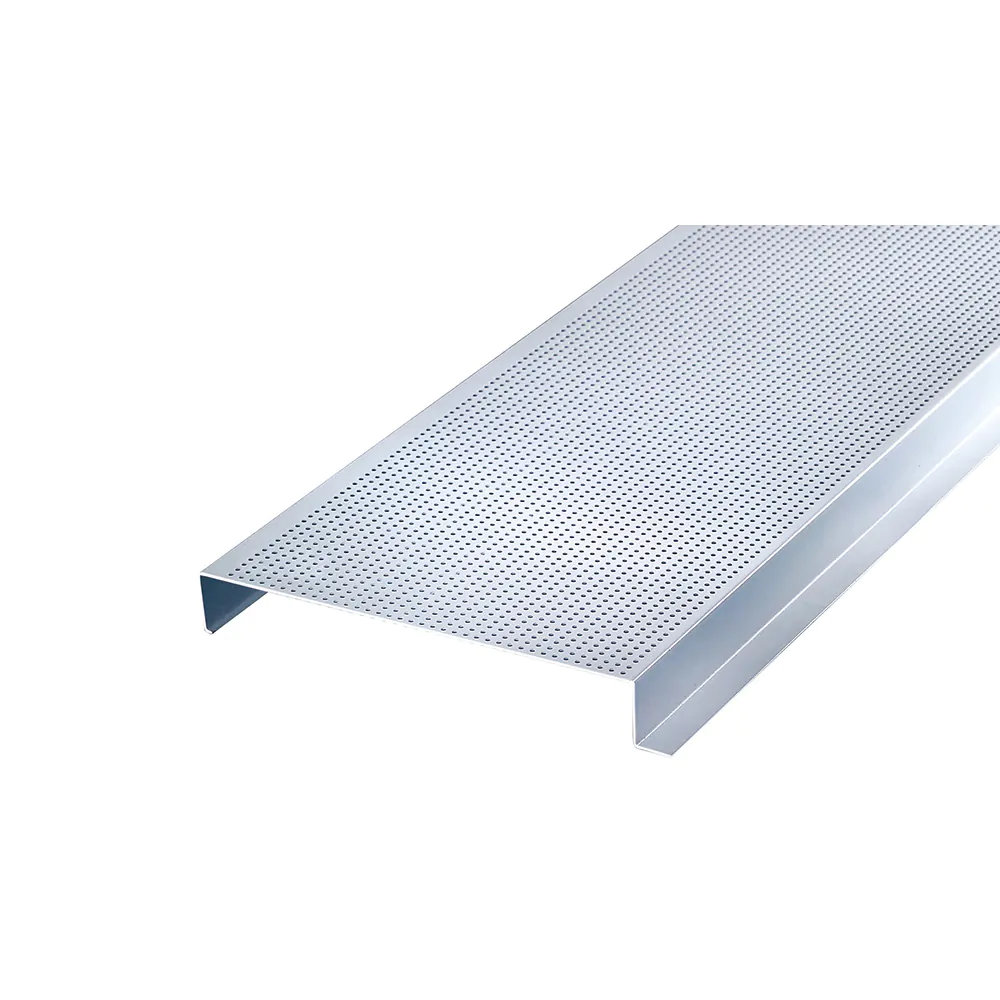
Les modèles présentés ici ne constituent qu'une partie de la gamme disponible pour les systèmes de plafonds à bandes d'aluminium. Les bandes peuvent être choisies sous forme de profilés plats, perforés, micro-perforés ou rainurés, avec des configurations à fentes ouvertes ou fermées, avec ou sans feutre acoustique derrière les perforations.
Ces options sont adaptées aux besoins du projet en matière de contrôle acoustique, de circulation d'air, de coordination de l'éclairage, de facilité d'accès au plénum et de rythme visuel global du plafond. Le profilé, la largeur, le motif de perforation, la taille des interstices et le rabattement des bords peuvent être personnalisés en fonction des plans du projet et des exigences de conception.





Les couleurs présentées ici ne représentent qu'une partie des finitions disponibles pour les systèmes de plafond à lamelles en aluminium. Une large gamme de couleurs standard et sur mesure est proposée pour s'adapter à différents styles d'intérieur, des environnements épurés des transports en commun et des bureaux aux espaces commerciaux et hôteliers décoratifs.
Les finitions sont choisies pour mettre en valeur la conception de l'éclairage, s'harmoniser avec les matériaux des murs et des sols, et répondre aux exigences pratiques des espaces publics très fréquentés. Que le projet nécessite un blanc classique, du noir, de l'argenté, un aspect bois ou une couleur personnalisée propre à la marque, les options de finition peuvent être adaptées à la conception souhaitée pour l'espace.
La sélection des couleurs en fonction du projet et la personnalisation des teintes sont prises en charge pour les systèmes de plafonds à bandes en aluminium, ce qui permet aux concepteurs, aux entrepreneurs et aux promoteurs immobiliers d'harmoniser la finition du plafond avec la palette architecturale globale.
Non, et cette distinction est importante. La résistance générale à l'humidité concerne l'humidité et la condensation, mais le plafond d'un bassin de natation doit également résister spécifiquement à l'exposition au gaz de chloramine, qui présente un risque de corrosion plus agressif que l'humidité seule — assurez-vous toujours que les spécifications de votre fournisseur traitent directement de l'exposition à la chloramine, et pas seulement des performances générales en matière d'humidité.
Ces deux aspects ont la même importance, et c'est là une lacune courante dans les projets de plafonds de piscines : un panneau résistant à la corrosion suspendu à des fixations ou à des rails de support dont la résistance n'est pas suffisante n'élimine pas le risque, mais ne fait que déplacer le point de rupture vers le composant qui n'a pas été conçu selon les mêmes normes.
Oui. Une piscine couverte dotée d'un système performant de déshumidification et de renouvellement d'air présente généralement une concentration en chloramine plus faible au niveau du plafond qu'une piscine équipée d'une ventilation passive, ce qui peut avoir une incidence sur le choix du revêtement et de la qualité des équipements adaptés. Il est donc préférable de se concerter avec votre ingénieur en CVC plutôt que de partir d'une spécification fixe, indépendamment de la conception du système de ventilation.
La fréquence des inspections dépend des niveaux de chloramine et des performances de ventilation propres à votre établissement, mais les plafonds des piscines justifient généralement des inspections structurelles plus fréquentes que ceux d’un bâtiment commercial standard, compte tenu du risque de corrosion. Il s’agit là d’un sujet qu’il convient d’aborder avec l’ingénieur de votre établissement dans le cadre de la planification de l’entretien courant.
Cela s'applique aux deux, même si l'intensité de l'exposition et le niveau de spécification requis peuvent varier en fonction de la proximité de la surface de l'eau : les zones situées directement au-dessus du bassin présentent généralement une concentration en chloramine plus élevée que les zones périphériques ou les tribunes surélevées, ce qui mérite d'être abordé dès la phase d'élaboration des spécifications.

 English English
  Russian
 French
 Spanish
 Portuguese
 Arabic