CONTACTEZ-NOUS DÈS MAINTENANT POUR RECEVOIR UN DEVIS RAPIDE, UN SUPPORT D'ÉCHANTILLONNAGE ET UNE GARANTIE DE SERVICE D'INGÉNIERIE.








Les meilleurs hôtels équipés de plafonds à déflecteurs et linéaires – Vitrine de projets
In luxury hospitality design, ceilings are no longer treated as simple architectural backgrounds. Today, they play an important role in shaping the atmosphere of a hotel, influencing how guests experience space, lighting, comfort, and even brand identity. From grand hotel lobbies to modern resort restaurants and premium conference areas, ceiling systems have become a key visual element in contemporary hotel architecture.
As modern hospitality interiors continue to move toward minimalist and experience-focused design, aluminum baffle ceilings and linear ceiling systems are becoming increasingly popular in high-end hotel projects. Architects and interior designers favor these ceiling solutions for their clean geometric lines, open spatial appearance, and ability to create a balance between modern aesthetics and functional performance. Wood-look finishes, curved ceiling layouts, and integrated linear lighting are now common design trends in luxury hotels worldwide.
Beyond visual appeal, baffle and linear ceilings also provide practical advantages for hospitality environments. Their open and customizable structures allow seamless integration of lighting, HVAC systems, sprinklers, and acoustic materials while maintaining a clean architectural appearance. In busy hotel spaces where comfort, durability, and long-term maintenance are essential, aluminum ceiling systems offer reliable performance together with modern design flexibility.
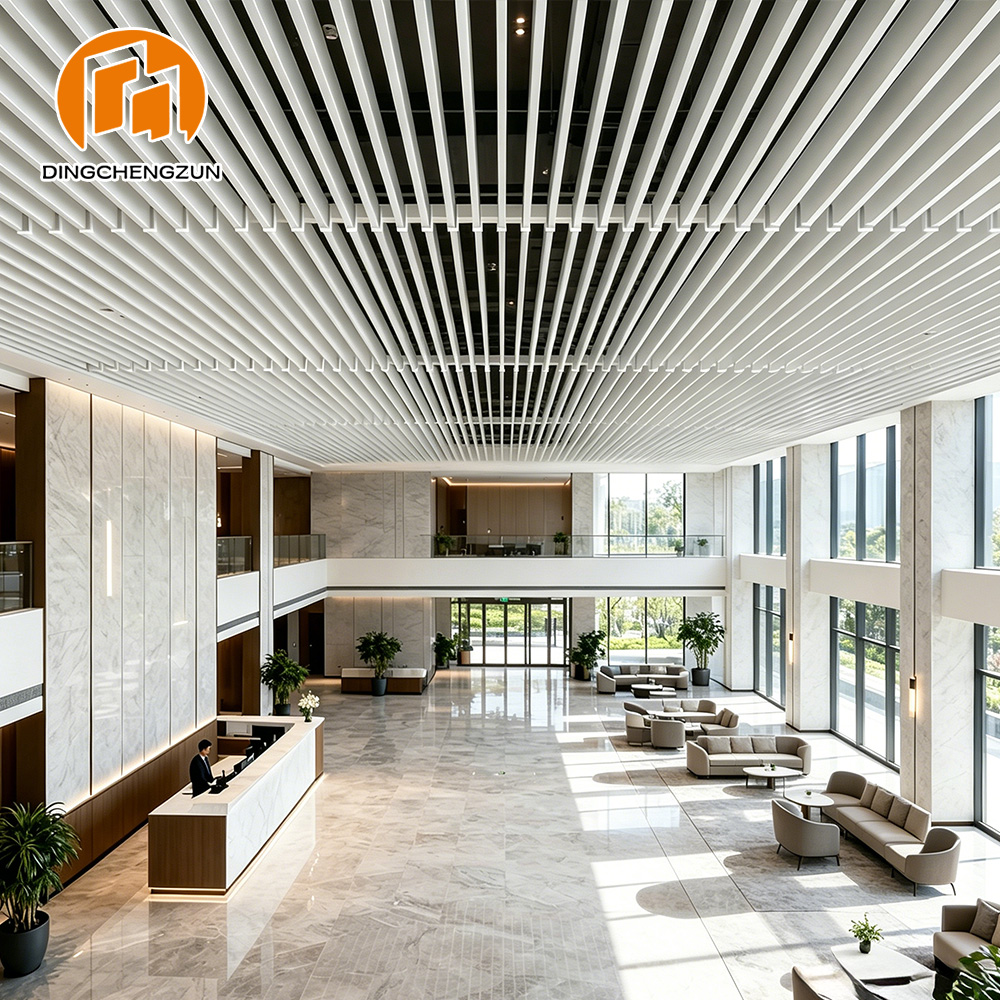
Aluminum Baffle Ceiling for Star Rated Hotels
Designed for luxury hotel interiors, this aluminum baffle ceiling system combines modern architectural aesthetics with excellent acoustic performance and flexible lighting integration. Ideal for hotel lobbies, reception areas, restaurants, and premium commercial spaces.
- Matériau : Alliage d'aluminium
- Type de plafond : Linear Baffle Ceiling System
- Finition de surface : Powder Coating / Wood Grain / PVDF
- Caractéristiques : Acoustic Performance, Fire Resistant, Custom Design
- Applications : Hotel Lobby, Reception Area, Restaurant, Commercial Interior
Why Hotels Choose Baffle & Linear Ceilings
Modern hotels are placing greater emphasis on interior atmosphere, guest comfort, and long-term operational efficiency. As a result, aluminum baffle ceilings and linear ceiling systems have become popular choices in hospitality architecture, especially in luxury hotels, resorts, and premium commercial spaces. Their combination of modern aesthetics and practical performance allows designers to create visually impressive interiors while meeting the functional demands of busy hotel environments.
2.1 Modern Architectural Appearance
Baffle and linear ceilings are widely used in hotels for their clean architectural lines and strong visual impact. In large lobby spaces, open-style baffle ceilings can create a greater sense of height and spatial depth, while linear ceilings help form organized and elegant interior layouts.
Many luxury hotels now prefer wood-look finishes, matte black ceilings, and integrated linear lighting to create modern hospitality environments with a more refined and welcoming atmosphere. Compared with traditional flat ceilings, these ceiling systems bring more texture, rhythm, and contemporary character to hotel interiors.
2.2 Acoustic Comfort for Guests
Guest comfort is a major priority in hospitality design, especially in busy hotel lobbies, restaurants, lounges, and conference areas where noise levels can easily increase during peak hours.
Perforated baffle ceilings and acoustic linear ceiling systems help reduce echo and improve sound absorption while maintaining a modern appearance. Combined with acoustic backing materials, these ceiling solutions can create quieter dining spaces, calmer reception areas, and more comfortable environments for guests and visitors.
2.3 Easy Integration with Building Systems
Modern hotel ceilings must accommodate lighting, HVAC systems, sprinklers, speakers, and other building services without affecting the overall interior appearance.
Baffle and linear ceiling systems offer flexible layouts that make coordination easier for architects and engineers. Integrated linear lighting, concealed air diffusers, and hidden maintenance access can all be incorporated into the ceiling design, helping hotels maintain a clean and seamless architectural style throughout public spaces.
2.4 Long-Term Durability
Hotel interiors experience constant daily use, making durable and low-maintenance materials essential for long-term operation. Aluminum ceiling systems are resistant to moisture, corrosion, and deformation, making them suitable for humid resort environments, restaurants, spas, and coastal hospitality projects.
Their durable surface finishes also help hotels maintain a premium appearance over time while reducing maintenance and replacement costs during operation.
Baffle Ceiling vs Linear Ceiling for Hotels
Both baffle ceilings and linear ceiling systems are popular in modern hotel design, but they create very different spatial experiences. Choosing the right system depends on the atmosphere a hotel wants to create, as well as practical considerations such as acoustics, maintenance, and installation efficiency.
| Fonctionnalité | Plafond à baffles | Linear Ceiling |
|---|---|---|
| Visual Style | Strong architectural effect | Clean and minimal |
| Performances acoustiques | Excellent | Modéré |
| Installation | More complex | Faster |
| Best Areas | Lobby, ballroom | Corridor, reception |
| Accès pour la maintenance | Bien | Excellent |
Baffle ceilings are often used in large hospitality spaces where designers want to create a stronger visual statement. Their suspended vertical structure adds depth, rhythm, and openness to hotel interiors, making lobbies, restaurants, and ballrooms feel more dramatic and architecturally distinctive. They are also a popular choice for spaces that require improved acoustic comfort without sacrificing modern aesthetics.
Linear ceiling systems focus more on simplicity, continuity, and operational practicality. Their clean parallel layouts help hotel corridors, reception areas, and conference spaces feel brighter, more organized, and visually consistent. Because of their simpler structure and easier maintenance access, linear ceilings are commonly used in hospitality projects that prioritize efficient installation and long-term maintenance convenience.
3.1 Best Applications for Baffle Ceilings
Baffle ceilings work particularly well in hospitality spaces with higher ceilings and open layouts. Designers often use them to create a premium atmosphere with stronger architectural character and better acoustic performance.
Common hotel applications include:
- Luxury hotel lobbies
- Ballrooms and banquet halls
- Restaurants and lounge areas
- Resort reception spaces
- Large open public areas
Wood-look finishes, curved layouts, and integrated lighting are frequently combined with baffle ceilings to create warmer and more visually memorable guest environments.
3.2 Best Applications for Linear Ceilings
Linear ceiling systems are better suited for hotel spaces that require cleaner layouts and more efficient daily operation. Their streamlined appearance helps create smooth visual flow throughout hospitality interiors while supporting easier access to ceiling services.
Common hotel applications include:
- Hotel corridors
- Business hotel interiors
- Reception and check-in areas
- Conference rooms
- Commercial hospitality spaces
Integrated lighting and concealed air diffusers can also be seamlessly incorporated into linear ceiling systems, helping hotels maintain a modern and organized interior appearance.

Hotel Ceiling Project Showcase
Modern hotel ceiling design is no longer limited to functionality alone. In luxury hospitality projects, ceiling systems are often used to shape the atmosphere of a space, strengthen architectural identity, and improve the overall guest experience. Baffle and linear ceiling systems are especially popular in hotel interiors because they combine modern aesthetics with practical long-term performance.
4.1 Luxury Hotel Lobby Project
Project Overview
This luxury hotel lobby project used a custom curved aluminum baffle ceiling system to create a more dramatic arrival experience for guests. The open ceiling layout helped enhance the sense of height and spatial depth throughout the main reception area.
Ceiling Solution
- Curved aluminum baffle ceiling
- Wood grain finish
- Integrated linear lighting
- Concealed HVAC coordination
The combination of wood-look finishes and continuous lighting lines created a warmer and more contemporary hospitality atmosphere. Custom curved baffles also added stronger architectural rhythm to the large-span lobby ceiling without making the space feel visually heavy.
Key Benefits
- Premium and visually distinctive lobby design
- Improved acoustic comfort in open public areas
- Clean integration of lighting and building systems
Recommended Images:
- Hotel lobby panoramic view
- Curved ceiling detail photos
- Integrated lighting close-ups
4.2 Resort Hotel Linear Ceiling Project
Project Overview
For this resort hotel project, a wood-look linear strip ceiling system was selected to create a calmer and more natural interior atmosphere inspired by modern tropical hospitality design.
Ceiling Solution
- Wood-look linear ceiling
- Moisture-resistant aluminum panels
- Integrated lighting layout
- Concealed maintenance access
The clean parallel ceiling lines helped reception and corridor spaces feel brighter, more organized, and visually consistent. Compared with traditional wood materials, the aluminum ceiling system provided better moisture resistance and reduced long-term maintenance requirements in humid resort environments.
Key Benefits
- Suitable for humid hospitality climates
- Easy maintenance access for hotel operations
- Warm and modern resort-style appearance
Recommended Images:
- Resort reception area
- Hotel corridor ceiling views
- Wood grain ceiling details
Important Design Considerations for Hotel Ceilings
Hotel ceiling systems must balance aesthetics, guest comfort, operational efficiency, and long-term durability. In modern hospitality projects, ceiling design is closely connected with acoustics, lighting, maintenance planning, and overall interior atmosphere. Well-designed ceiling systems not only improve visual appeal but also help hotels maintain a more comfortable and functional environment for guests and daily operations.
5.1 Acoustic Performance
Acoustic comfort is an important consideration in hotel public spaces such as lobbies, restaurants, conference rooms, and lounges where large numbers of guests gather throughout the day. Poor sound control can create excessive echo and increase background noise, affecting both guest experience and communication.
Perforated aluminum ceiling panels combined with acoustic backing materials can help absorb sound while maintaining a modern architectural appearance. Baffle ceilings are especially effective in large open areas because their suspended structure helps reduce sound reflection and improve overall acoustic balance within the space.
5.2 Lighting Coordination
Lighting design plays a major role in shaping the atmosphere of hospitality interiors. Modern hotel ceilings often integrate linear lighting systems to create cleaner ceiling layouts and more refined visual effects.
Baffle and linear ceiling systems allow lighting fixtures to be incorporated directly into the ceiling design, helping maintain continuous architectural lines throughout the space. Hidden fixture layouts and soft ambient lighting can also create warmer and more welcoming hotel environments while improving the visual comfort of guests.
5.3 Ceiling Maintenance Access
Hotel buildings require regular access to HVAC systems, electrical wiring, sprinklers, and other ceiling-mounted services. As a result, maintenance accessibility should be considered early in the ceiling design process.
Linear and modular ceiling systems can provide easier access to concealed building systems while preserving a clean interior appearance. Efficient maintenance access is especially important in operating hotels where minimizing disruption to guests and daily hotel activities is a priority.
5.4 Custom Finishes & Colors
Modern hospitality interiors increasingly use customized ceiling finishes to strengthen brand identity and create more memorable guest experiences. Wood grain aluminum ceilings remain one of the most popular choices for luxury hotels because they combine the warmth of natural wood with the durability of metal ceiling systems.
Matte black ceilings are also widely used in contemporary hospitality spaces for a more modern and minimalist architectural style. In addition, custom powder-coated finishes allow hotels to match ceiling colors with interior themes, lighting concepts, and overall design direction.

Why Aluminum Ceilings Are Ideal for Hospitality Projects
Modern hospitality spaces require ceiling systems that can maintain both visual quality and long-term performance under continuous daily use. From luxury hotel lobbies to resort restaurants and conference areas, ceiling materials must support modern architectural design while remaining durable, easy to maintain, and suitable for large commercial environments. Because of this balance between aesthetics and functionality, aluminum ceiling systems have become a widely preferred solution in hospitality projects.
| Caractéristiques de performance | Plafond en aluminium |
|---|---|
| Résistance au feu | Class A |
| Durée de vie | 15–25 Years |
| Résistance à la corrosion | Excellent |
| Maintenance | Faible |
| Customization | Élevé |
One of the key advantages of aluminum ceilings is their ability to maintain a clean and premium interior appearance over time, even in high-traffic hospitality spaces. Their lightweight structure allows more efficient installation in large-span hotel areas while supporting modern ceiling layouts such as curved designs, open ceiling concepts, and integrated architectural lighting.
Compared with traditional ceiling materials, aluminum systems also provide better resistance to moisture, corrosion, and deformation. This makes them especially suitable for resort hotels, spa facilities, coastal hospitality projects, and other environments where humidity levels are higher and long-term material stability is essential.
Another important advantage is design flexibility. Aluminum ceiling systems can be customized in a wide range of wood-look finishes, matte colors, perforated acoustic panels, and seamless linear layouts to match different hospitality styles and interior concepts. This allows architects and designers to create more visually consistent guest environments while supporting the functional requirements of modern hotel operations.
In addition, recyclable aluminum materials are increasingly used in sustainable hospitality construction projects because of their long service life and reduced replacement frequency, helping hotels achieve more efficient long-term building management.
Why Choose DCZ Building
For hospitality projects, ceiling systems must combine architectural aesthetics, engineering accuracy, and reliable long-term performance. DCZ Building provides customized aluminum ceiling solutions for hotels, resorts, commercial buildings, and large public spaces, supporting projects from design development to manufacturing and delivery.
7.1 One-Stop Engineering Support
Hospitality ceiling projects often require close coordination between architectural design, lighting systems, HVAC layouts, and structural installation. DCZ Building provides one-stop engineering support to help architects, contractors, and project teams improve installation efficiency and reduce on-site coordination challenges.
Engineering support services include:
- CAD drawing assistance
- BIM coordination support
- Shop drawing optimization
- Custom ceiling layout development
- Fabrication detailing for complex ceiling systems
This integrated approach helps ensure ceiling systems align more accurately with overall hospitality project requirements while supporting smoother installation processes.
7.2 Advanced Manufacturing
Modern hotel ceiling projects frequently involve customized ceiling layouts, curved architectural elements, and large-scale production requirements. DCZ Building uses advanced CNC production equipment to support high-precision fabrication for both standard and custom aluminum ceiling systems.
Manufacturing capabilities include:
- Curved baffle ceiling fabrication
- Custom linear ceiling production
- Perforated acoustic ceiling panels
- Large-span ceiling system manufacturing
- Custom surface finishing options
The combination of automated production processes and project-based customization allows greater flexibility for complex hospitality ceiling designs.
7.3 International Project Experience
DCZ Building has experience supporting international hospitality and commercial projects with customized ceiling solutions, export packaging coordination, and project-based manufacturing services.
Project support services include:
- Export-standard packaging protection
- International project delivery coordination
- Installation guidance support
- Production scheduling for large commercial orders
- Coordination for overseas hospitality projects
By combining engineering support, manufacturing capability, and international project experience, DCZ Building helps deliver ceiling systems that meet both architectural design expectations and practical construction requirements.
FAQ
What ceiling system is best for luxury hotel lobbies?
Baffle ceilings are commonly used in luxury hotel lobbies because they create stronger architectural impact, improve spatial depth, and provide better acoustic performance in large open areas.
Are aluminum ceilings suitable for humid hotel environments?
Yes. Aluminum ceiling systems offer excellent moisture and corrosion resistance, making them suitable for resorts, spas, coastal hotels, restaurants, and other humid hospitality environments.
Can hotel ceilings integrate lighting and HVAC systems?
Yes. Both baffle and linear ceiling systems can integrate linear lighting, air diffusers, sprinklers, speakers, and other ceiling-mounted building services while maintaining a clean architectural appearance.
Are acoustic ceiling solutions available for hotels?
Yes. Perforated aluminum ceiling panels combined with acoustic backing materials can help reduce echo and improve sound absorption in hotel lobbies, restaurants, conference rooms, and other public spaces.
Can aluminum ceilings be customized for different hotel designs?
Yes. Aluminum ceiling systems can be customized in different sizes, colors, wood-look finishes, perforation patterns, and curved layouts to match various hospitality interior concepts.


