CONTACT US NOW TO RECEIVE A QUICK QUOTE, SAMPLE SUPPORT, AND ENGINEERING SERVICE GUARANTEE.


Products
Acoustic Metal Tegular Ceiling Tiles for Conference Room Ceilings
Conference room acoustics used to be judged by a fairly simple standard: can the people in the room hear each other clearly. That standard has quietly gotten harder to meet now that most conference rooms run video calls as often as in-person meetings, and the ceiling-mounted microphone arrays built into modern conferencing systems are far less forgiving of reverberation and echo than a human ear sitting across the table. A hard, reflective ceiling that was acoustically tolerable for face-to-face conversation can produce noticeably poor audio for remote participants, since the microphone picks up reflected sound the room's human occupants barely notice. Dingchengzun's acoustic metal tegular ceiling tiles for conference rooms are specified with this modern hybrid-meeting reality in mind, not just traditional in-room speech clarity.
This system is used across corporate conference rooms, boardrooms, video conferencing suites, huddle rooms, and training rooms — spaces that are almost always smaller and more acoustically "live" (reflective) than open-plan offices, which makes reverberation control more noticeable and more consequential per square meter than it would be in a larger space. The tegular edge profile gives these rooms a more finished, boardroom-appropriate look than a flush utility tile, while the acoustic backing behind the perforated panel does the actual work of reducing the reflected sound that degrades ceiling-mounted microphone pickup.
Because conference room ceilings also carry projector mounts, video conferencing cameras, and ceiling speakers in addition to standard lighting and HVAC, the acoustic panel layout needs to be planned around all of that AV infrastructure, not just around sound absorption in isolation.

Looking for Custom Aluminum Ceilings and Facades? Let's Talk


Product Application Showcase
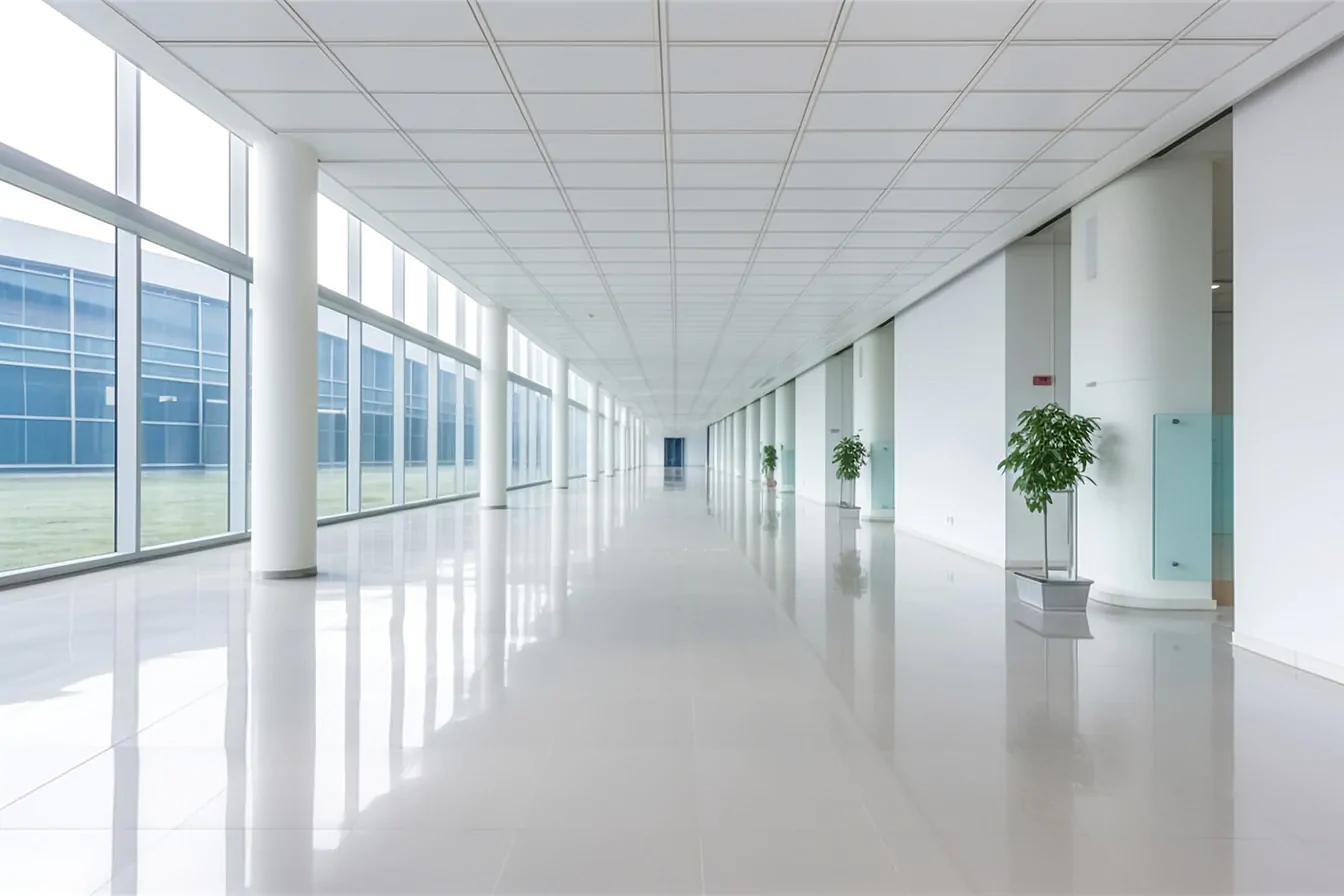
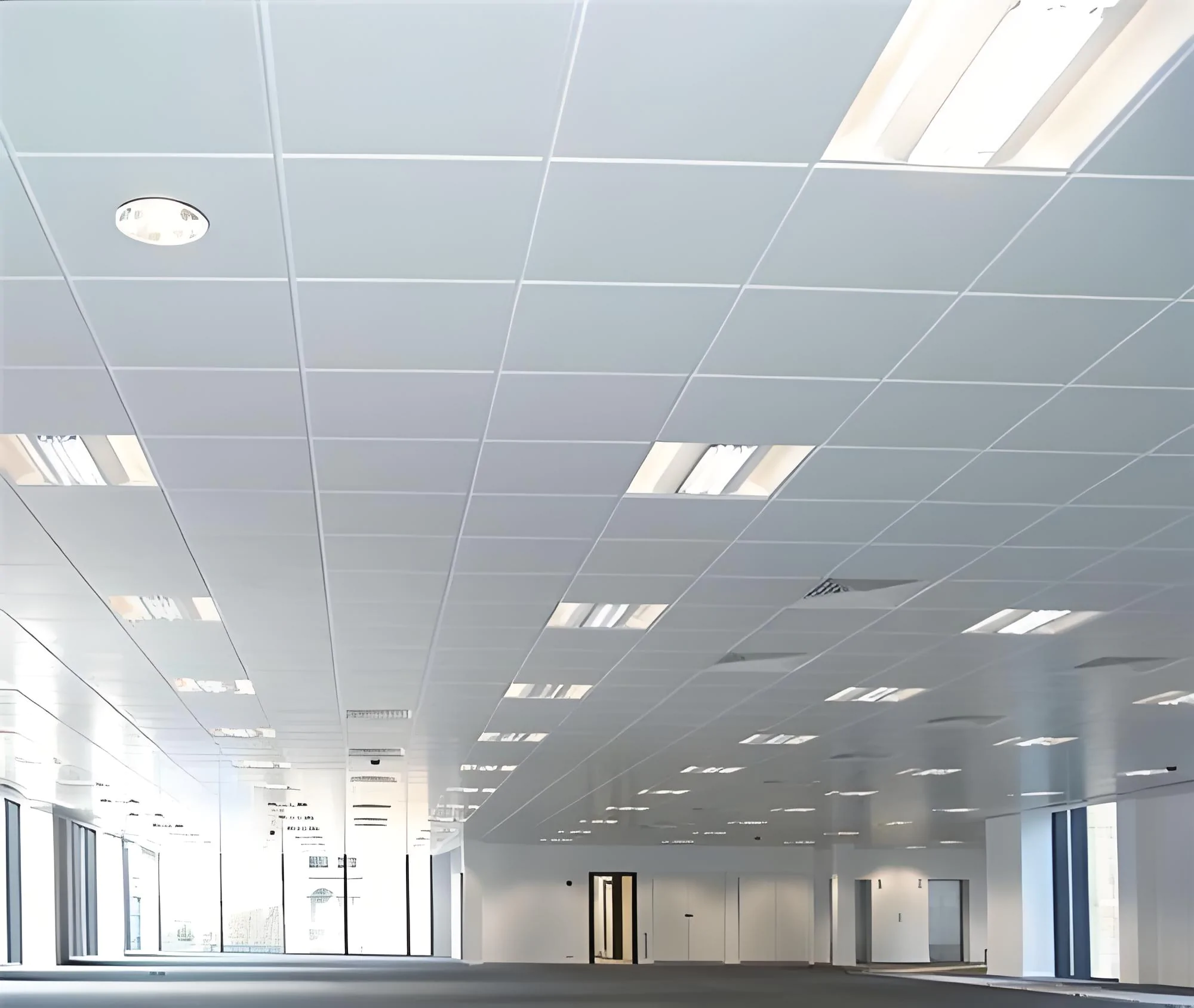
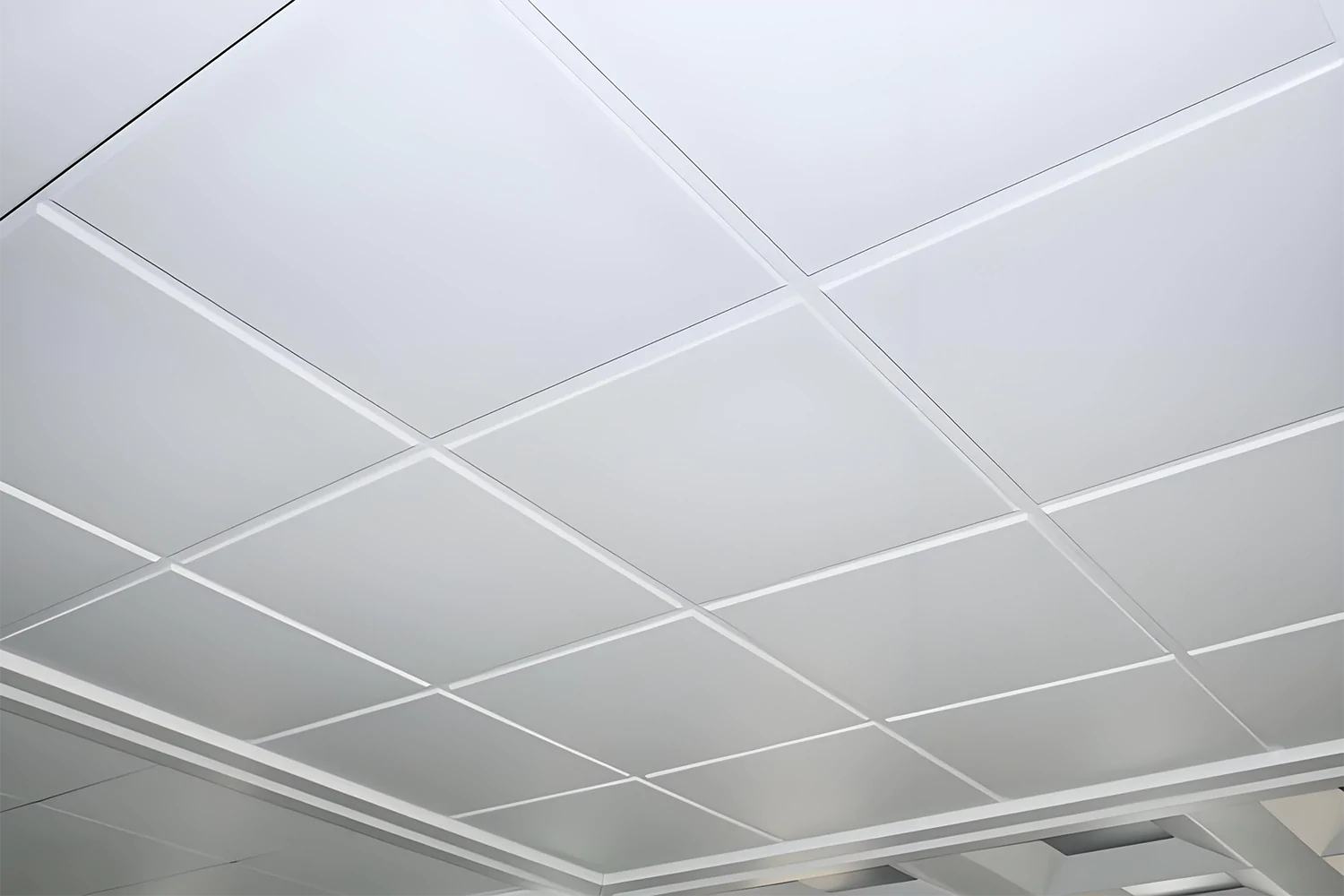
Within the tegular panel system, conference room applications are specified with perforation density and acoustic backing tuned toward mid-to-high frequency absorption, since speech intelligibility depends more on controlling those frequencies than on the low-frequency absorption that matters more in larger auditorium-scale spaces. This distinction matters for ceiling-mounted microphone performance specifically, since conferencing systems are most sensitive to the frequency range human speech occupies.
Panel layout is coordinated with projector mounts, conferencing camera positions, and ceiling speaker placement at the specification stage, and finish is typically kept in standard light tones to support even lighting for video calls, where uneven ceiling-reflected light can affect how participants appear on camera.
Product Installation
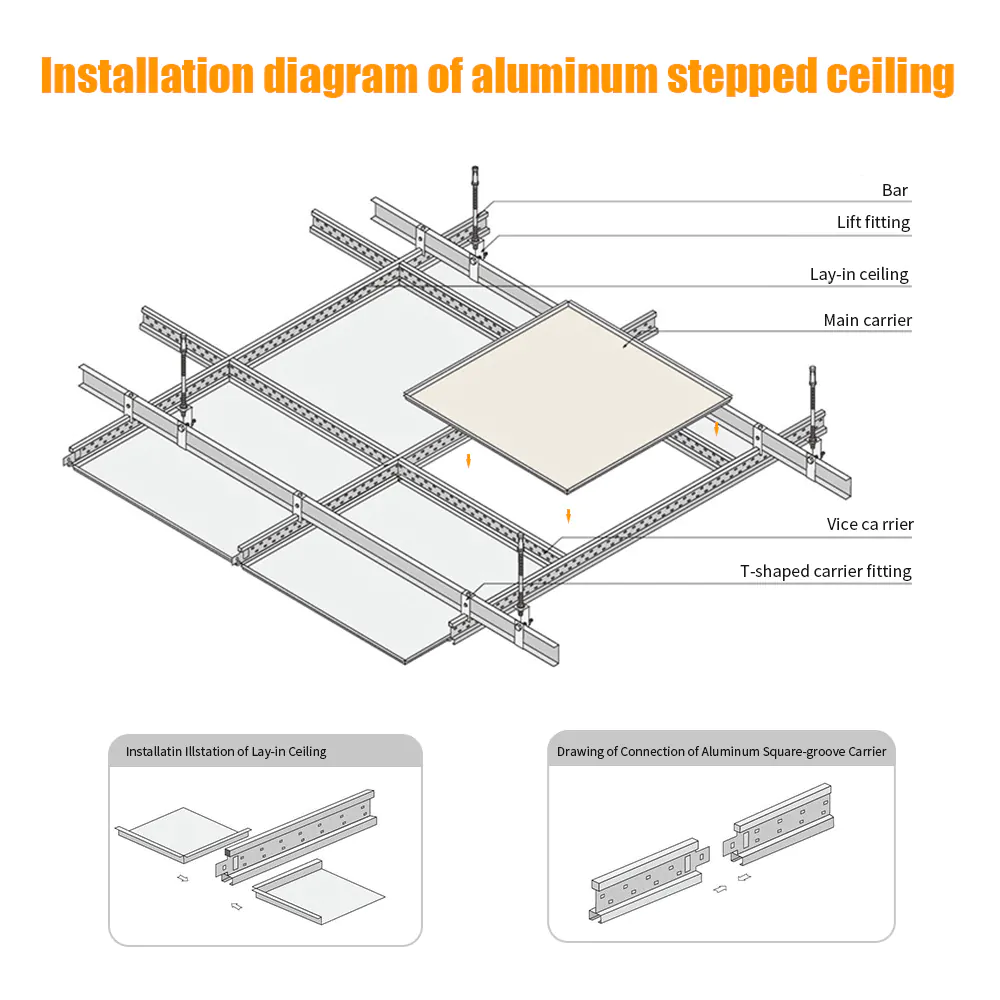
Aluminum Lay-in Ceiling Installation Instruction
Install the suspension rods according to the ceiling layout and keep all hanging points at the same level. Fix the perimeter trim, main tees, and cross tees to form a stable exposed grid system that matches the panel size.
Check and adjust the grid to make sure it is level, straight, and properly aligned before placing the panels. Then lay the aluminum ceiling panels into the grid openings one by one, ensuring each panel sits evenly and securely.
Prepare cut-outs and reserved positions in advance for lights, air diffusers, sprinklers, and access openings. After installation, inspect the ceiling surface, panel fitting, and grid alignment to ensure a clean, flat, and secure finish.
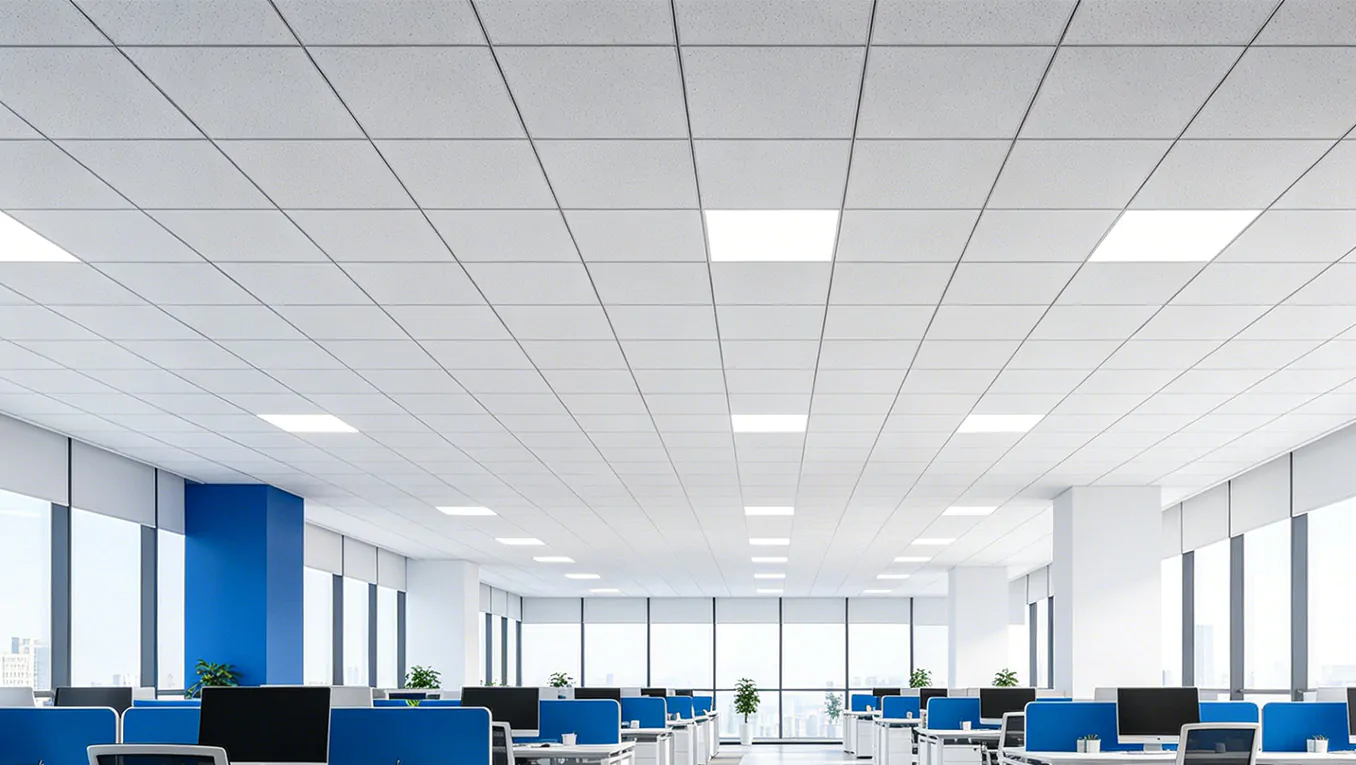
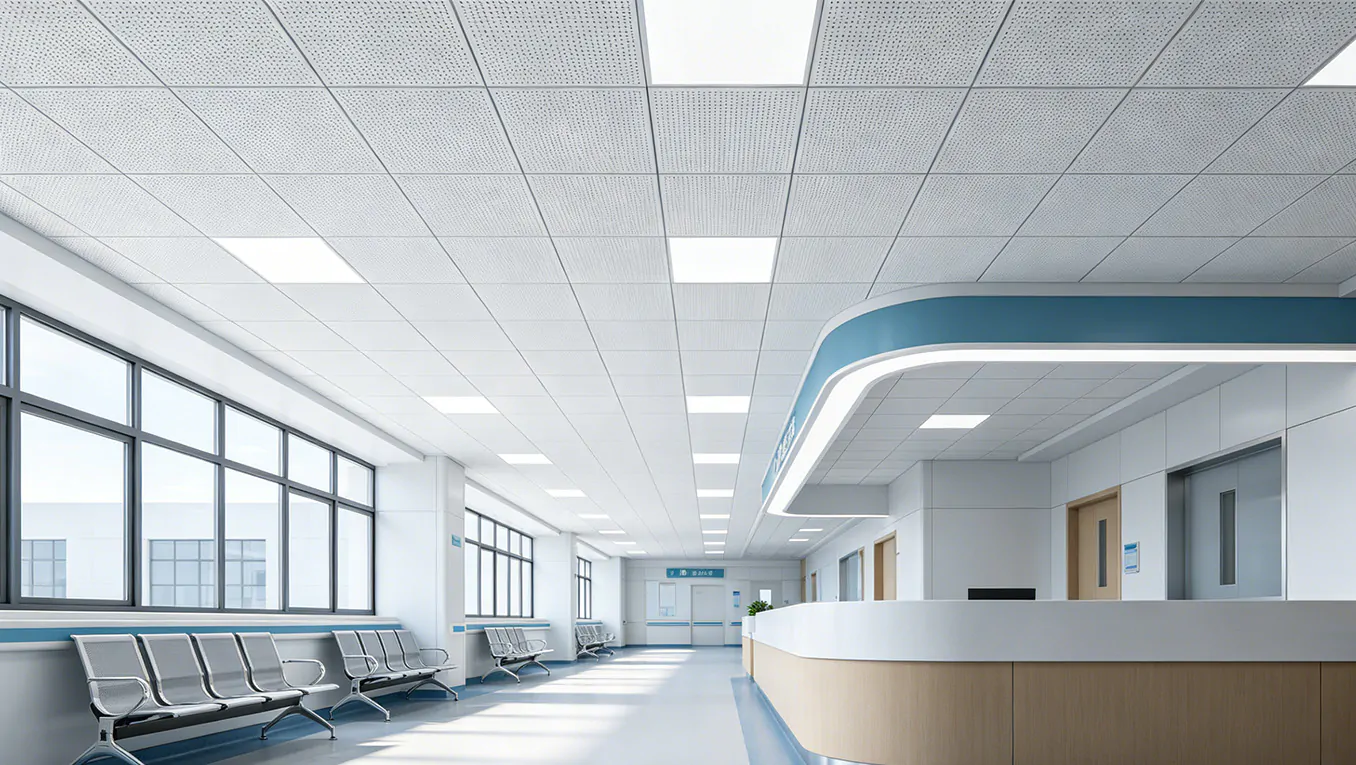
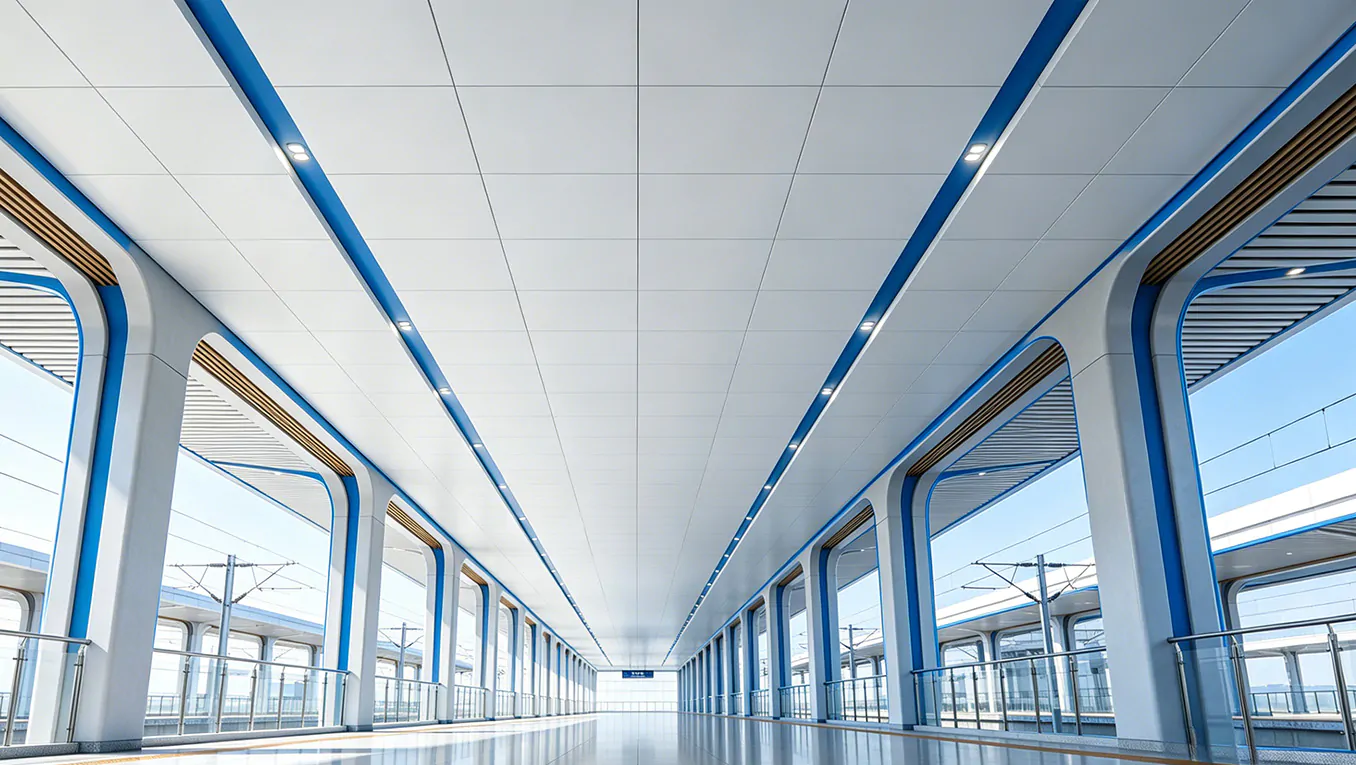




The patterns shown here are only part of what Dingchengzun offers. Our aluminum stepped ceiling panels are available in various design options, including flat panels, perforated panels, micro-perforated designs, embossed surfaces, decorative textures, metallic finishes, wood grain finishes, and customized stepped profiles.
These options can meet different project needs for layered ceiling decoration, acoustic performance, ventilation, lighting coordination, easy maintenance, and overall interior style. Dingchengzun aluminum stepped ceiling panels can be customized in panel size, step height, perforation pattern, color, surface finish, edge type, and installation system according to project drawings and design requirements.





Ceiling-mounted microphone arrays are more sensitive to reverberation than human hearing, so reducing reflected sound in the mid-to-high frequency range where speech occurs helps microphones pick up clearer audio for remote participants, not just improve how the room sounds to people physically present.
Yes. Conference room applications are tuned toward mid-to-high frequency absorption relevant to speech intelligibility and microphone pickup, while larger spaces like auditoriums often need more low-frequency absorption as well, given their scale and use.
Yes. Panel layout is planned around projector mounts, video conferencing camera positions, and ceiling speaker placement at the specification stage, based on your room's AV equipment plan.
It can, indirectly. Standard light finishes are typically recommended to support even light reflectance, since an uneven or overly dark ceiling can affect ambient lighting quality on camera during video calls.
The tegular edge itself is primarily an aesthetic and architectural detail — giving the room a more finished, boardroom-appropriate look — while the acoustic performance comes from the perforation pattern and backing material behind the panel face.

 English English
  Russian
 French
 Spanish
 Portuguese
 Arabic