CONTACT US NOW TO RECEIVE A QUICK QUOTE, SAMPLE SUPPORT, AND ENGINEERING SERVICE GUARANTEE.


Products
Perforated Aluminum Ceiling Tiles for Museum Interior Ceilings
A museum ceiling has one job that overrides almost everything else: get out of the way of the art. Visitors aren't supposed to notice it, curators don't want it competing with the exhibits, and conservators care about it mainly for what it enables — controlled lighting, stable climate conditions, and a dust-free environment that protects fragile or light-sensitive objects over decades, not just years. Dingchengzun's perforated aluminum clip-in ceiling tiles for museum interiors are specified around this quiet, background role rather than any decorative ambition of their own.
This system is used across permanent collection galleries, rotating exhibition halls, archival display rooms, museum lobbies, and object conservation areas — spaces where lighting requirements can shift dramatically from one exhibit to the next. Track lighting and adjustable spotlight systems are standard in gallery ceilings because artwork gets rehung and rotated regularly, and the panel layout is built to accommodate that kind of recurring reconfiguration without requiring ceiling rework every time a curator changes an exhibit.
Because many museum objects are sensitive to dust accumulation and airborne particulates, the ceiling surface also plays a quiet role in the building's overall conservation strategy — a non-porous, easily wiped panel surface contributes to maintaining the clean-air conditions that textile, paper, and photographic collections in particular depend on.

Looking for Custom Aluminum Ceilings and Facades? Let's Talk


Product Application Showcase
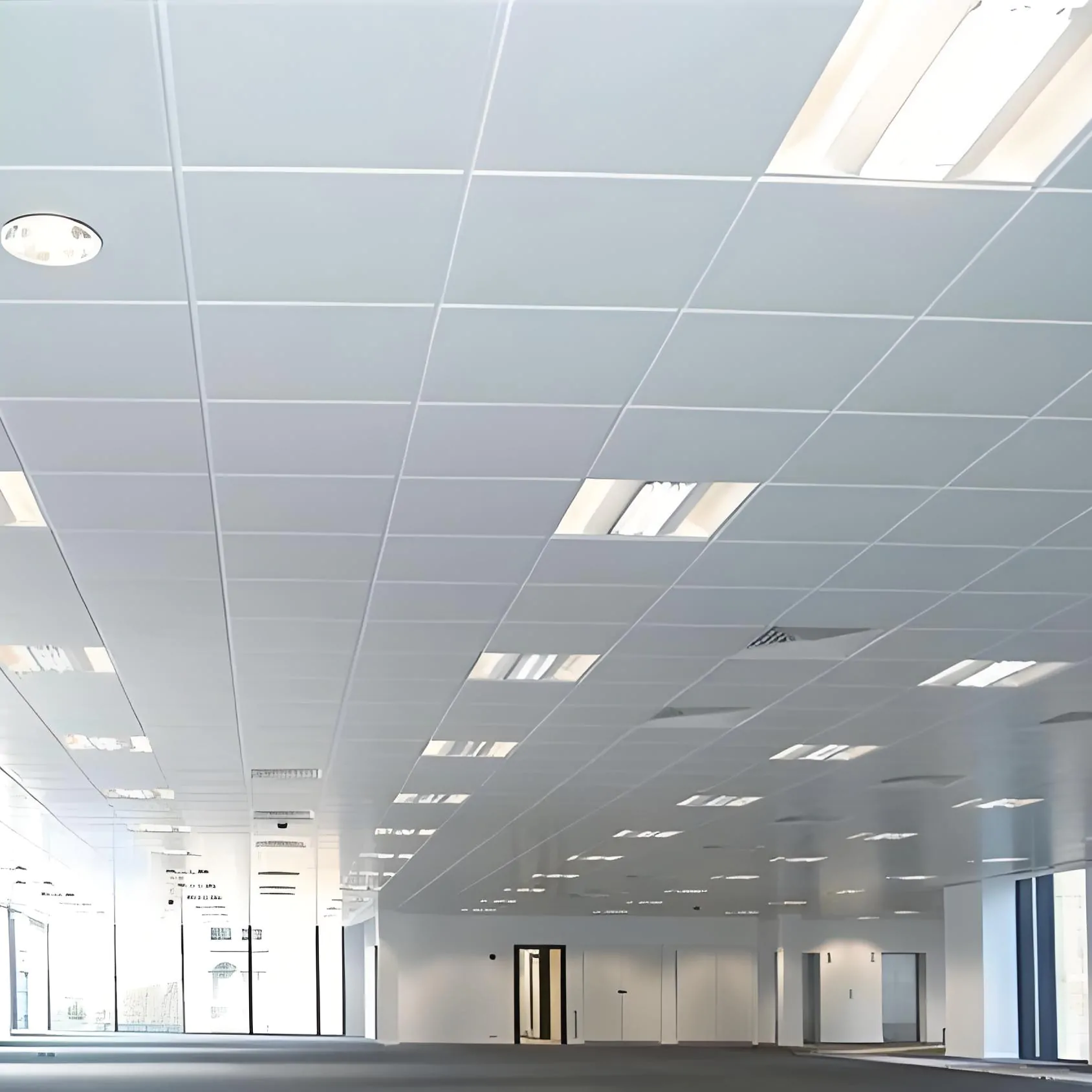
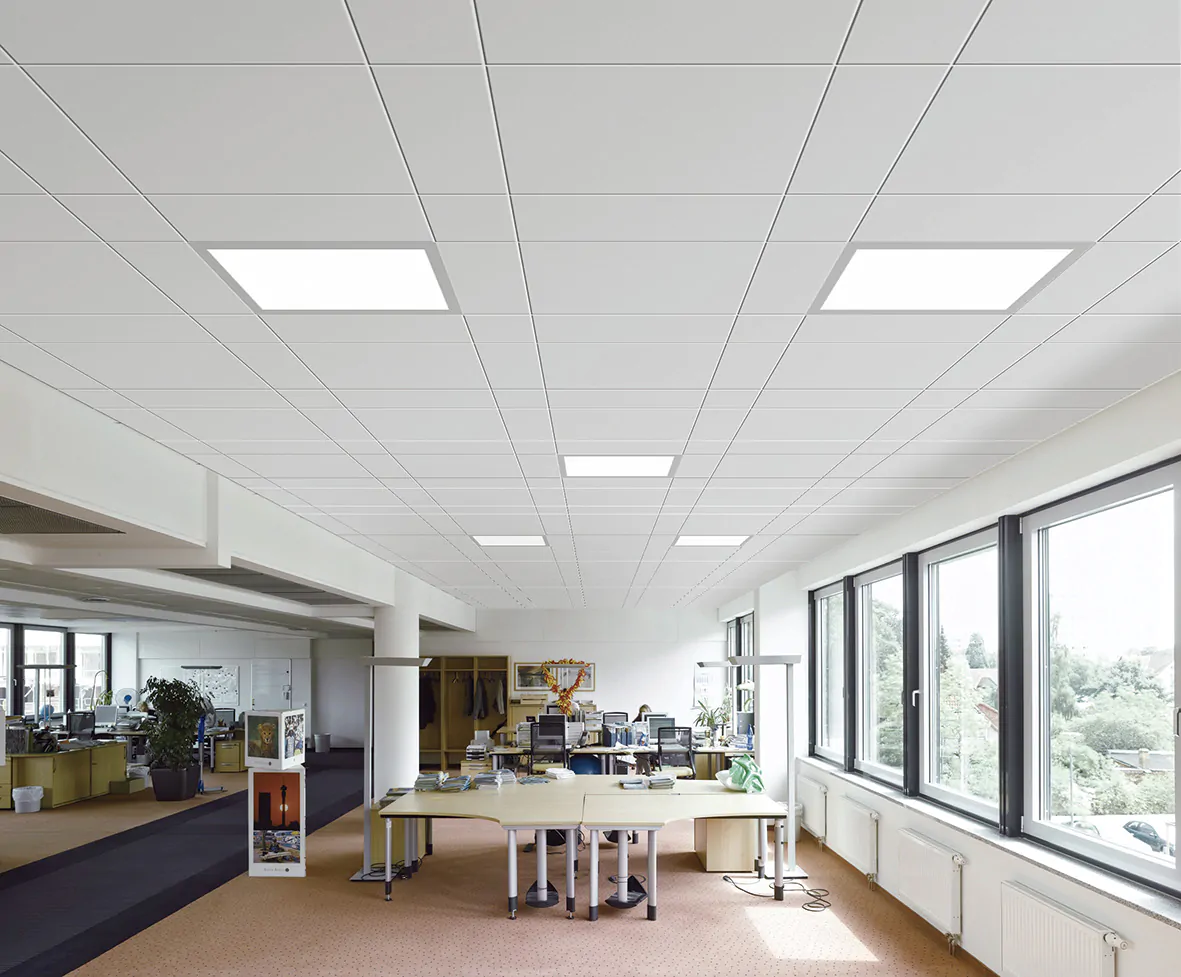
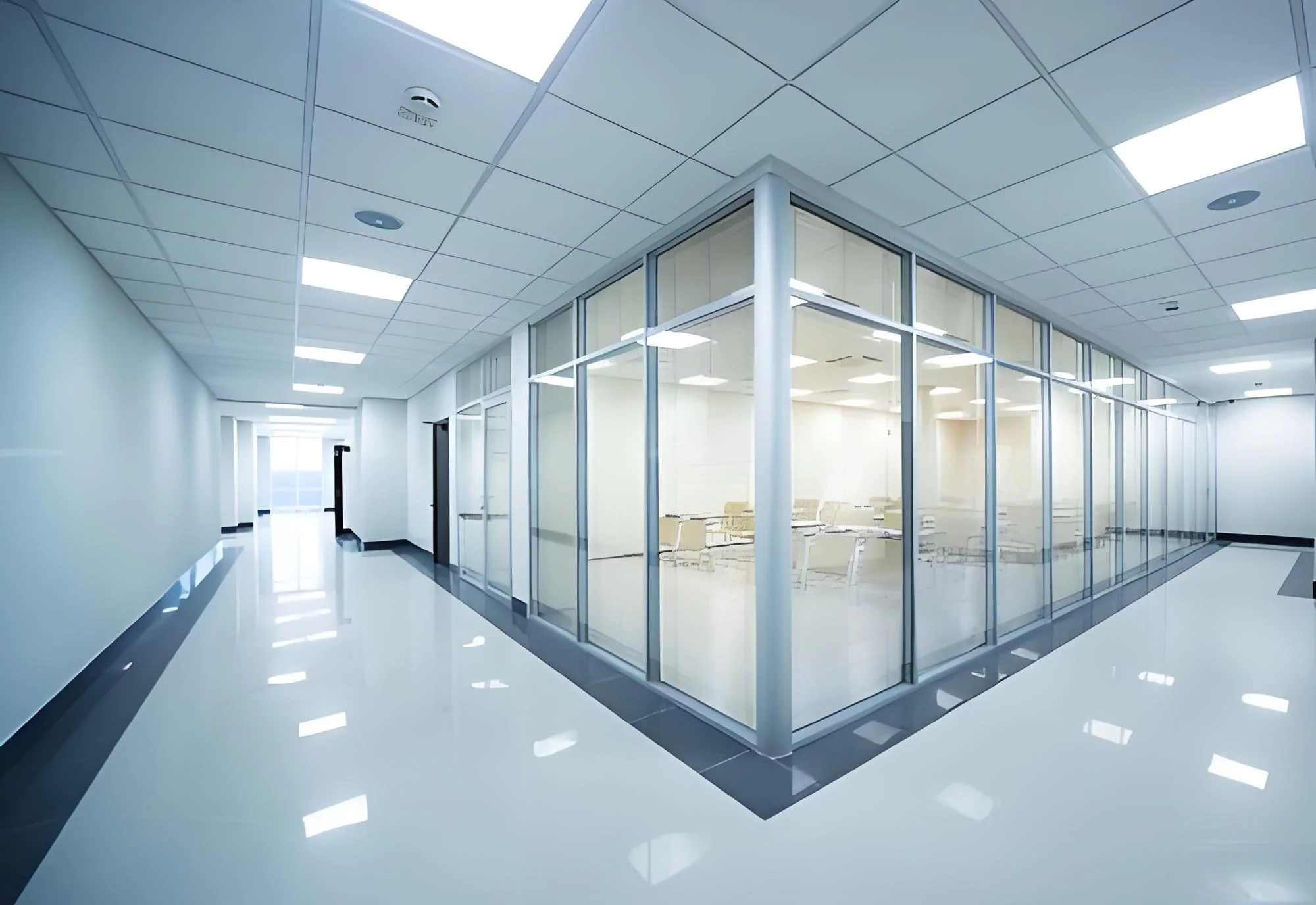
Within the clip-in panel system, museum applications are typically specified in matte, low-reflectance finishes that avoid glare and light bounce onto sensitive artwork, since even indirect reflected light can affect how a painting or object is lit and, over time, how much UV and heat exposure it receives. Perforation is used selectively — heavier in HVAC-dense zones where climate control airflow needs to pass through the ceiling plane, and lighter or solid in gallery areas where a cleaner, quieter surface better suits the display.
Panel layout is coordinated with track lighting systems, humidity and climate sensors, and fire suppression appropriate to museum collections (often requiring specific system types for archival or fine art spaces), and cutout positions are typically finalized alongside the exhibition design team rather than fixed early, since gallery layouts change more often than the building itself.
Product Installation
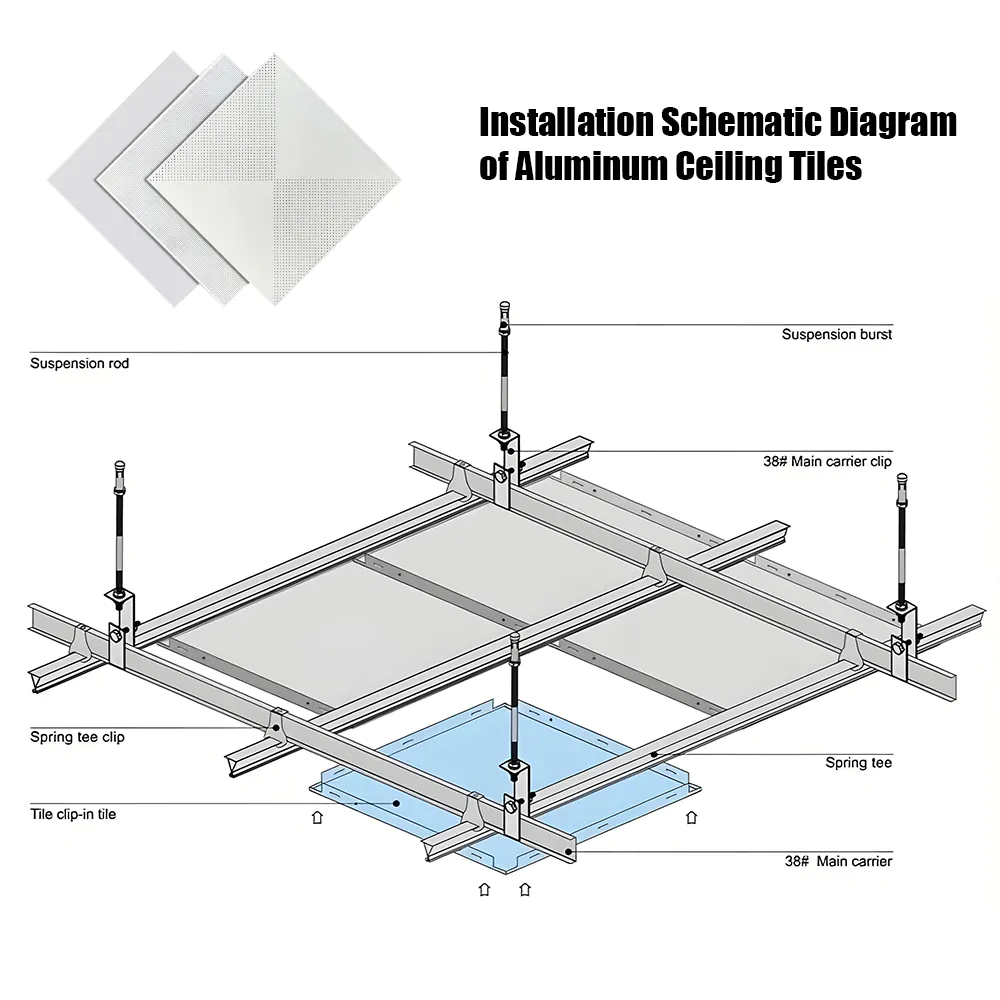
Clip-In Aluminum Ceiling Installation Instruction
- Install the hanger rods according to the ceiling layout and make sure all suspension points are kept at the same horizontal level.
- Fix the main runners securely, then install the clip-in carriers based on the ceiling panel size and layout requirements. The spacing of the carrier system should be adjusted properly to ensure stable support.
- Check and adjust the entire frame to make sure the carrier system is level and aligned before installing the panels.
- Clip the aluminum ceiling panels into the carrier system one by one in the correct order. Make sure each panel is firmly fixed and the joints are neat and even.
- For lights, air diffusers, sprinklers, or access openings, prepare the required cut-outs and reserved positions before or during installation.
- After all panels are installed, inspect the ceiling surface, panel alignment, and connection stability to ensure a flat, clean, and secure finish.





The patterns shown here are only part of what Dingchengzun offers. Our aluminum ceiling panels are available in various pattern options, including flat panels, perforated panels, micro-perforated designs, square patterns, linear patterns, embossed surfaces, decorative textures, metallic finishes, and customized panel designs.
These options can meet different project needs for ceiling decoration, acoustic performance, ventilation, lighting coordination, easy maintenance, and overall interior style. Dingchengzun aluminum ceiling panels can be customized in panel size, perforation pattern, color, surface finish, edge type, and installation system according to project drawings and design requirements.




The colors shown here represent only part of the available color options for Dingchengzun aluminum ceiling panel systems. We provide a wide range of standard and customized colors to support different interior design styles, from clean modern offices to commercial, public, and decorative spaces.
Our aluminum ceiling panel colors are designed to improve visual appearance, coordinate with lighting and wall finishes, and meet the practical needs of different ceiling projects. Whether the design requires classic white, black, gray, metallic tones, wood grain finishes, or customized project colors, Dingchengzun can provide suitable color solutions for various application scenarios.
Click the button below to explore more color options. Dingchengzun supports project-based color selection and customization for aluminum ceiling panels, helping designers, contractors, and developers match different architectural styles, ceiling layouts, and interior design requirements.
Museum applications are typically specified with matte, low-reflectance finishes specifically to avoid glare and light bounce onto sensitive artwork, since reflected light can affect both the visual presentation and long-term light exposure of an object.
Yes. Panel layout is designed to work with track lighting and adjustable spotlight systems that are standard in gallery ceilings, supporting the frequent rehanging and exhibit rotation typical of museum programming.
The non-porous panel surface is easy to wipe down and doesn't shed particulates the way some other ceiling materials can, which supports the clean-air conditions that textile, paper, and photographic collections typically require.
It typically varies. Heavier perforation is often used in HVAC-dense zones where climate control airflow needs to pass through the ceiling, while gallery display areas often use lighter or solid panels for a cleaner, quieter surface.
Both, ideally. While base structural and climate coordination follows the architectural drawings, cutout positions and lighting integration are often finalized alongside the exhibition design team, since gallery layouts and lighting needs tend to change more frequently than the building envelope itself.

 English English
  Russian
 French
 Spanish
 Portuguese
 Arabic