CONTACT US NOW TO RECEIVE A QUICK QUOTE, SAMPLE SUPPORT, AND ENGINEERING SERVICE GUARANTEE.


Products
Powder Coated Aluminum Ceiling Panels for Hospital Corridors
Hospital corridors take a different kind of abuse than almost any other ceiling application, but people rarely think about it because the damage happens below eye level, not overhead — until a maintenance team notices scuffed panel edges from IV poles, gurneys, and equipment carts that clip the lower grid line during shift changes and emergency transport. A hospital corridor functions less like a hallway and more like a continuously operating logistics corridor, moving beds, trolleys, and mobile equipment around the clock, and the ceiling system needs to survive vibration and incidental contact from that traffic without the finish degrading in visible, patchy ways over time.
Dingchengzun's powder coated aluminum clip-in ceiling panels for hospital corridors are specified for exactly this wear profile — not the airtight, pressure-sealed requirements of an operating theater, but the more everyday challenge of a ceiling and suspension grid that stays structurally solid and visually consistent under constant low-level physical contact, equipment vibration, and the kind of round-the-clock foot and cart traffic that hospital circulation spaces see and general commercial corridors don't.
This system covers main hospital corridors, patient transport routes, emergency department circulation paths, service and supply corridors, and connector passages between hospital wings — spaces defined less by air pressure or infection control requirements and more by continuous mechanical wear, cleaning frequency, and the need for a ceiling that still looks presentable after years of being brushed, bumped, and wheeled past daily.

Looking for Custom Aluminum Ceilings and Facades? Let's Talk


Product Application Showcase
Within the clip-in panel system, hospital corridor applications are specified with a powder coating chosen primarily for abrasion and impact resistance rather than the antimicrobial or gasket-sealing priorities of a clean room application — corridors are cleaned frequently but don’t typically require the pressure-sealed panel joints that operating theaters and isolation wards depend on. The coating is formulated to resist the scuffing and minor impact marks that build up from equipment contact over years of continuous corridor traffic, without requiring full panel replacement to keep the ceiling looking uniform.
Panel layout is coordinated with corridor wayfinding signage, overhead directional displays, nurse call system wiring, and standard corridor lighting runs, and individual panels remain removable for routine access even in corridors that stay in continuous use and are rarely, if ever, fully closed off for maintenance work.
Product Installation
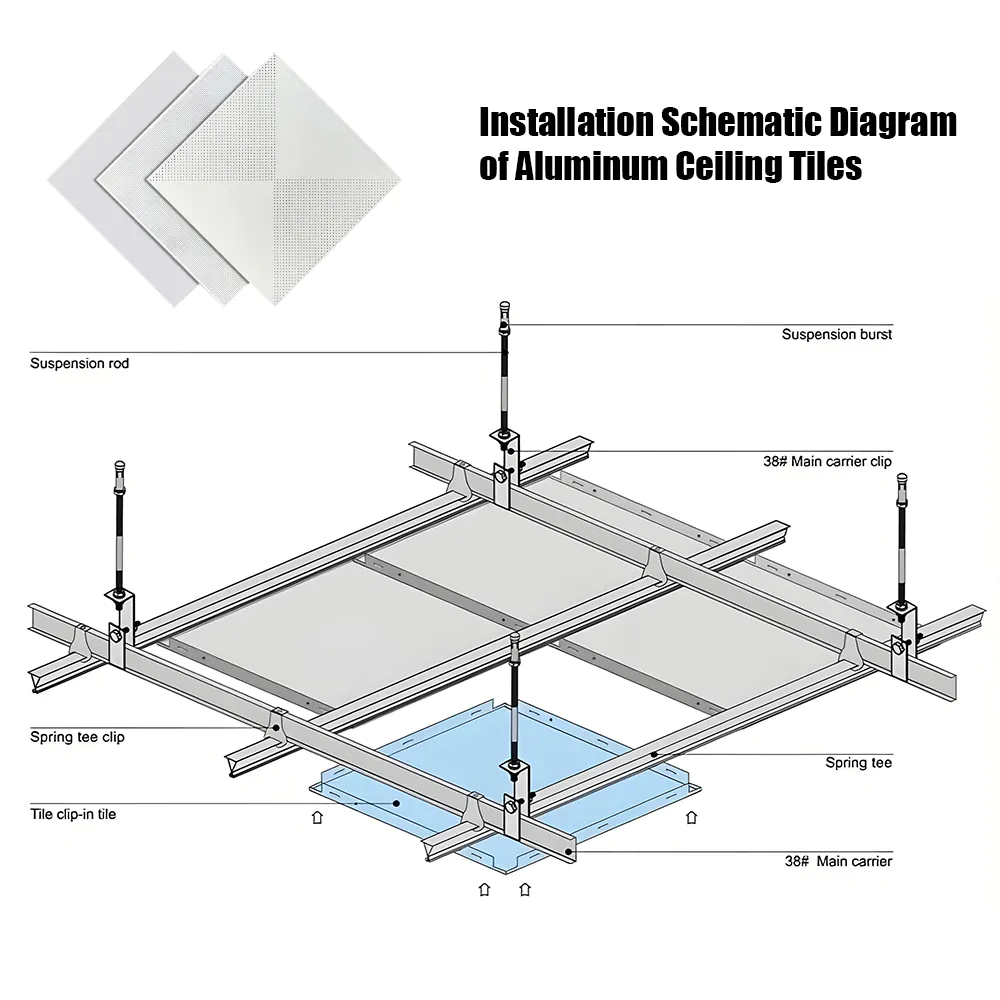
Clip-In Aluminum Ceiling Installation Instruction
- Install the hanger rods according to the ceiling layout and make sure all suspension points are kept at the same horizontal level.
- Fix the main runners securely, then install the clip-in carriers based on the ceiling panel size and layout requirements. The spacing of the carrier system should be adjusted properly to ensure stable support.
- Check and adjust the entire frame to make sure the carrier system is level and aligned before installing the panels.
- Clip the aluminum ceiling panels into the carrier system one by one in the correct order. Make sure each panel is firmly fixed and the joints are neat and even.
- For lights, air diffusers, sprinklers, or access openings, prepare the required cut-outs and reserved positions before or during installation.
- After all panels are installed, inspect the ceiling surface, panel alignment, and connection stability to ensure a flat, clean, and secure finish.



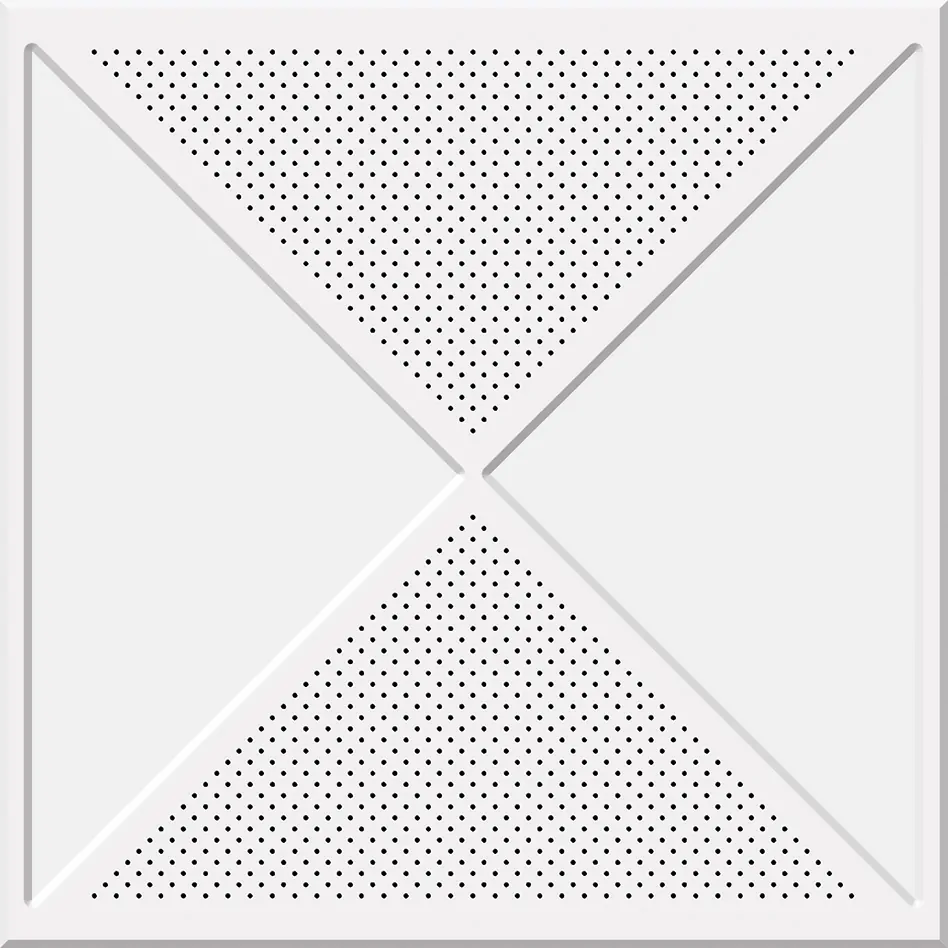


The patterns shown here are only part of what Dingchengzun offers. Our aluminum ceiling panels are available in various pattern options, including flat panels, perforated panels, micro-perforated designs, square patterns, linear patterns, embossed surfaces, decorative textures, metallic finishes, and customized panel designs.
These options can meet different project needs for ceiling decoration, acoustic performance, ventilation, lighting coordination, easy maintenance, and overall interior style. Dingchengzun aluminum ceiling panels can be customized in panel size, perforation pattern, color, surface finish, edge type, and installation system according to project drawings and design requirements.




The colors shown here represent only part of the available color options for Dingchengzun aluminum ceiling panel systems. We provide a wide range of standard and customized colors to support different interior design styles, from clean modern offices to commercial, public, and decorative spaces.
Our aluminum ceiling panel colors are designed to improve visual appearance, coordinate with lighting and wall finishes, and meet the practical needs of different ceiling projects. Whether the design requires classic white, black, gray, metallic tones, wood grain finishes, or customized project colors, Dingchengzun can provide suitable color solutions for various application scenarios.
Click the button below to explore more color options. Dingchengzun supports project-based color selection and customization for aluminum ceiling panels, helping designers, contractors, and developers match different architectural styles, ceiling layouts, and interior design requirements.
No. This specification is built for general hospital corridor traffic and impact resistance, not the pressure-sealed, gasketed system used in operating theaters or ISO-classified clean rooms. If your project includes both corridor and clean room areas, we can specify each separately to match their different requirements.
The powder coating is selected specifically for abrasion and impact resistance to minimize visible wear from this kind of incidental contact, which is common in hospital corridors given the volume of equipment and bed traffic moving through them daily.
Panels remain individually removable for routine maintenance access, which matters in hospital corridors that are rarely fully closed off, allowing facility teams to service lighting or wiring above the ceiling without disrupting corridor traffic for extended periods.
Yes. Panel layout is coordinated with corridor wayfinding signage and directional display mounting points at the specification stage, based on your hospital's signage and circulation plans.
Corridors are cleaned frequently but don't typically require the disinfection-grade or pressure-sealed specifications used in clean rooms, so the coating here is optimized for standard hospital cleaning routines and physical durability rather than chemical resistance to aggressive decontamination agents.

 English English
  Russian
 French
 Spanish
 Portuguese
 Arabic