CONTACT US NOW TO RECEIVE A QUICK QUOTE, SAMPLE SUPPORT, AND ENGINEERING SERVICE GUARANTEE.


Products
T-Grid Aluminum Ceiling Panels for Convention Center Ceilings
Convention centers get rebuilt from the inside out multiple times a month — movable partition walls go up and come down between events, exhibit booths get reconfigured, and ceiling access above a hall that was a trade show floor last week and a banquet space next week needs to happen fast, without a construction crew and without visible patchwork. This is the specific case where a visible T-grid lay-in system, not a concealed clip-in system, is usually the better fit: exposed grid lines are a functional tradeoff convention center operators accept in exchange for panels that lift out and drop back in in seconds, by venue staff, not specialized installers.
Dingchengzun's T-grid aluminum ceiling panels for convention centers are specified for exactly this operational tempo. This system covers main exhibition halls, ballrooms, breakout meeting rooms, pre-function concourses, and back-of-house service corridors within convention center facilities — spaces that share a need for a ceiling that tolerates constant overhead reconfiguration around movable partition wall tracks, rigging points, and rental AV equipment that changes with every event booking.
Because convention centers run on event turnover schedules measured in hours, not weeks, the panel system prioritizes install and removal speed over the seamless finish that a hotel lobby or retail flagship store would specify — the visible grid becomes an acceptable, even expected, part of the venue's utilitarian architectural language.

Looking for Custom Aluminum Ceilings and Facades? Let's Talk


Product Application Showcase
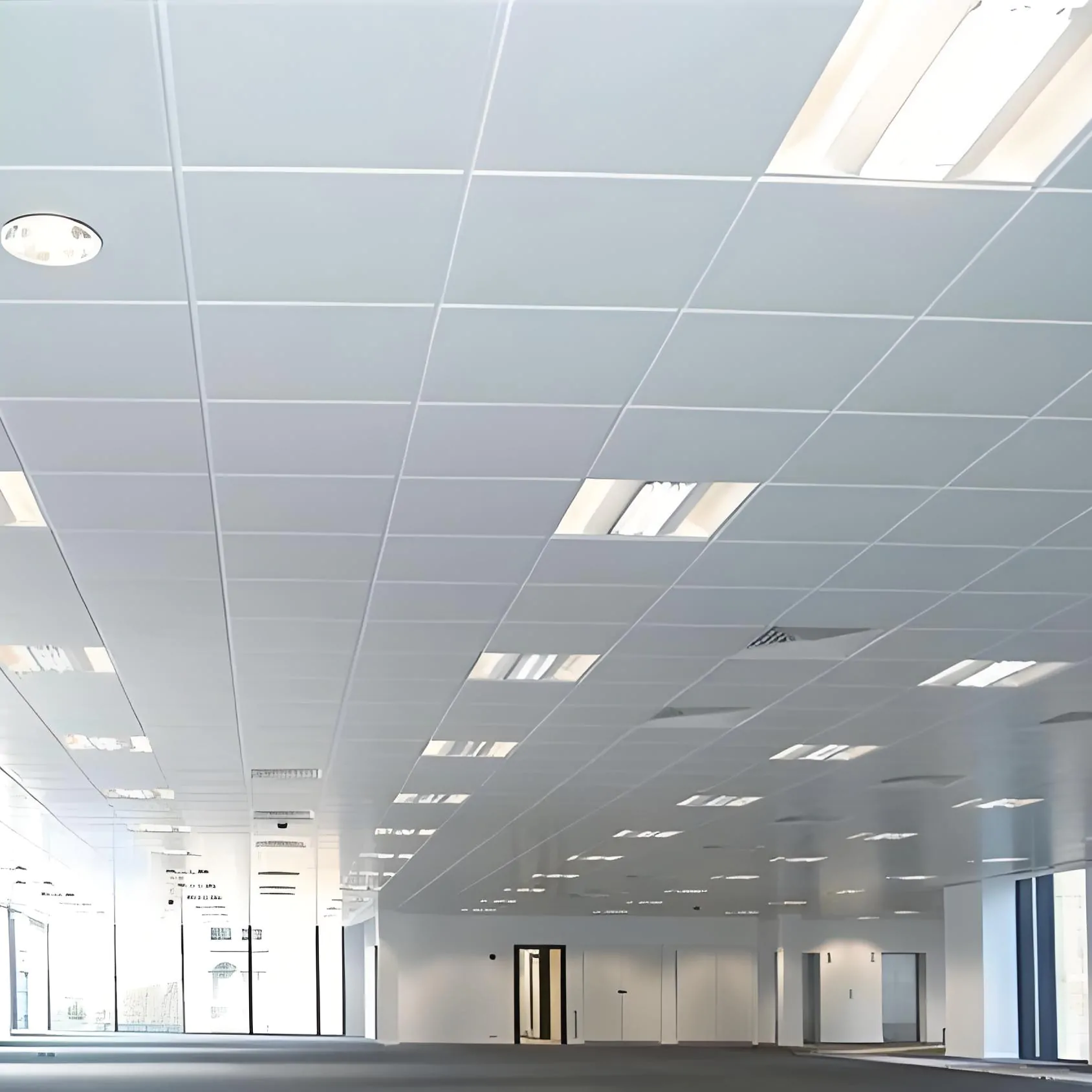
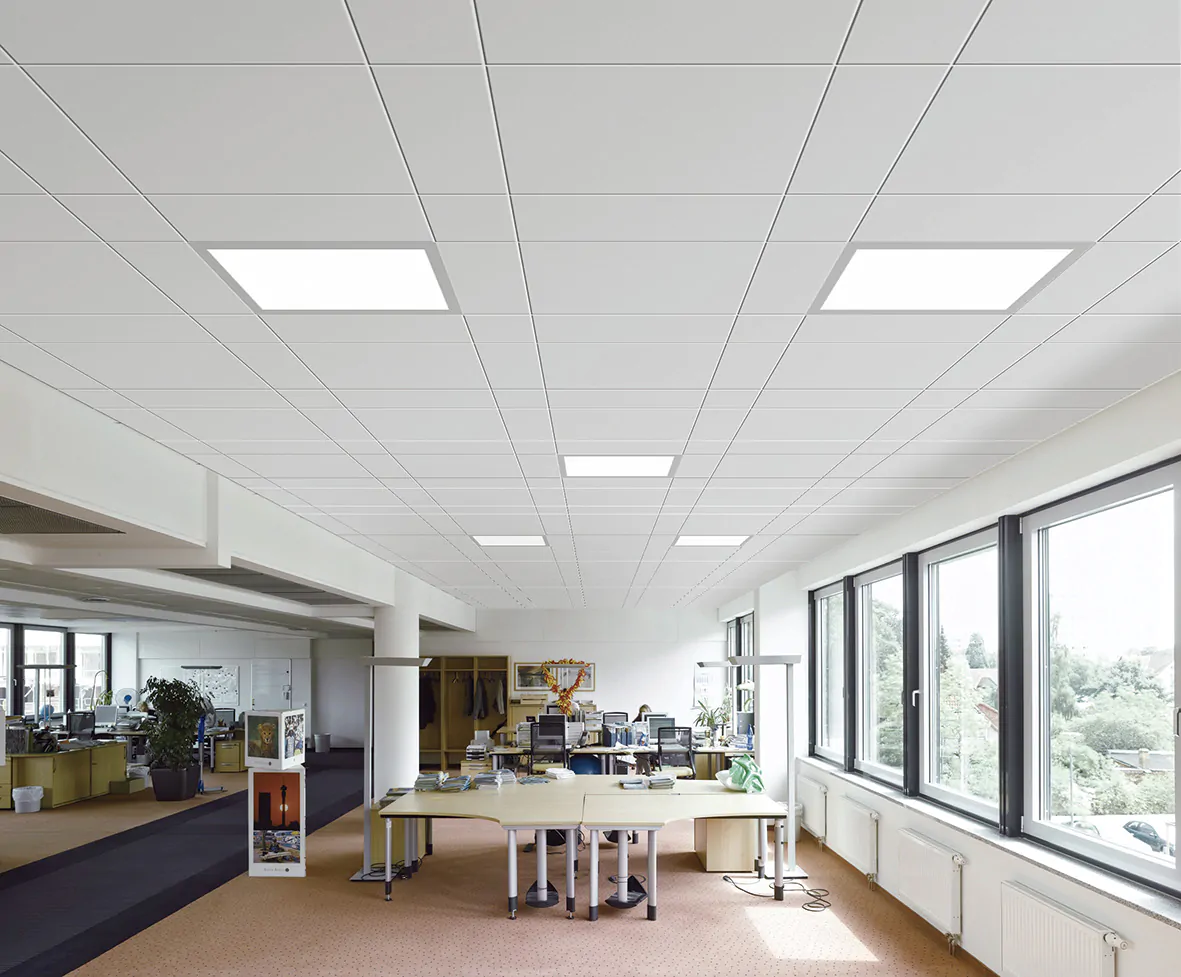
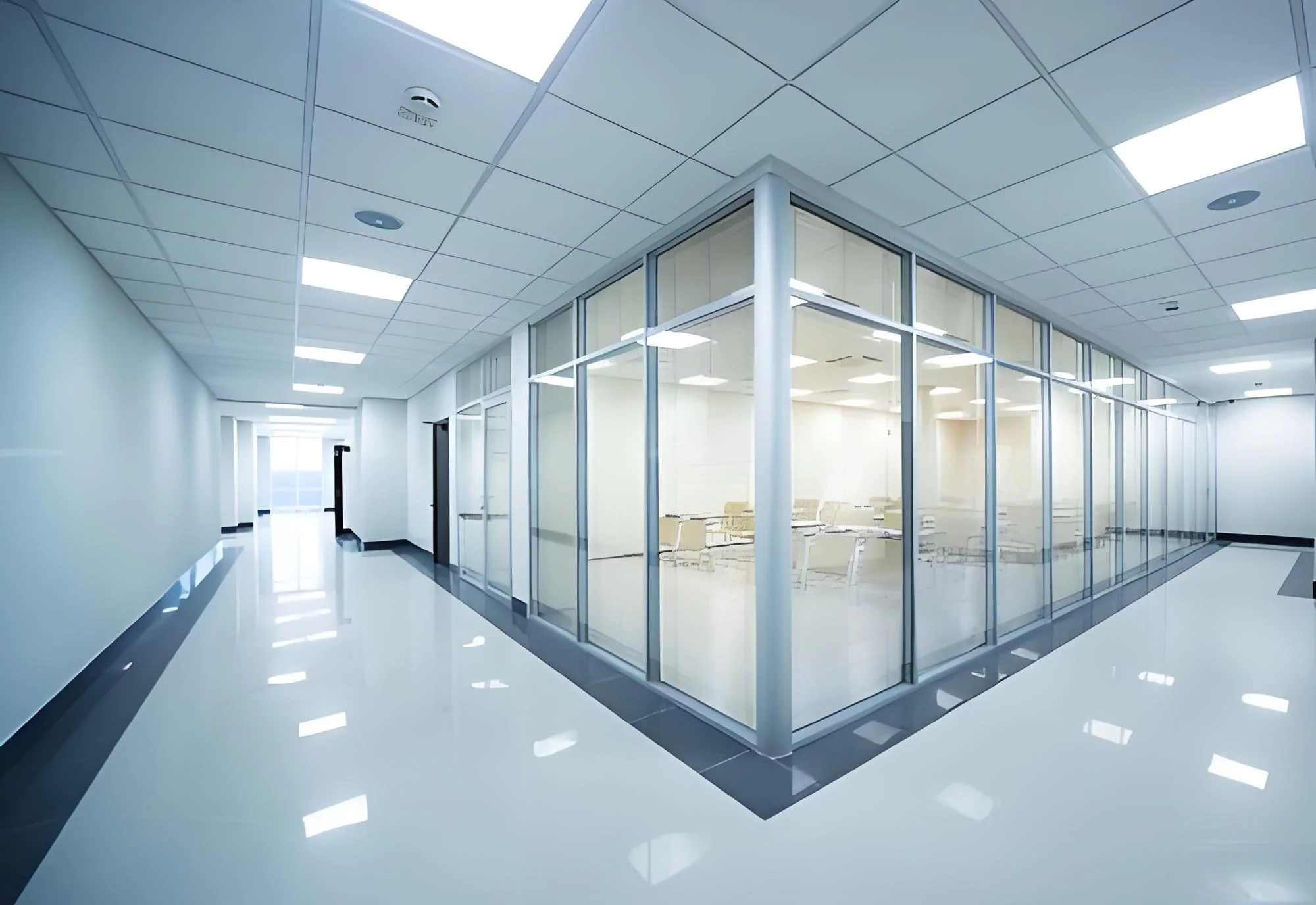
Within the T-grid panel system, convention center applications are typically specified with panels sized to standard grid modules for fast sourcing and replacement, since venues need to be able to restock damaged or missing panels quickly between bookings without waiting on custom lead times. Perforated panels with acoustic backing are common in large exhibition halls and ballrooms where echo control affects announcement and presentation audio quality, while solid panels are more typical in back-of-house corridors and service areas.
Grid layout is coordinated with movable partition wall tracks, rigging point locations, and HVAC diffuser placement at the specification stage, since convention halls are frequently subdivided into smaller configurations and the ceiling grid needs to align consistently with wherever a partition wall might be positioned.
Product Installation
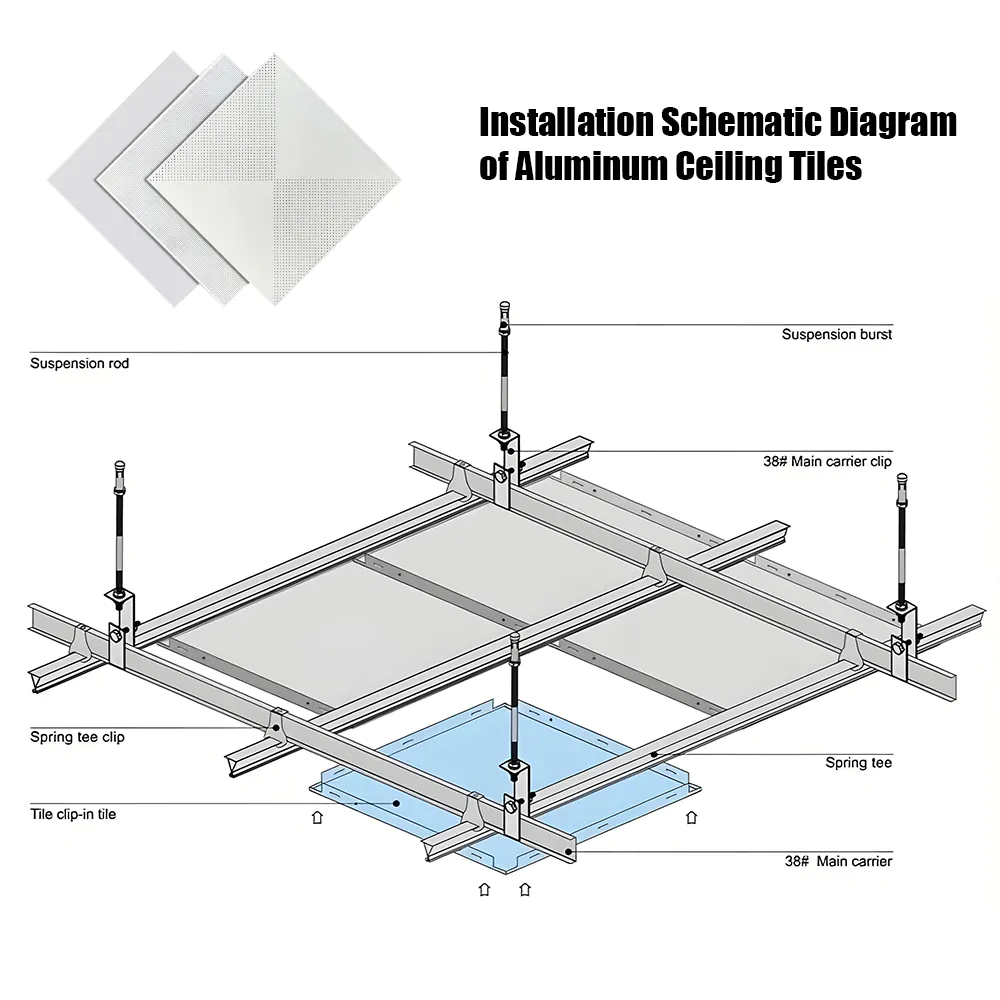
Clip-In Aluminum Ceiling Installation Instruction
- Install the hanger rods according to the ceiling layout and make sure all suspension points are kept at the same horizontal level.
- Fix the main runners securely, then install the clip-in carriers based on the ceiling panel size and layout requirements. The spacing of the carrier system should be adjusted properly to ensure stable support.
- Check and adjust the entire frame to make sure the carrier system is level and aligned before installing the panels.
- Clip the aluminum ceiling panels into the carrier system one by one in the correct order. Make sure each panel is firmly fixed and the joints are neat and even.
- For lights, air diffusers, sprinklers, or access openings, prepare the required cut-outs and reserved positions before or during installation.
- After all panels are installed, inspect the ceiling surface, panel alignment, and connection stability to ensure a flat, clean, and secure finish.


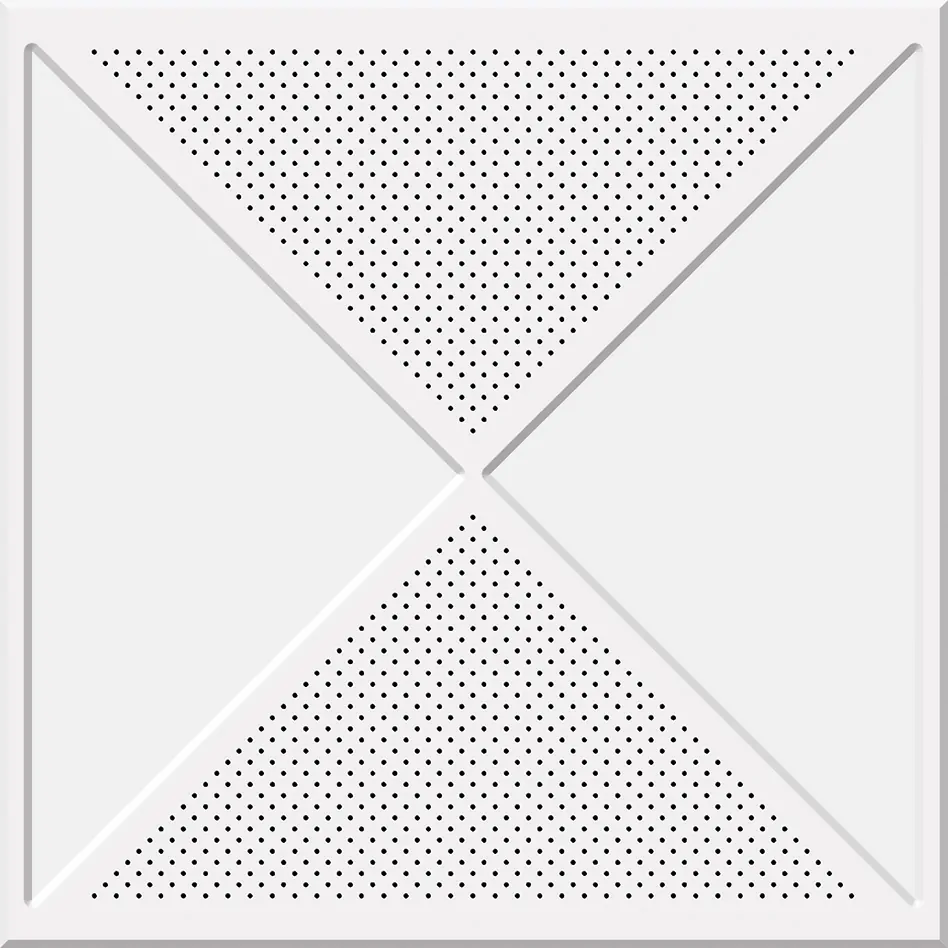
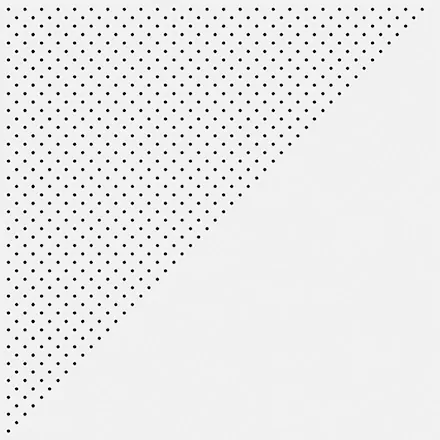


The patterns shown here are only part of what Dingchengzun offers. Our aluminum ceiling panels are available in various pattern options, including flat panels, perforated panels, micro-perforated designs, square patterns, linear patterns, embossed surfaces, decorative textures, metallic finishes, and customized panel designs.
These options can meet different project needs for ceiling decoration, acoustic performance, ventilation, lighting coordination, easy maintenance, and overall interior style. Dingchengzun aluminum ceiling panels can be customized in panel size, perforation pattern, color, surface finish, edge type, and installation system according to project drawings and design requirements.


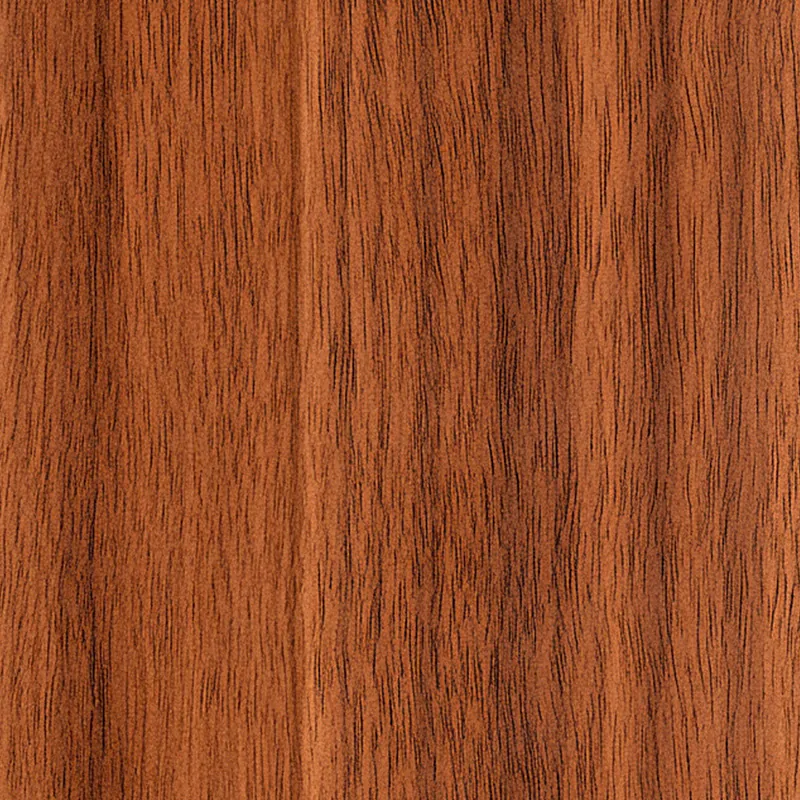

The colors shown here represent only part of the available color options for Dingchengzun aluminum ceiling panel systems. We provide a wide range of standard and customized colors to support different interior design styles, from clean modern offices to commercial, public, and decorative spaces.
Our aluminum ceiling panel colors are designed to improve visual appearance, coordinate with lighting and wall finishes, and meet the practical needs of different ceiling projects. Whether the design requires classic white, black, gray, metallic tones, wood grain finishes, or customized project colors, Dingchengzun can provide suitable color solutions for various application scenarios.
Click the button below to explore more color options. Dingchengzun supports project-based color selection and customization for aluminum ceiling panels, helping designers, contractors, and developers match different architectural styles, ceiling layouts, and interior design requirements.
Exposed T-grid panels install and remove faster than a concealed clip-in system, which matters more in convention centers than the seamless finish a clip-in system provides, given how frequently these venues reconfigure the space between events.
T-grid panels are designed for quick lift-out and drop-in access, which venue staff can typically manage for routine reconfiguration without needing a specialized installation contractor for basic panel movement.
Yes. Grid layout is coordinated with movable partition wall tracks at the specification stage so the ceiling grid lines up consistently across the different hall configurations the space might be divided into.
Panels are typically specified to standard grid module sizes for this reason, so replacement stock can be sourced quickly without waiting on a custom production lead time between events.
Yes. Perforated panels with acoustic backing are commonly specified for large halls and ballrooms where echo control affects presentation and announcement audio quality, while back-of-house areas typically use solid panels.

 English English
  Russian
 French
 Spanish
 Portuguese
 Arabic