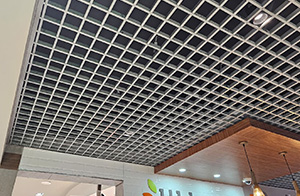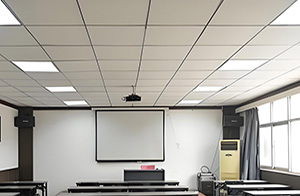






As melhores aplicações comerciais para sistemas de teto com clipes
Clip in ceiling systems are widely used in modern commercial buildings such as offices, airports, hospitals, hotels, shopping malls, and transportation hubs. Designed with panels that securely clip into a concealed suspension framework, these ceiling systems create a clean and seamless appearance that fits contemporary architectural interiors while maintaining easy access for maintenance and inspection. Compared with traditional exposed grid ceilings, clip in ceilings provide a more integrated visual effect that is especially suitable for high-end commercial environments.
One of the key reasons clip in ceiling systems are popular in commercial projects is their practical performance. Individual ceiling panels can be removed and reinstalled quickly, improving maintenance efficiency for lighting, HVAC systems, and fire protection equipment in large buildings. In high-traffic commercial areas such as airport terminals and hospital corridors, this accessibility helps reduce long-term operational and maintenance costs. In addition, perforated aluminum panels with acoustic backing materials can significantly improve sound absorption and reduce echo in open office spaces, waiting areas, and public halls.
Modern aluminum clip in ceilings also offer strong fire resistance, moisture resistance, and corrosion resistance, making them suitable for demanding indoor environments. Available in multiple panel sizes, perforation patterns, and custom finishes, clip in ceiling systems provide architects and contractors with flexible design options for a wide range of commercial applications.
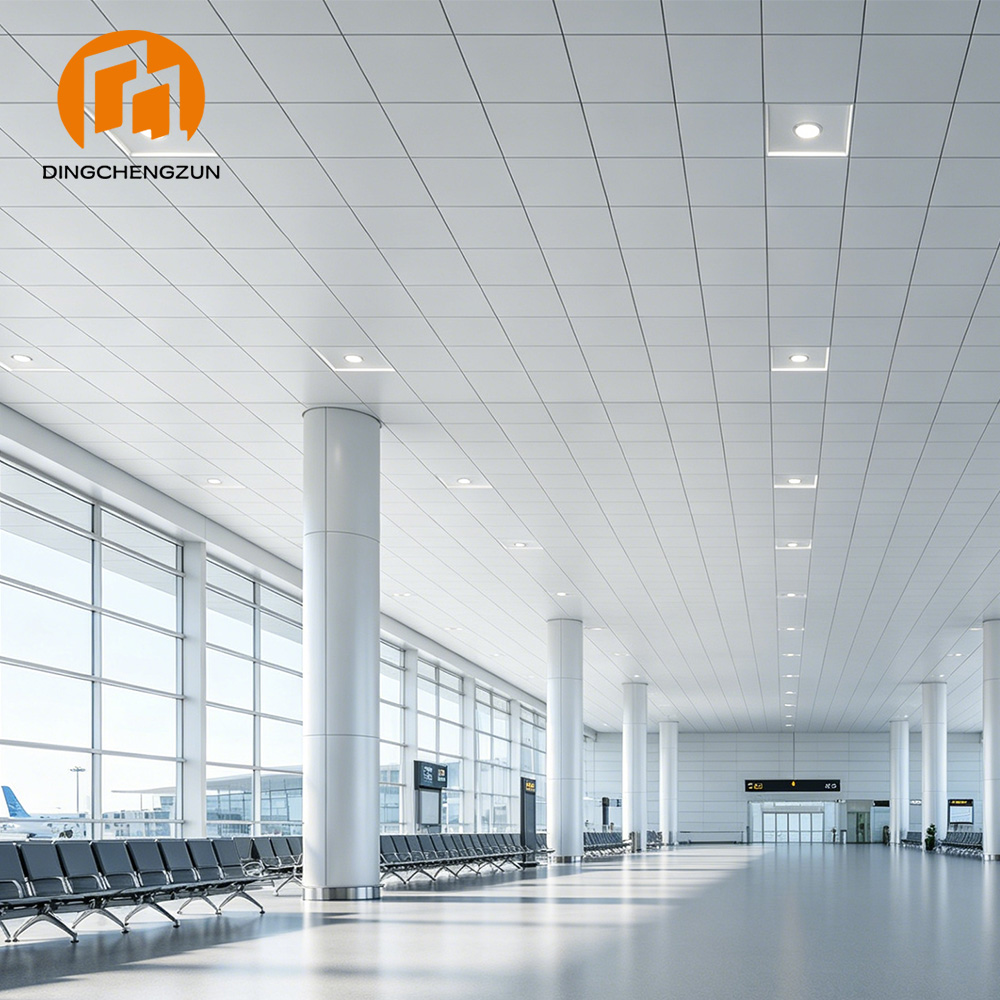
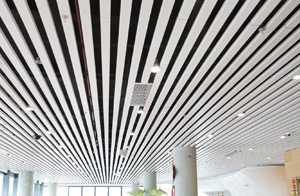
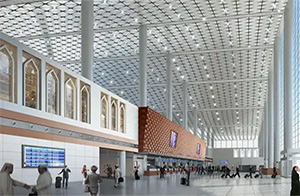
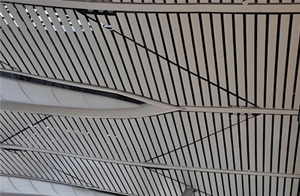
Sistema de teto suspenso em alumínio para interiores de terminais de aeroportos
Engineered for modern airport terminals, this suspended aluminum ceiling system provides a clean architectural appearance while supporting lighting integration, ventilation systems, fire protection equipment, and convenient maintenance access. It is ideal for departure halls, arrival areas, waiting lounges, security zones, and passenger circulation spaces. :contentReference[oaicite:0]{index=0}
- Material: Liga de alumínio de alta qualidade
- Ceiling System: Suspended Aluminum Ceiling System
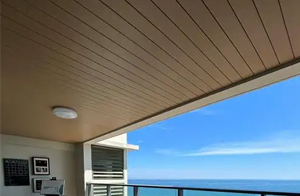
- Acabamento da superfície: Revestimento em pó / PVDF / Acabamento em imitação de madeira
- Características: Leve, resistente ao fogo, resistente à corrosão, de fácil manutenção
- Aplicações: Airport Terminals, Departure Halls, Waiting Areas, Transportation Hubs
What Is a Clip In Ceiling System?
A clip in ceiling system is a specialized concealed metal ceiling solution widely used in commercial buildings, including offices, airports, hospitals, hotels, shopping malls, and public facilities. This system consists of aluminum ceiling panels securely clipped into a hidden suspension framework, creating a seamless, modern appearance without visible grids. Compared with traditional lay-in ceilings, clip in systems deliver a more integrated visual effect, making them ideal for commercial interiors where design continuity, acoustic performance, and functional maintenance are priorities.
Basic Structure and Installation
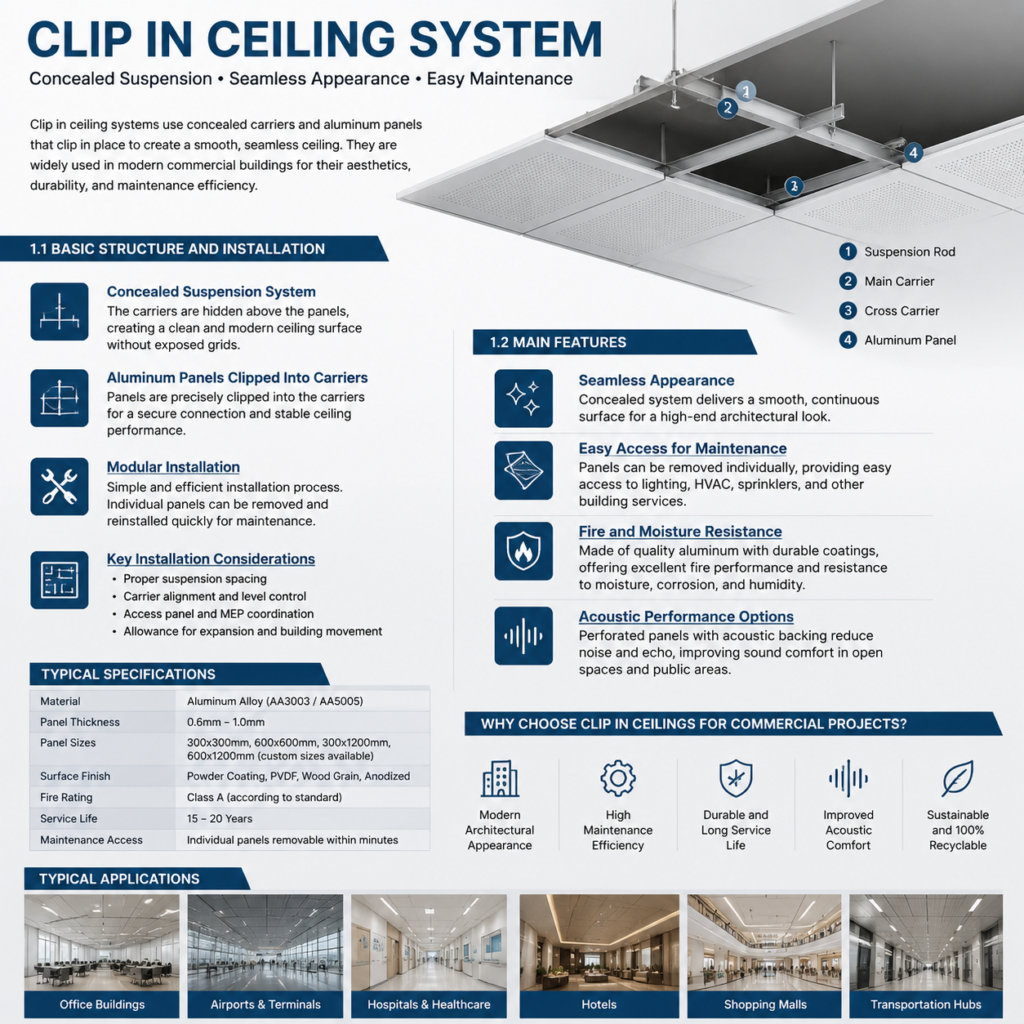
The fundamental structure of a clip in ceiling system includes suspension rods, main carriers, and aluminum ceiling panels. Suspension rods are anchored to the structural slab above, while main carriers form a concealed grid that supports the panels. Each aluminum panel is precisely clipped into the carriers, providing a stable and secure connection that maintains ceiling flatness even in wide open areas such as airport terminals and large office lobbies.
Installation begins with careful ceiling layout planning, including leveling the framework, spacing the carriers accurately, and aligning panels according to design direction. In commercial projects, proper suspension spacing is critical: too wide can lead to sagging panels, while too narrow increases material and labor costs. Once the framework is leveled, individual panels are clipped in. This modular system allows panels to be removed and reinstalled efficiently, facilitating maintenance for lighting fixtures, HVAC systems, and fire protection equipment without disrupting surrounding areas. In large-scale projects, access panels are strategically placed to optimize inspection and maintenance efficiency.
Main Features
Seamless Appearance: Since the carriers are hidden, clip in ceilings offer a smooth, uninterrupted surface, enhancing visual appeal in modern commercial interiors. The clean design is suitable for office reception areas, hotel lobbies, hospital corridors, and airport terminals.
Easy Maintenance Access: Individual panels can be removed without affecting adjacent panels. This is particularly valuable in high-traffic commercial environments where regular maintenance or upgrades to lighting, HVAC, or fire systems are required. Typical panels can be removed and reinstalled in under five minutes, significantly reducing downtime.
Fire and Moisture Resistance: High-quality aluminum alloys combined with durable powder-coated or PVDF finishes provide fire resistance and corrosion protection, making clip in ceilings suitable for humid environments such as hospital wings or tropical airport locations.
Acoustic Performance: Perforated panels with acoustic backing materials improve sound absorption, reducing echo in open office areas, conference rooms, waiting lounges, and public halls. Noise reduction coefficients (NRC) typically range from 0.6 to 0.85 depending on the panel type and backing, providing a more comfortable environment for occupants.
Versatility in Commercial Applications: Clip in ceilings are available in multiple panel sizes (300×300mm, 600×600mm, and custom options), perforation patterns, and finishes, allowing architects and contractors to tailor solutions for diverse commercial layouts while maintaining functional durability.
By combining aesthetic appeal, technical functionality, and practical maintenance features, clip in ceiling systems are a preferred choice for architects, contractors, and building managers who aim to create efficient, visually pleasing, and long-lasting commercial interiors.
Why Clip In Ceiling Systems Are Ideal for Commercial Buildings
Clip in ceiling systems are widely chosen for commercial buildings due to their combination of modern aesthetics, durability, and operational efficiency. These systems provide seamless aluminum panels clipped into a concealed suspension framework, delivering a clean, minimalist appearance that complements contemporary office spaces, hotel lobbies, hospital corridors, and airport terminals. Unlike traditional exposed grid ceilings, clip in systems maintain visual continuity while accommodating essential building services.
Modern Architectural Appearance
The concealed suspension framework allows for uninterrupted ceiling surfaces, which integrate smoothly with linear lighting, HVAC diffusers, and fire protection elements. In high-end offices and reception areas, this clean design enhances spatial perception and architectural appeal. For example, in a recent airport terminal project in [City], clip in ceilings were chosen to maintain a consistent ceiling pattern across spans exceeding 25 meters, ensuring a visually cohesive space without exposed grid interruptions.
Durability in High-Traffic Areas
Aluminum clip in ceilings offer superior corrosion and moisture resistance, making them suitable for humid environments and areas with heavy foot traffic. Panels typically range from 0.6mm to 1.0mm in thickness, with common sizes of 300×300mm and 600×600mm. With proper installation, service life can reach 15–25 years. In large hospital corridors and busy transportation hubs, the durability of these panels reduces long-term replacement costs and minimizes maintenance disruption.
Integration with Building Systems
Clip in systems are designed for seamless integration with essential building systems. Panels can accommodate air diffusers, linear lighting, and fire sprinklers without compromising ceiling alignment. Proper suspension spacing and carrier alignment are critical; in a recent commercial office project, maintaining a 1.2m spacing between carriers ensured flatness across the entire ceiling while enabling easy access to HVAC and lighting systems. This coordinated approach reduces installation complexity and ensures long-term operational efficiency.
Maintenance and Accessibility
Individual panels are easily removable for inspection, cleaning, or repair. Maintenance access is particularly valuable in large commercial buildings, allowing technicians to reach HVAC, electrical, and fire systems without disturbing surrounding panels. On average, a panel can be removed and reinstalled within five minutes, minimizing downtime for offices, airports, and hospital wings. Strategic placement of access panels ensures that routine inspections or emergency maintenance can be performed efficiently across wide ceiling spans.
Real Challenges in Commercial Clip In Ceiling Projects
Installing clip in ceiling systems in large commercial buildings can present several technical and logistical challenges that require careful planning and engineering expertise. Addressing these issues ensures not only a visually seamless ceiling but also long-term durability, acoustic performance, and efficient maintenance access.
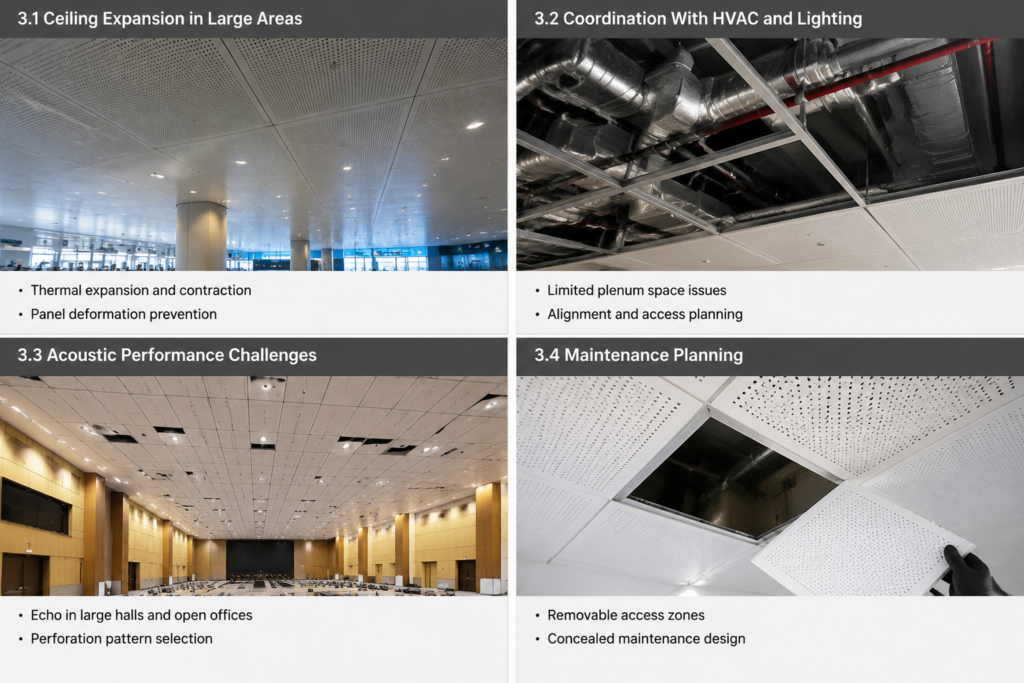
Ceiling Expansion in Large Areas
Thermal expansion and contraction are critical considerations for large-scale ceilings, such as in airport terminals, convention centers, and expansive office lobbies. Aluminum panels naturally expand and contract with temperature fluctuations, and insufficient allowances can lead to visible gaps, sagging, or panel deformation. In a recent airport terminal project in [City], engineers incorporated 1.5-meter expansion joints and calculated precise suspension spacing to maintain flatness across a 30×20 meter ceiling span, preventing alignment issues while accommodating daily temperature changes.
Coordination With HVAC and Lighting
Limited plenum space above commercial ceilings creates challenges for integrating HVAC ducts, air diffusers, lighting fixtures, and fire protection systems. Proper coordination during layout planning ensures panels can be removed for maintenance without interfering with installed systems. In a hospital corridor project, aligning carriers and access panels reduced maintenance time for HVAC inspections by 25% while preserving ceiling aesthetics. Such integration is critical in commercial projects where operational efficiency and system accessibility are essential.
Acoustic Performance Challenges
Large open halls, office areas, and waiting lounges often experience echo and reverberation if acoustic considerations are overlooked. Selecting the correct perforation patterns and acoustic backing materials is vital for noise control. In a recent co-working space project, panels with a noise reduction coefficient (NRC) of 0.75 were installed, improving speech intelligibility and reducing ambient noise without compromising the clean visual appearance of the ceiling.
Maintenance Planning
Efficient maintenance planning is essential in high-traffic commercial environments. Clip in ceiling panels should be designed with strategically placed removable access zones to allow technicians to reach HVAC, electrical, and fire systems without disturbing adjacent panels. In a large office project, the use of modular panels enabled individual section replacement in under five minutes, minimizing operational disruption while maintaining the seamless aesthetic.
As melhores aplicações comerciais para sistemas de teto com clipes
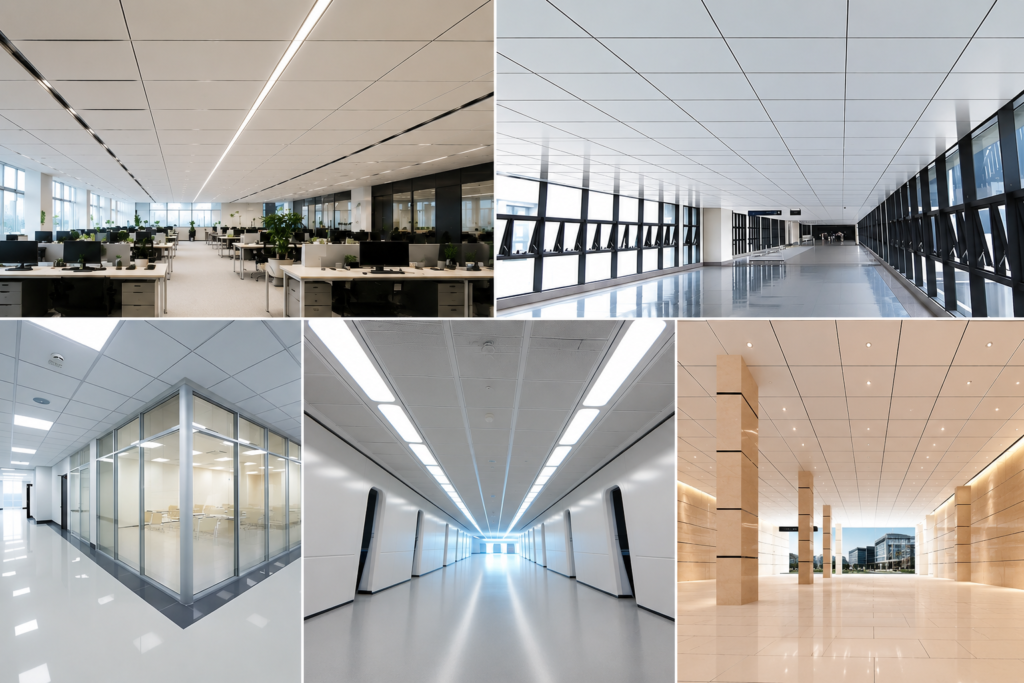
Clip in ceiling systems are widely used in commercial buildings because they combine modern architectural aesthetics with long-term durability, maintenance efficiency, and functional flexibility. Different commercial environments require different ceiling performance standards, including acoustic control, corrosion resistance, large-span stability, and seamless integration with lighting and HVAC systems.
Office Buildings
Clip in ceilings are commonly installed in open office areas, meeting rooms, executive offices, and reception spaces where acoustic comfort and clean architectural appearance are important. In open-plan workplaces, excessive sound reflection can reduce speech privacy and employee concentration. Perforated aluminum panels with acoustic backing materials help improve indoor sound absorption while maintaining a modern ceiling appearance.
The concealed suspension system also integrates efficiently with linear lighting, air diffusers, and fire sprinklers, creating a more organized ceiling layout for contemporary office interiors. In large office projects, properly aligned carriers help maintain ceiling flatness across wide ceiling spans while allowing convenient maintenance access for lighting and HVAC systems.
Airports and Transportation Hubs
Airports, metro stations, and railway terminals require ceiling systems capable of covering large open spaces while supporting continuous public traffic and complex building systems. Clip in ceilings are widely used in transportation projects because aluminum panels provide corrosion resistance, lightweight performance, and long-term structural stability.
Large airport terminal ceilings may span more than 20 meters, requiring precise carrier alignment and expansion planning to maintain consistent panel alignment. At the same time, transportation facilities often contain dense HVAC ducts, lighting systems, and security equipment above the ceiling, making removable clip in panels essential for efficient maintenance access and operational reliability.
Hospitals and Healthcare Facilities
Healthcare buildings require ceiling systems that support hygiene, moisture resistance, and maintenance efficiency. Clip in ceilings are commonly installed in hospital corridors, waiting areas, consultation rooms, and medical offices because powder-coated aluminum panels are easy to clean and resistant to corrosion in humid environments.
In healthcare projects, removable ceiling panels simplify maintenance access for air filtration systems, medical piping, lighting equipment, and HVAC systems without affecting adjacent ceiling areas. Acoustic perforated panels are also frequently used to improve patient comfort by reducing noise reverberation in waiting zones and public circulation areas.
Hotels and Hospitality Projects
Hotels and hospitality projects often emphasize luxury interior aesthetics and integrated lighting design. Clip in ceiling systems are widely used in hotel lobbies, restaurants, conference halls, corridors, and ballrooms because concealed suspension structures create a smooth and visually continuous ceiling appearance.
Architects frequently combine clip in ceilings with custom finishes such as wood grain coatings, metallic surfaces, and matte colors to match different hospitality concepts. Coordinated lighting integration also enhances the visual atmosphere of premium hospitality interiors while maintaining convenient maintenance accessibility behind the ceiling system.
Shopping Malls and Retail Stores
Retail environments require ceiling systems that combine modern aesthetics with flexible maintenance solutions and brand-oriented interior design. Clip in ceilings are commonly used in shopping malls, retail stores, and commercial showrooms because they provide a clean ceiling appearance while supporting lighting systems, signage, and air circulation equipment.
In high-traffic retail environments, removable ceiling panels improve maintenance efficiency during business operations, minimizing disruption to customers and tenants. Customized perforation patterns and surface finishes also help brands create more recognizable interior spaces while maintaining long-term ceiling durability.
Educational and Public Buildings
Educational and public buildings such as schools, universities, libraries, museums, and government halls require ceiling systems designed for long-term public use and acoustic comfort. Clip in ceilings provide durable structural performance, corrosion resistance, and convenient maintenance access, making them suitable for large public facilities with high occupancy rates.
Acoustic optimization is especially important in classrooms, lecture halls, and libraries where speech clarity directly affects user experience. Perforated aluminum ceiling panels with acoustic backing materials help reduce echo and improve indoor sound quality while maintaining a clean and organized architectural appearance.
Technical Considerations for Commercial Clip In Ceilings
Selecting the appropriate specifications for clip in ceiling systems is crucial for ensuring long-term durability, acoustic comfort, and smooth integration with commercial building systems. Factors such as panel size, aluminum alloy selection, perforation design, surface coating, and MEP coordination significantly influence ceiling performance and visual consistency across large spaces.
Panel Size and Layout
Standard clip in ceiling panels are manufactured in sizes of 300×300mm and 600×600mm, providing a balance between installation efficiency and maintenance access. Larger custom panels are often used in airports, hotel lobbies, and exhibition centers to reduce visible joints and create uninterrupted ceiling lines.
Proper layout planning is critical in large commercial spaces. Panel direction, carrier alignment, and suspension spacing must be coordinated with lighting fixtures, HVAC vents, and fire safety systems. For example, in a 25×20 meter airport terminal project, panels were carefully aligned with 1.5m carrier spacing to maintain flatness while accommodating extensive HVAC ducting and linear lighting.
Aluminum Alloy and Panel Thickness
The choice of aluminum alloy affects durability, corrosion resistance, and structural stability. AA3003 and AA5005 are commonly used due to their excellent forming properties and resistance to moisture. Panel thickness is generally selected between 0.6mm and 1.0mm depending on the span and load requirements. Thicker panels improve rigidity in high-traffic areas such as hospitals and transportation hubs, while thinner panels may be suitable for standard office environments.
Perforation and Acoustic Backing
Acoustic considerations are essential in offices, hospitals, classrooms, and conference halls. Panels are available in round, square, or micro-perforation patterns, each offering different visual and acoustic properties.
Perforated panels combined with acoustic backing materials, such as mineral wool or non-woven fabrics, significantly improve noise absorption. In one co-working office project, NRC 0.75 panels reduced echo and enhanced speech clarity without compromising the ceiling’s modern appearance.
Surface Coatings and Finishes
Surface finish enhances both aesthetic appeal and durability. Powder-coated aluminum provides stable color and corrosion resistance for standard commercial interiors. PVDF coatings are preferred for areas with higher humidity or exposure, offering superior weather and corrosion resistance. Decorative finishes, including wood grain, metallic, or matte textures, allow architects to tailor ceilings to interior design concepts. Custom RAL colors are widely supported for cohesive design integration.
Lighting and MEP Coordination
Efficient integration with lighting, HVAC, and fire protection systems is essential. Linear lighting layouts, air diffusers, and sprinklers are coordinated with ceiling panels to avoid conflicts and ensure easy access for maintenance. In a large hospital wing, strategically placed removable panels allowed technicians to inspect HVAC and lighting systems in under five minutes without removing adjacent panels, maintaining the seamless aesthetic while supporting operational efficiency.
Modern Design Trends in Commercial Ceilings
Commercial ceiling design is increasingly influenced by trends that combine architectural aesthetics, operational efficiency, acoustic comfort, and sustainable building practices. Modern clip in ceiling systems are no longer selected only for appearance, but also for their ability to support lighting integration, maintenance accessibility, and long-term building performance in commercial environments.
Minimalist Ceilings for Offices
Minimalist ceiling layouts remain highly popular in modern office interiors because they create cleaner visual spaces and improve lighting consistency in open-plan work environments. Concealed clip in ceiling systems help reduce visual clutter while supporting integrated HVAC and lighting layouts. In large office projects, simplified ceiling designs also improve maintenance planning and provide easier access to ceiling-mounted systems without disrupting the overall architectural appearance.
Black Matte Ceilings in Lobbies
Black matte ceiling finishes are increasingly used in hotel lobbies, luxury retail stores, and commercial reception areas because they create stronger visual contrast and reduce glare from integrated lighting systems. Matte black aluminum panels can also conceal ceiling service elements more effectively, helping designers achieve a premium architectural atmosphere while maintaining ceiling accessibility for maintenance and inspection.
Integrated Lighting in Airports and Hotels
Integrated linear lighting systems have become a major trend in airports, hotels, and commercial public spaces where uniform illumination and clean ceiling lines are essential. Modern clip in ceiling systems allow lighting fixtures, air diffusers, and fire sprinklers to be coordinated within a continuous ceiling layout, reducing visible interruptions. Many airport terminals now combine concealed aluminum ceilings with energy-efficient LED lighting systems to improve visual comfort while maintaining efficient maintenance access above the ceiling.
Decorative Acoustic Panels in Open Spaces
Acoustic comfort has become a key design priority in open commercial environments such as offices, libraries, conference halls, and public waiting areas. Decorative perforated ceiling panels combined with acoustic backing materials help reduce echo and improve speech clarity without sacrificing interior aesthetics. Designers increasingly use customized perforation patterns, textures, and finishes to combine sound absorption performance with architectural identity in large public interiors.
Sustainable Aluminum Materials
Sustainability is becoming an important factor in commercial ceiling selection, particularly in projects targeting LEED and other green building certifications. Aluminum clip in ceiling systems are widely favored because aluminum is lightweight, recyclable, and suitable for long-term commercial use. Many modern projects now prioritize low-maintenance ceiling materials and durable powder-coated finishes that reduce replacement frequency while supporting environmentally responsible building design.
By combining modern aesthetics, acoustic optimization, integrated building systems, and sustainable materials, clip in ceiling systems continue to evolve as a preferred ceiling solution for contemporary commercial architecture.
Why Aluminum Clip In Ceilings Are Preferred
Aluminum clip in ceiling systems are widely preferred in commercial construction because they combine lightweight performance, long-term durability, fire safety, and efficient maintenance within a modern architectural ceiling solution. Compared with traditional ceiling materials, aluminum panels provide greater structural stability and lower maintenance requirements, making them suitable for offices, airports, hospitals, hotels, shopping malls, and other large-scale commercial environments.
One of the most important advantages of aluminum clip in ceilings is their lightweight structure. Aluminum panels significantly reduce overall ceiling load while maintaining strong rigidity across large ceiling spans. In a recent airport terminal project with ceiling spans exceeding 25 meters, lightweight aluminum panels helped reduce suspension load pressure while maintaining ceiling flatness and alignment throughout the installation. Their lightweight properties also improve transportation efficiency and simplify on-site installation in large commercial projects.
Durability is another key reason aluminum clip in ceilings are widely used in high-traffic environments. Commercial-grade aluminum alloys such as AA3003 and AA5005 provide strong corrosion resistance and long-term structural stability, particularly in humid spaces such as hospital corridors, transportation hubs, and public buildings. Ceiling panels typically range from 0.6mm to 1.0mm in thickness, with thicker panels improving rigidity in demanding commercial applications. Powder-coated and PVDF surface finishes further enhance resistance to moisture, oxidation, and daily wear, helping maintain ceiling appearance over many years of operation.
Fire safety is also a critical consideration in modern commercial architecture. Aluminum clip in ceiling systems are non-combustible and compatible with commercial fire protection requirements, making them suitable for airports, office towers, healthcare facilities, and government buildings where strict safety standards must be maintained.
Another major advantage is maintenance efficiency. Individual ceiling panels can typically be removed and reinstalled within minutes, allowing technicians to access HVAC systems, electrical wiring, lighting fixtures, and fire protection equipment without disturbing surrounding ceiling areas. In a large hospital project, modular clip in panels reduced maintenance downtime by approximately 20% compared with traditional ceiling systems, improving operational efficiency while preserving the seamless ceiling appearance.
Sustainability has also become an important factor in commercial ceiling selection. Aluminum is fully recyclable and widely used in green building projects pursuing LEED and other environmental certifications. Many architects and developers now prefer aluminum clip in ceiling systems because they combine modern aesthetics, environmental responsibility, and long-term operational performance within a single commercial ceiling solution.
Engineering and Project Support by DCZ Building
DCZ Building provides comprehensive engineering and project support for commercial ceiling and facade projects, combining technical expertise, advanced manufacturing capabilities, and extensive international experience. By emphasizing professional engineering solutions over promotional language, this section highlights DCZ’s technical competence and real-world project capabilities.
One-Stop Engineering Support
DCZ offers complete engineering support services, including CAD and BIM modeling, shop drawings, and detailed project documentation. This integrated approach allows architects, contractors, and project managers to accurately plan ceiling layouts, coordinate with building systems, and ensure alignment with design specifications. By providing detailed technical support, DCZ helps reduce on-site errors, shorten installation timelines, and improve overall project efficiency.
Advanced Manufacturing Capabilities
The company’s production facilities are equipped with CNC machinery, precision fabrication tools, and custom panel production lines. These capabilities enable DCZ to deliver aluminum clip in ceilings, baffle ceilings, and customized metal panels with tight dimensional tolerances and high-quality surface finishes. Large-scale projects, such as airports or hotel lobbies, benefit from DCZ’s ability to produce panels in exact specifications while maintaining consistent quality across multiple batches.
International Project Experience
DCZ has extensive experience executing commercial projects worldwide, including airport terminals, office complexes, healthcare facilities, and hospitality developments. This international exposure allows the company to navigate diverse regulatory requirements, climate conditions, and installation standards, ensuring that each project is completed efficiently and to the highest technical standard. The combination of engineering support, manufacturing precision, and global project expertise positions DCZ Building as a reliable partner for complex commercial ceiling and facade installations.
FAQ
1. Are clip in ceilings suitable for high-humidity commercial environments?
Yes. Aluminum clip in ceilings with powder-coated or PVDF finishes provide excellent moisture and corrosion resistance, making them ideal for hospitals, airports, and other high-humidity commercial spaces.
2. Can acoustic panels be integrated into clip in ceiling systems?
Absolutely. Perforated aluminum panels can be combined with acoustic backing materials to reduce echo and improve speech clarity in offices, lecture halls, conference rooms, and public areas.
3. How long do aluminum clip in ceiling panels typically last in commercial projects?
With proper installation and maintenance, aluminum clip in ceiling panels generally have a service life of 15–25 years, depending on environmental conditions and panel thickness.
4. Can clip in ceilings accommodate integrated lighting and HVAC systems?
Yes. Clip in ceiling panels are designed to work seamlessly with linear lighting, recessed fixtures, air diffusers, and fire protection systems. Panels are modular and removable for easy maintenance access without affecting surrounding areas.
5. Are custom panel sizes, perforation patterns, and finishes available?
Yes. Clip in ceilings can be manufactured in standard sizes (300×300mm, 600×600mm) or customized dimensions. Surface finishes include powder coating, PVDF, wood grain, matte, or custom RAL colors, and perforation patterns can be tailored for acoustic and aesthetic requirements.