







Produtos
Teto de tira de alumínio para terminal de aeroporto
Walk far enough down an airport concourse and a gate announcement that was perfectly clear near the speaker becomes an indistinct wash of sound by the time it reaches the far end of the hall. This isn't a speaker placement problem you can solve by adding more volume — hard, reflective surfaces across a large, glazed, high-ceilinged terminal volume cause sound energy to bounce and stack on itself faster than it decays naturally, and the reverberant buildup degrades intelligibility over distance regardless of how loud the original announcement is. A strip ceiling with acoustic backing behind the groove addresses this directly, absorbing a meaningful portion of that reflected energy across the ceiling plane rather than letting it bounce indefinitely between the hard floor, glazed curtain wall, and an untreated ceiling above.
Dingchengzun's aluminum strip ceiling for airport terminal interiors is specified with this acoustic function as a primary driver in long concourses, departure halls, and gate seating areas — anywhere passengers need to reliably hear boarding calls, security instructions, or emergency announcements across a large, often crowded space with significant ambient noise from foot traffic, rolling luggage, and HVAC systems running at commercial-building scale. The strip's directional geometry, which naturally suits the linear layout of a concourse, ends up serving both a wayfinding function and an acoustic one simultaneously — the same design decision solves two separate problems.

Procura tectos e fachadas de alumínio personalizados? Vamos conversar


Apresentação da aplicação do produto


Groove width and acoustic backing density are specified against the space’s actual reverberation time and PA speaker layout, not applied as a fixed generic treatment — a gate seating area with speakers spaced closely for even coverage needs a different acoustic treatment than a long transit corridor with speakers spaced further apart, where sound has more distance to decay before reaching a listener. Coordinating strip ceiling acoustic treatment with your PA system’s actual speaker layout and coverage plan generally produces better real-world intelligibility than specifying ceiling acoustics and audio system layout independently of each other.
Beyond acoustic performance, strip material and coating follow the same durability requirements common to other airport terminal ceiling zones — corrosion resistance, structural stability under long-span conditions, and integration points for the flight information displays, wayfinding signage, and lighting that run throughout terminal ceiling plans.
Instalação do produto
Instruções de instalação de tectos de tiras de alumínio
- Install the hanger rods according to the ceiling layout, keeping all suspension points at the same horizontal level to prevent the strip line from sagging or twisting along its run.
- Fix the main runners securely, then position the carrier rails (or cross-tees) to match the strip spacing and module width specified in the layout drawing.
- Check and adjust the entire frame so the carrier system is level, straight, and square before any strips are hung, since misalignment at this stage will show clearly along a continuous linear run.
- Insert the aluminum strips into the carrier rail one section at a time, working in the correct sequence so each strip locks flush against the next and the gap width stays consistent along the full run.
- Prepare cut-outs and reserved positions for light fixtures, air diffusers, sprinklers, or access panels before or during installation, and use matching trim or closure strips at these openings to keep the line unbroken.
- After all strips are installed, sight down the full run to check for consistent gap spacing, straight alignment, and secure connections, confirming a flat, continuous, and properly finished ceiling line.
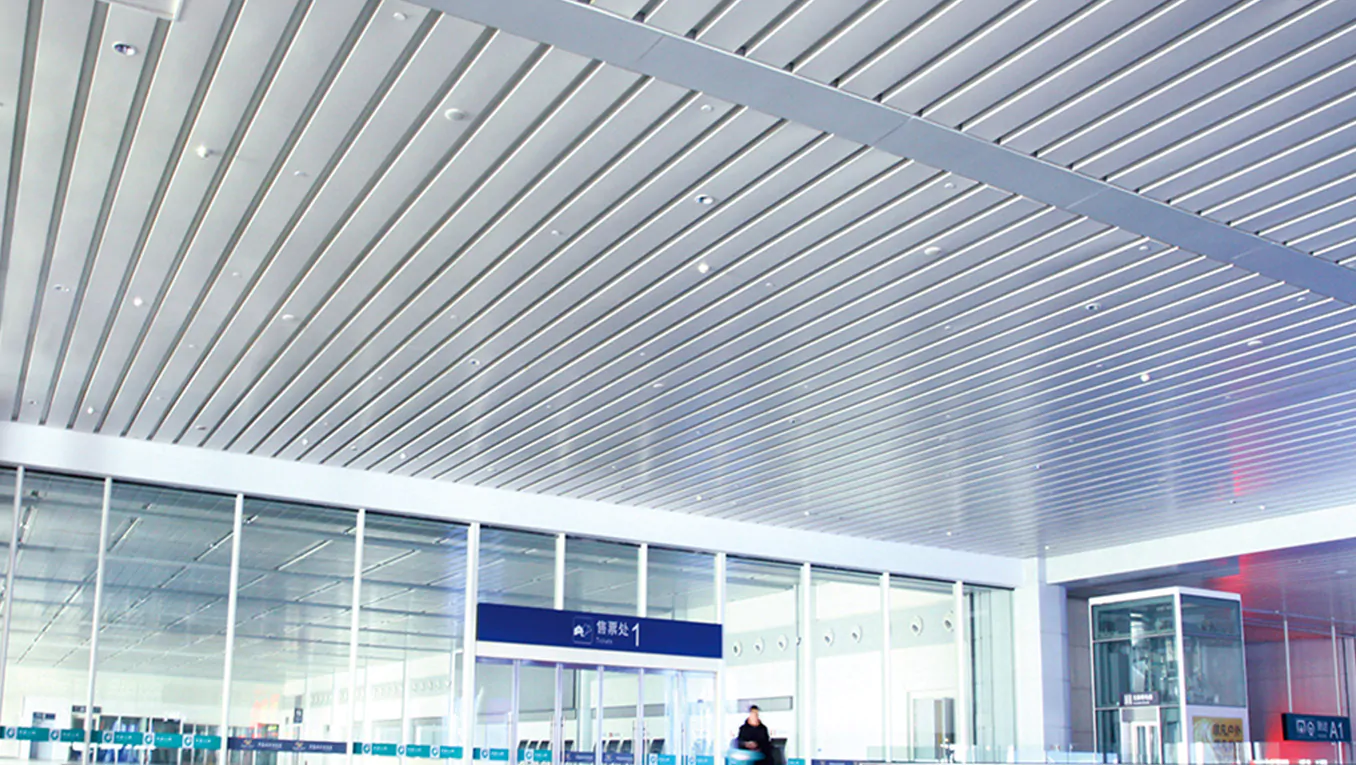
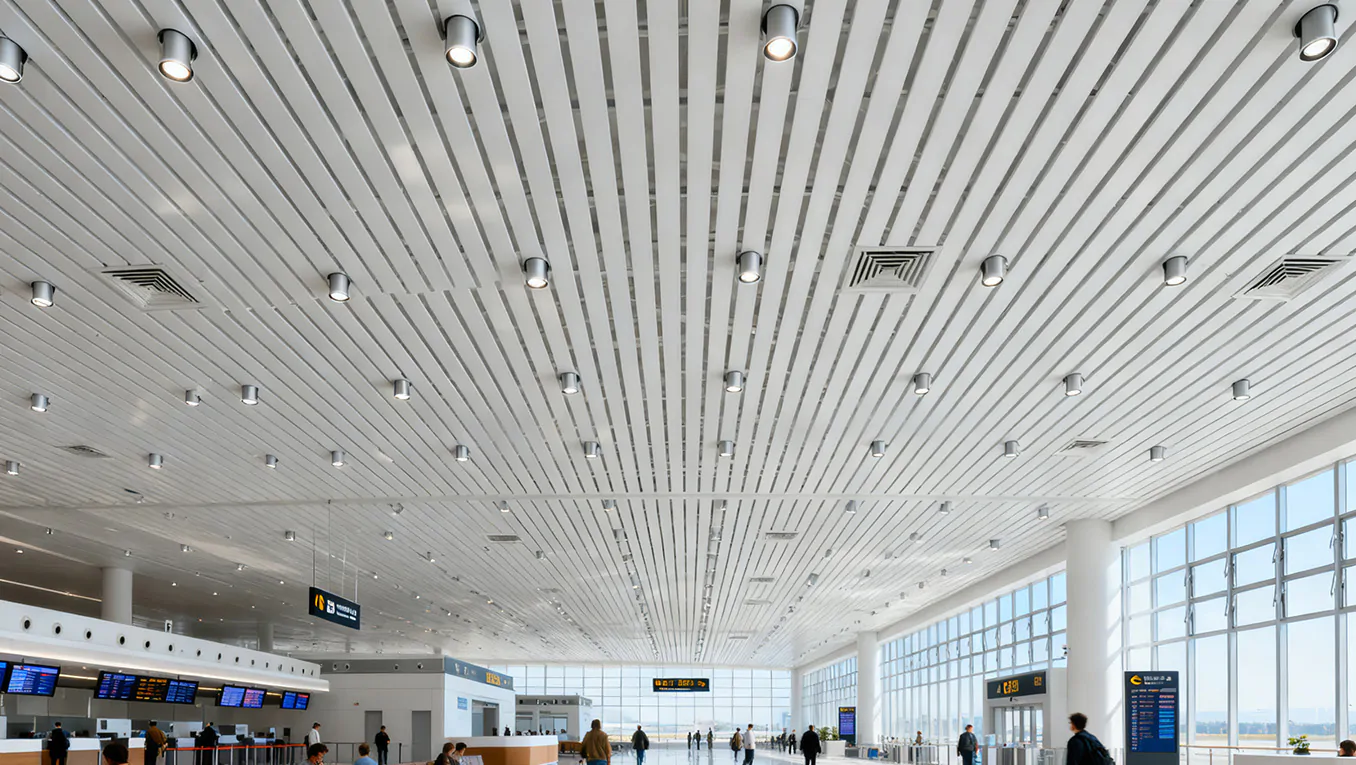
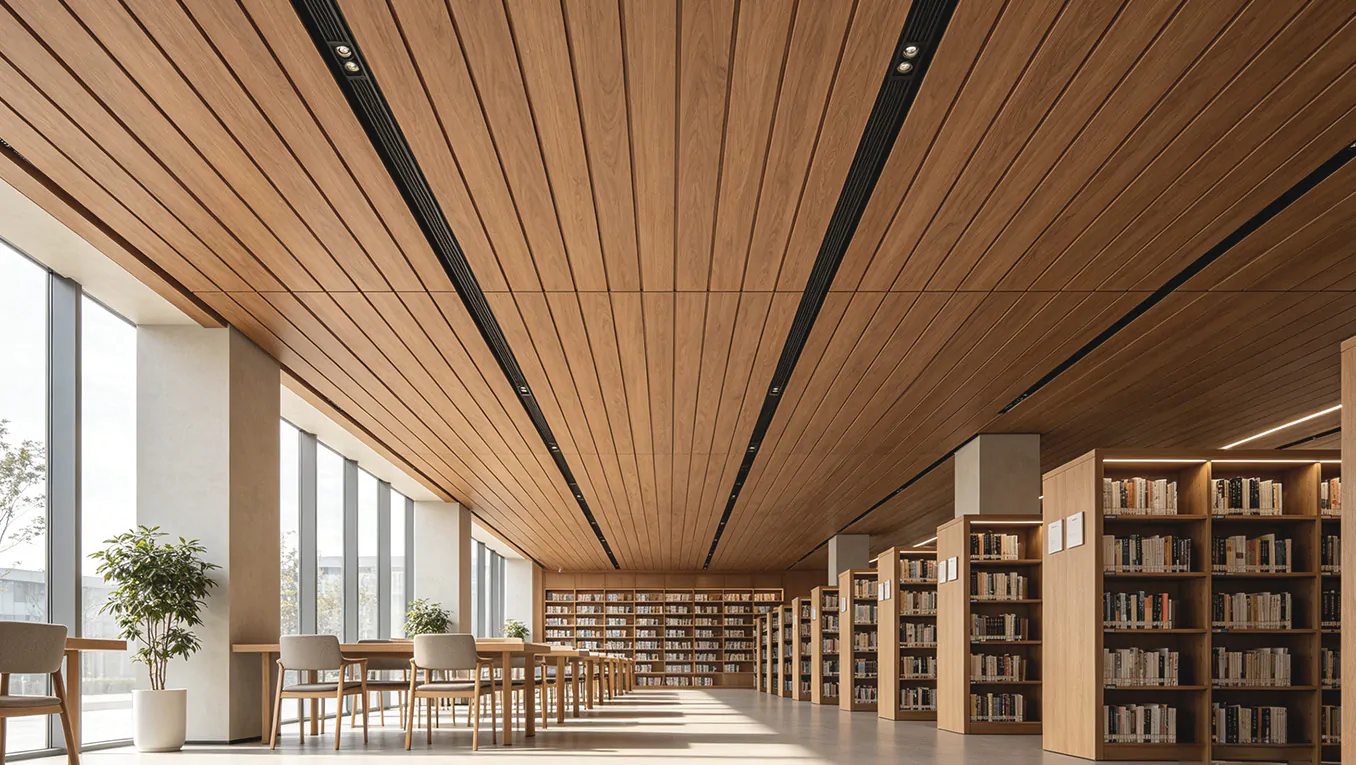
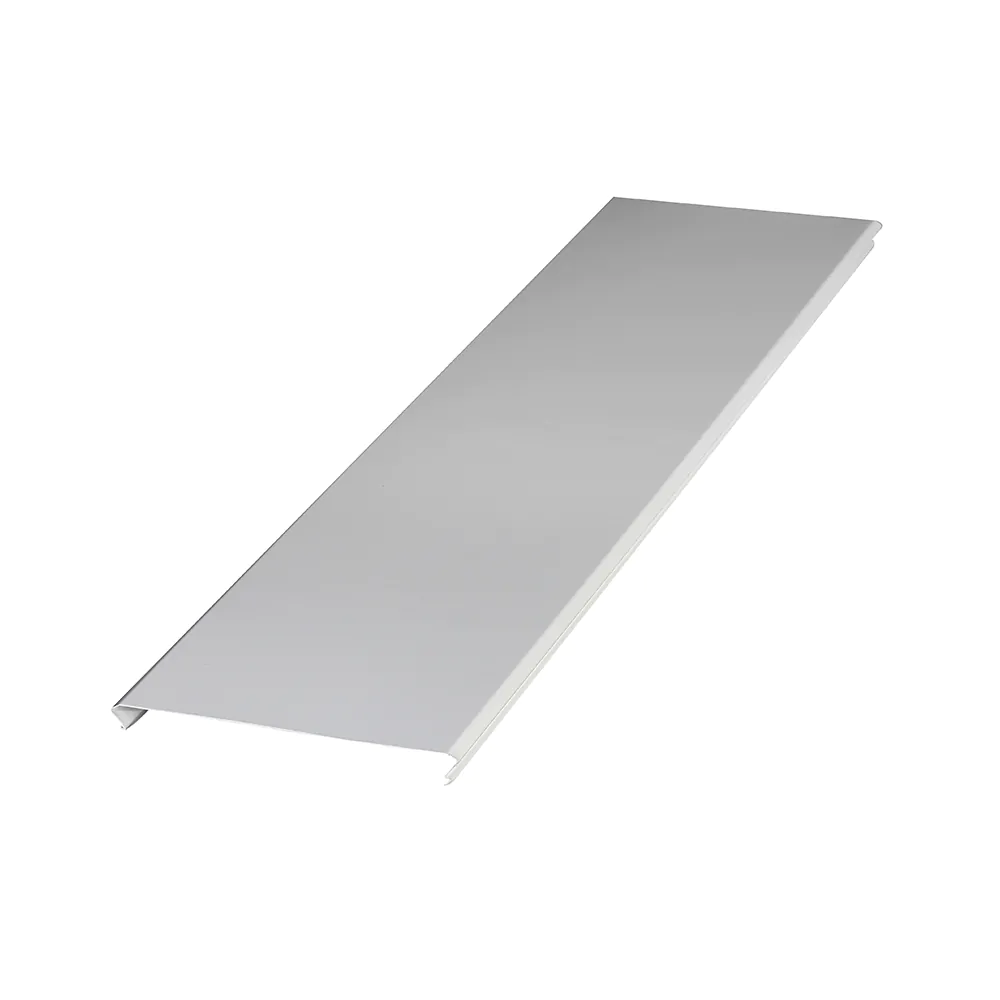
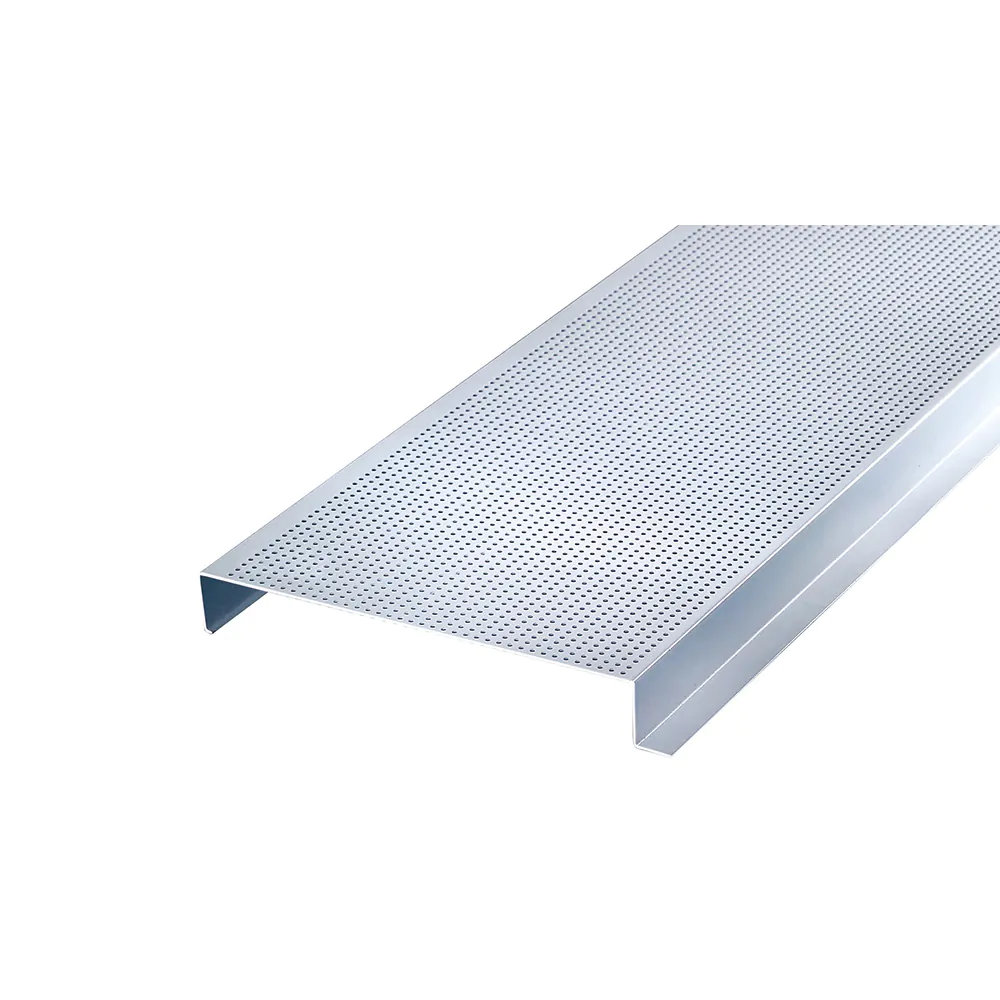
The patterns shown here are only part of what’s available in aluminum strip ceiling systems. Strips can be specified as flat, perforated, micro-perforated, or grooved profiles, in open or closed-gap configurations, with or without acoustic backing fleece behind the perforation.
These options are matched to project needs for acoustic control, airflow, lighting coordination, ease of plenum access, and the overall visual rhythm of the ceiling. Strip profile, width, perforation pattern, gap size, and edge return can be customized according to project drawings and design requirements.





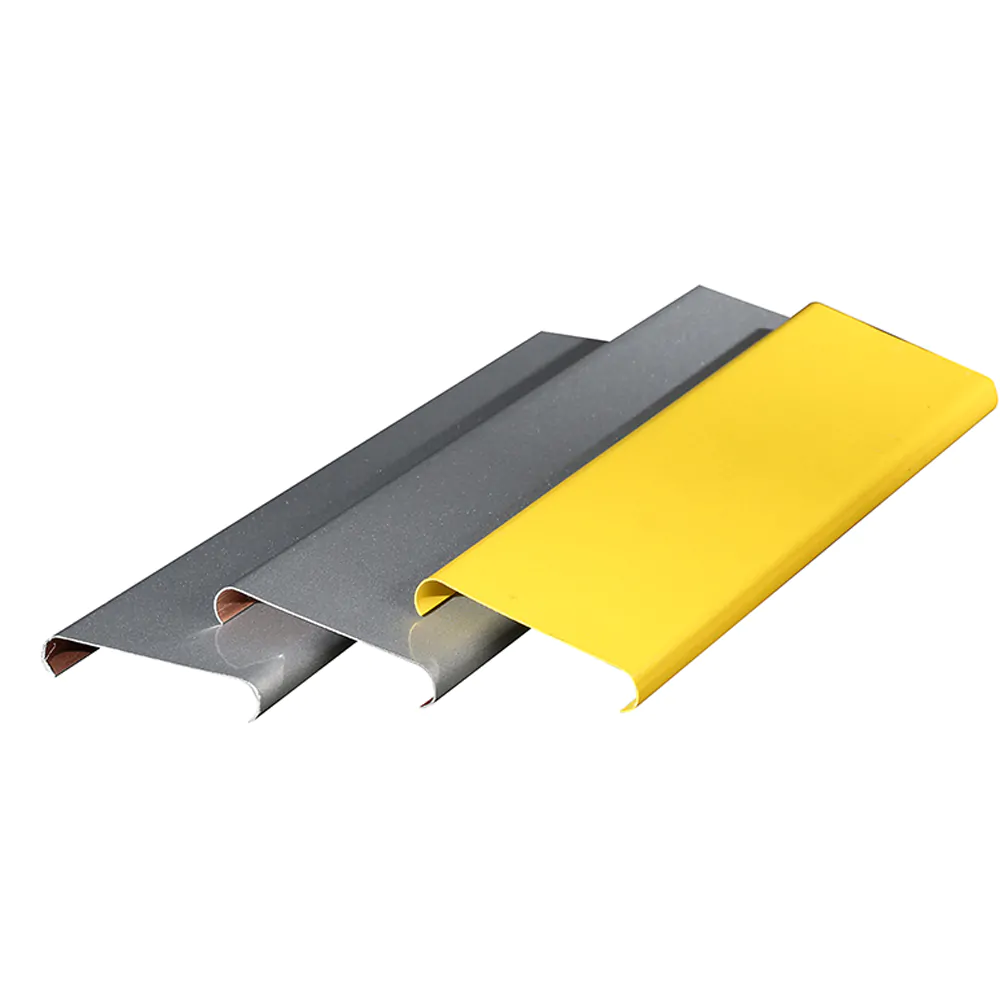
The colors shown here represent only part of the available finish options for aluminum strip ceiling systems. A wide range of standard and custom colors is available to support different interior styles, from clean transit and office environments to decorative commercial and hospitality spaces.
Finishes are selected to complement lighting design, coordinate with wall and floor materials, and meet the practical demands of high-traffic public spaces. Whether the project calls for classic white, black, silver, wood grain, or a custom brand color, finish options can be matched to the design intent of the space.
Project-based color selection and custom matching are supported for aluminum strip ceiling systems, helping designers, contractors, and developers align the ceiling finish with the broader architectural palette.
The acoustic backing behind the strip groove absorbs reflected sound energy that would otherwise bounce between hard floors, glazed walls, and an untreated ceiling, reducing the reverberant buildup that makes announcements sound washed out over distance — this matters more in large, hard-surfaced terminal volumes than in smaller or more acoustically absorbent spaces.
Ideally yes. Groove spacing and acoustic backing density are more effective when coordinated with your actual speaker layout and coverage plan, rather than applying a generic acoustic treatment independently of how your PA system is distributed through the space.
No. Areas with closely spaced speakers for even coverage, like gate seating zones, often need different treatment than long transit corridors with more widely spaced speakers, where sound has further to travel and decay before reaching a listener.
Yes. The strip's linear geometry still reinforces the directional flow of a concourse the same way it would without acoustic backing — the acoustic function is added to the existing directional and durability specification, not a tradeoff against it.
Yes. Integration points for flight information displays, wayfinding signage, and terminal lighting are planned into the strip layout at the drawing stage, consistent with other airport terminal ceiling specifications.
