







Produtos
Teto linear de alumínio resistente à humidade para centros de natação
The natatorium industry has a known failure mode that doesn't get discussed nearly as often as it should outside specialist circles: chloramine gas — the byproduct of chlorine reacting with organic matter in pool water — off-gasses into the air above the pool and settles onto everything overhead, including the ceiling and its suspension hardware. Left unaddressed, this creates a slow corrosion process that attacks metal fasteners and structural components from an environment most building materials were never designed to withstand continuously. This isn't a hypothetical concern — it's the specific reason pool ceiling and suspension system material selection gets scrutinized more carefully in aquatic facility design than in almost any other building type, and why "moisture-resistant" alone isn't actually a sufficient specification for a natatorium ceiling.
Dingchengzun's moisture-resistant aluminum linear ceiling system for swimming centers is specified with this chloramine exposure risk addressed directly, not just general humidity resistance. Aluminum itself performs reasonably well in this environment compared to some other metals, but the coating, fastener material, and suspension hardware all need to be selected as a coordinated system — a corrosion-resistant strip panel suspended from an inadequately rated fastener doesn't actually solve the underlying risk, since the failure point simply moves to whichever component wasn't specified to the same standard.
This system is used across competition pool halls, leisure and recreational pool areas, pool deck perimeter zones, and spectator seating overhangs — areas that share continuous exposure to elevated humidity and chloramine off-gassing, though exposure intensity varies with proximity to the water surface and the facility's ventilation design.

Procura tectos e fachadas de alumínio personalizados? Vamos conversar


Apresentação da aplicação do produto


The full suspension system — not just the visible strip panel — needs corrosion-rated specification for a natatorium: stainless steel or specifically rated fastener hardware, carrier rail materials selected for the same chloramine exposure the panels themselves face, and coating chemistry on the aluminum strip that resists both moisture absorption and chemical exposure over the facility’s operating life. Ask your supplier whether the coating and hardware recommendation is based on general moisture resistance or specifically on natatorium/chloramine exposure standards — these are not interchangeable specifications, and treating them as equivalent is a common and avoidable gap in pool facility ceiling projects.
Ventilation design also affects how the ceiling should be specified, since a natatorium with a well-engineered dehumidification and air exchange system reduces chloramine concentration at ceiling height compared to a facility relying on passive ventilation — coordinating with your HVAC engineer on expected air quality conditions at ceiling level helps confirm the appropriate coating and hardware grade rather than defaulting to the highest (and most expensive) specification universally.
Instalação do produto
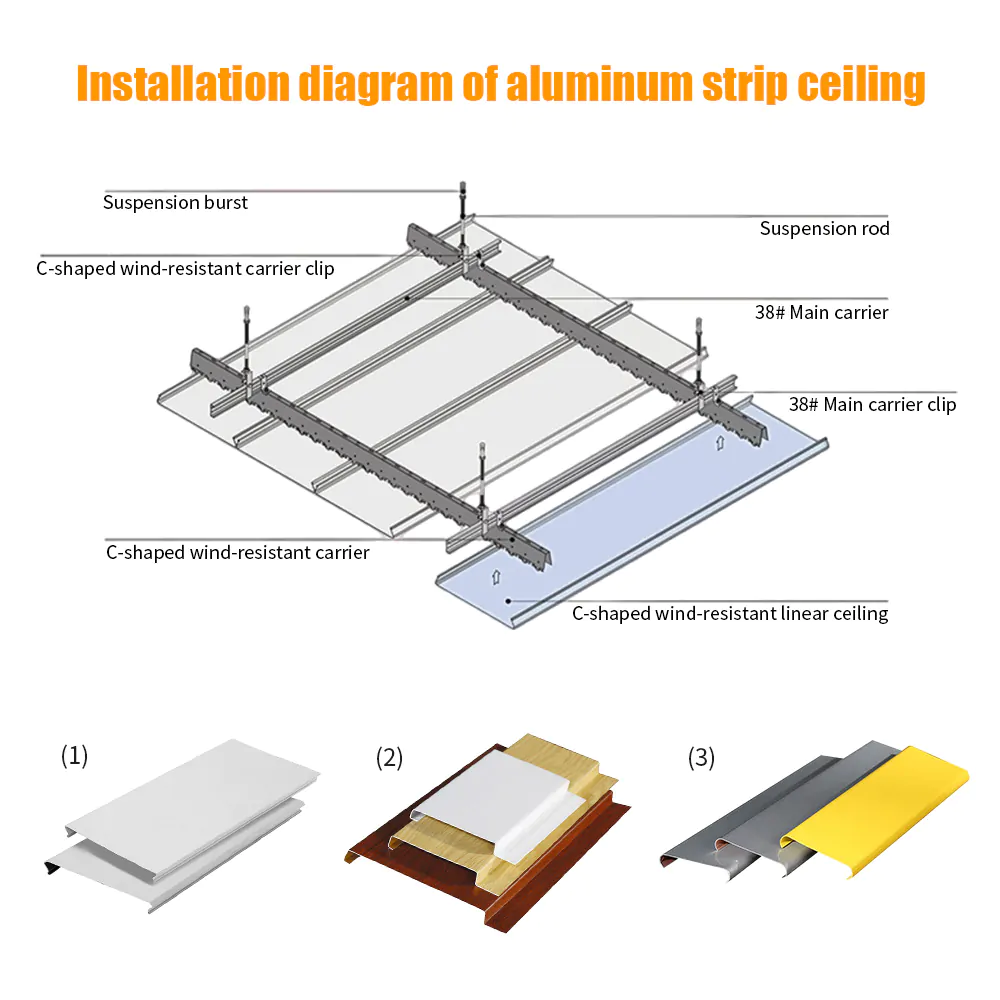
Instruções de instalação de tectos de tiras de alumínio
- Install the hanger rods according to the ceiling layout, keeping all suspension points at the same horizontal level to prevent the strip line from sagging or twisting along its run.
- Fix the main runners securely, then position the carrier rails (or cross-tees) to match the strip spacing and module width specified in the layout drawing.
- Check and adjust the entire frame so the carrier system is level, straight, and square before any strips are hung, since misalignment at this stage will show clearly along a continuous linear run.
- Insert the aluminum strips into the carrier rail one section at a time, working in the correct sequence so each strip locks flush against the next and the gap width stays consistent along the full run.
- Prepare cut-outs and reserved positions for light fixtures, air diffusers, sprinklers, or access panels before or during installation, and use matching trim or closure strips at these openings to keep the line unbroken.
- After all strips are installed, sight down the full run to check for consistent gap spacing, straight alignment, and secure connections, confirming a flat, continuous, and properly finished ceiling line.
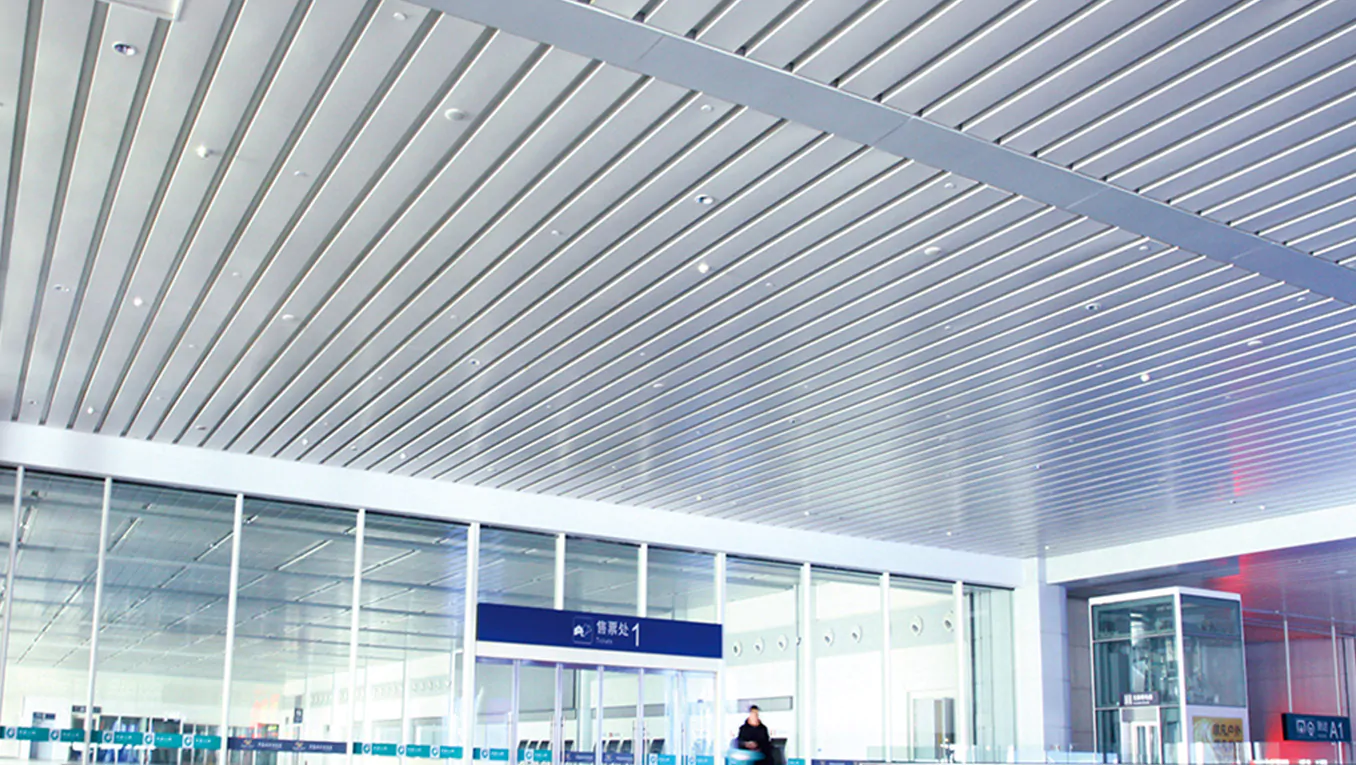
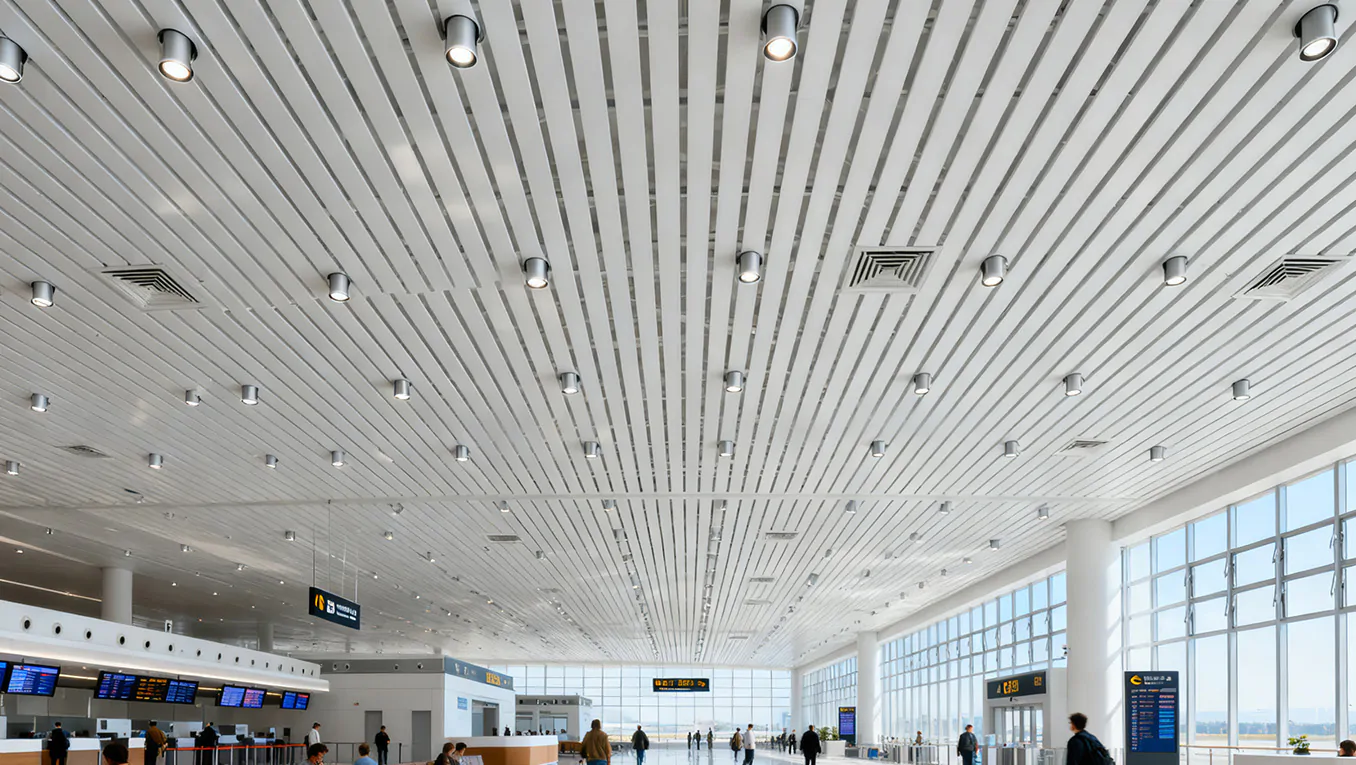
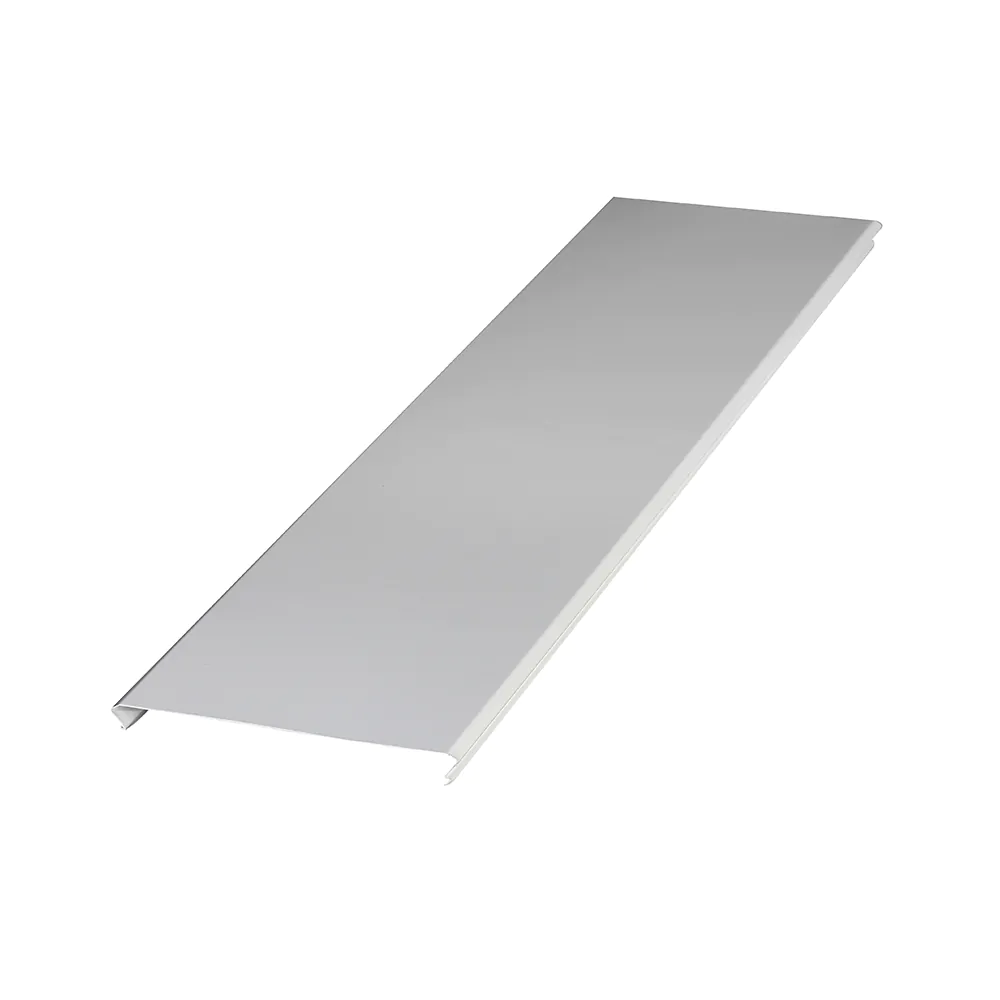
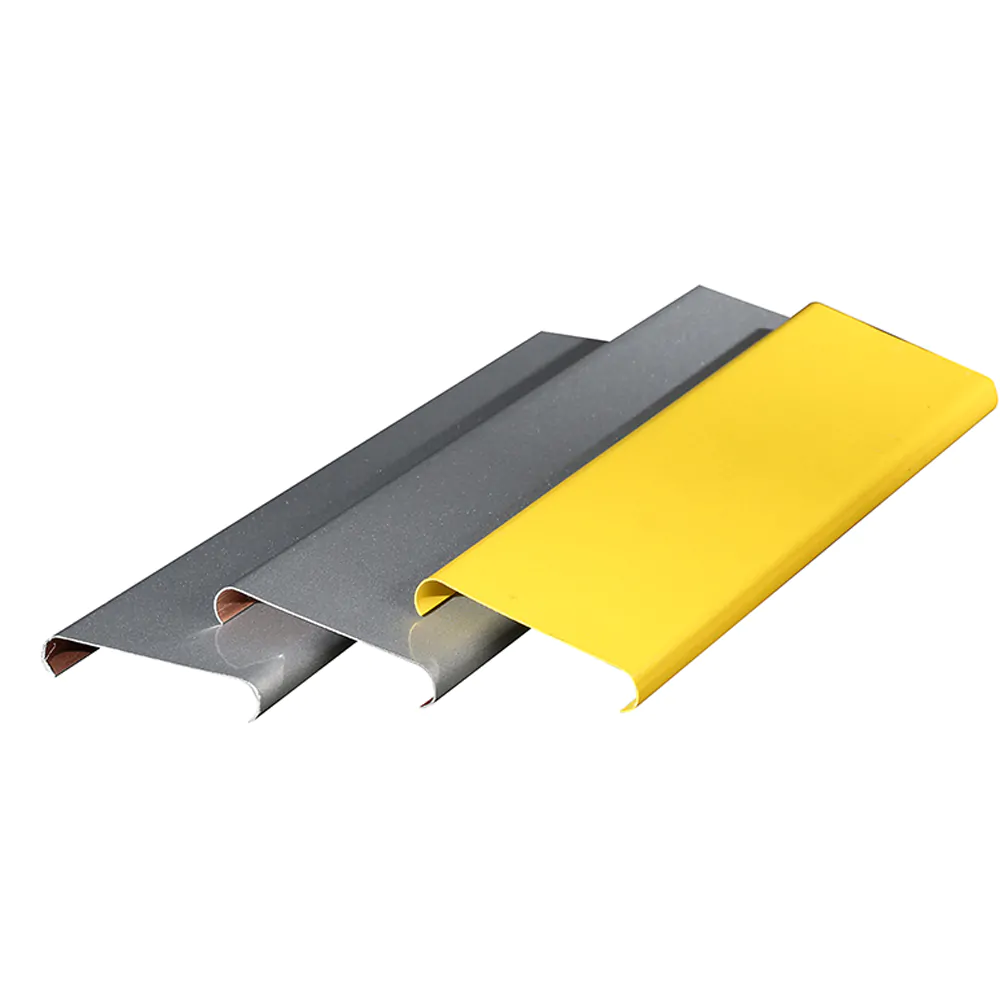
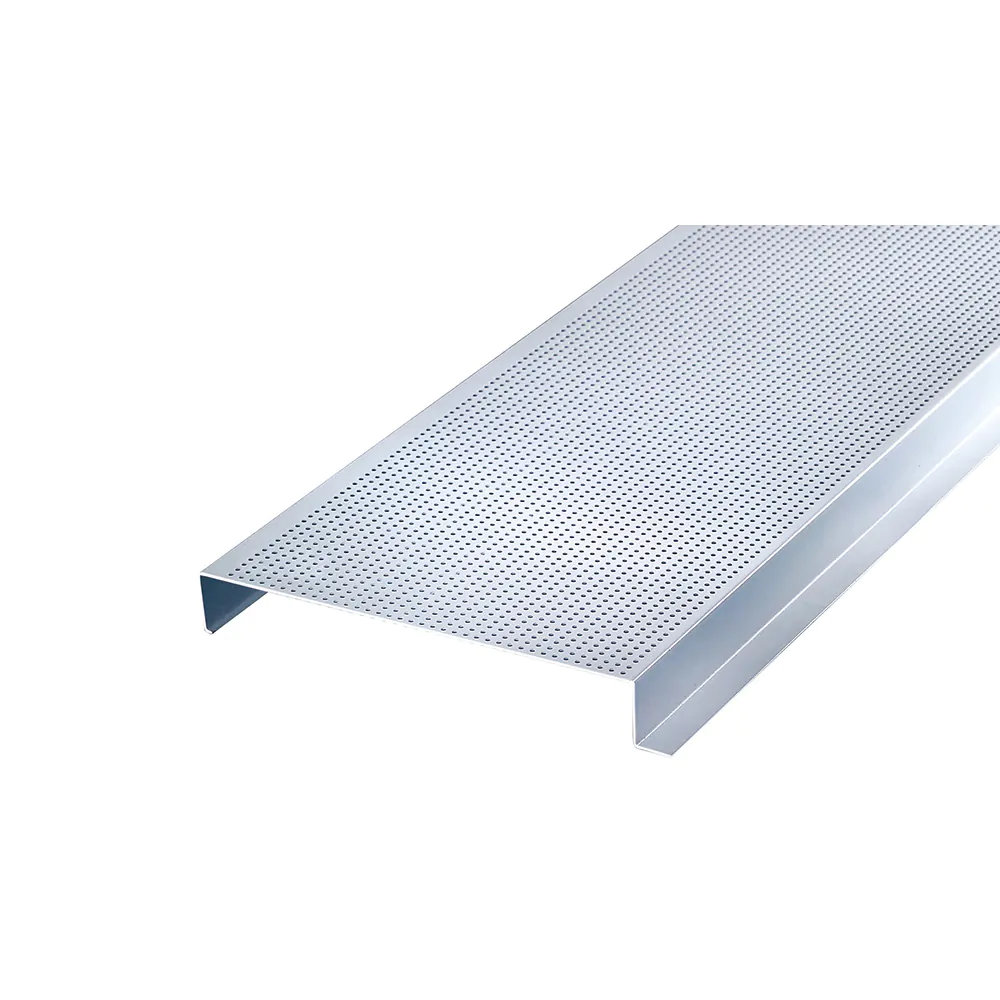
The patterns shown here are only part of what’s available in aluminum strip ceiling systems. Strips can be specified as flat, perforated, micro-perforated, or grooved profiles, in open or closed-gap configurations, with or without acoustic backing fleece behind the perforation.
These options are matched to project needs for acoustic control, airflow, lighting coordination, ease of plenum access, and the overall visual rhythm of the ceiling. Strip profile, width, perforation pattern, gap size, and edge return can be customized according to project drawings and design requirements.


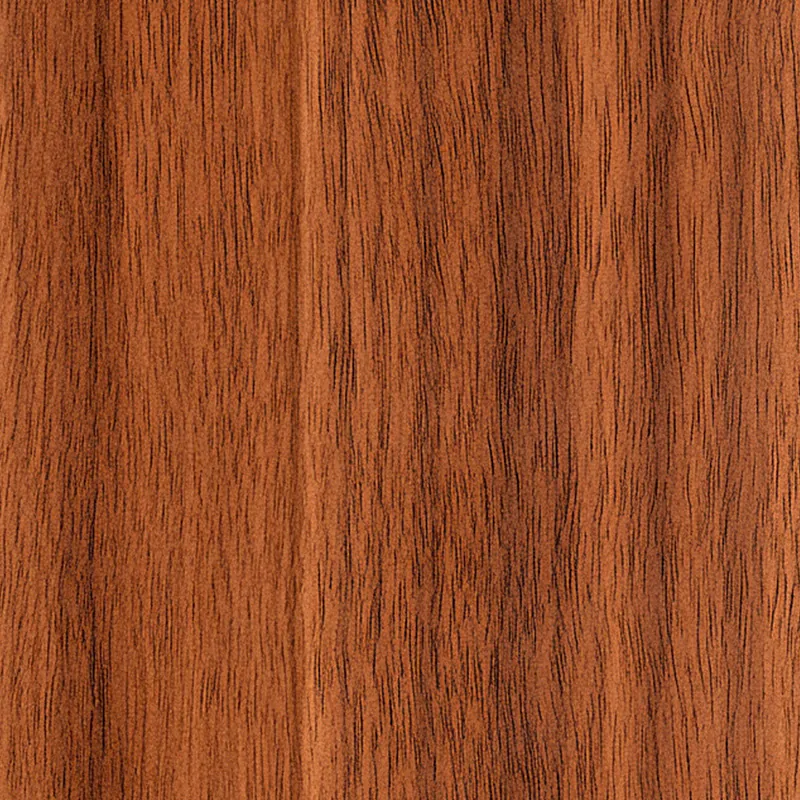


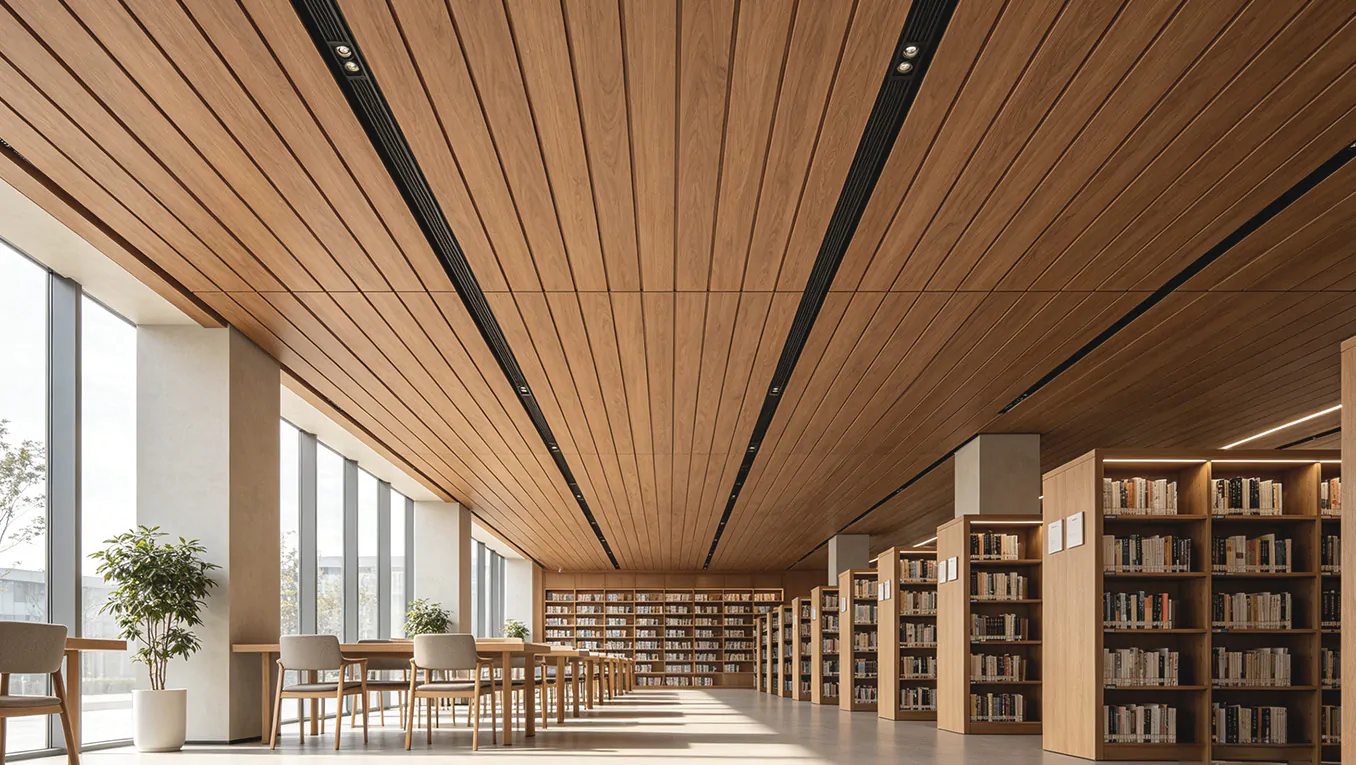
The colors shown here represent only part of the available finish options for aluminum strip ceiling systems. A wide range of standard and custom colors is available to support different interior styles, from clean transit and office environments to decorative commercial and hospitality spaces.
Finishes are selected to complement lighting design, coordinate with wall and floor materials, and meet the practical demands of high-traffic public spaces. Whether the project calls for classic white, black, silver, wood grain, or a custom brand color, finish options can be matched to the design intent of the space.
Project-based color selection and custom matching are supported for aluminum strip ceiling systems, helping designers, contractors, and developers align the ceiling finish with the broader architectural palette.
No, and this distinction matters. General moisture resistance addresses humidity and condensation, but a natatorium ceiling also needs to withstand chloramine gas exposure specifically, which is a more aggressive corrosion risk than humidity alone — always confirm your supplier's specification addresses chloramine exposure directly, not just general moisture performance.
Both matter equally, and this is a common gap in pool ceiling projects — a corrosion-resistant panel suspended from inadequately rated fasteners or carrier rails doesn't eliminate the risk, it just shifts the failure point to whichever component wasn't specified to the same standard.
Yes. A natatorium with strong dehumidification and air exchange typically has lower chloramine concentration at ceiling height than one with passive ventilation, which can affect the appropriate coating and hardware grade — this is worth coordinating with your HVAC engineer rather than assuming a fixed specification regardless of ventilation design.
Inspection frequency depends on your specific facility's chloramine levels and ventilation performance, but natatorium ceilings generally warrant more frequent structural inspection than a standard commercial ceiling given the corrosion risk — this is a discussion worth having with your facility engineer as part of ongoing maintenance planning.
It applies to both, though exposure intensity and required specification grade can vary with proximity to the water surface — areas directly over the pool typically see higher chloramine concentration than perimeter or elevated spectator zones, which is worth discussing at the specification stage.
