اتصل بنا الآن للحصول على عرض أسعار سريع، ودعم العينات، وضمان الخدمة الهندسية.








السقف المُثبت بمشابك مقابل السقف المُثبت بالتركيب: أيهما أفضل للمباني التجارية؟
Choosing the right ceiling system is a crucial decision for any commercial building project. An inappropriate selection can lead to increased maintenance costs, complicated HVAC and electrical access, reduced durability, and long-term operational inefficiencies. Clip In Ceiling systems, with panels securely clipped into a concealed framework, offer a seamless modern look and stable performance, while Lay In Ceiling systems, resting on a visible T-grid, provide easier access for maintenance and cost-effective installation.
In real-world projects, offices and high-end retail spaces often benefit from the aesthetic and acoustic advantages of Clip In Ceilings, whereas schools, utility rooms, and budget-conscious office buildings frequently opt for Lay In Ceilings for faster installation and practical maintenance. This guide compares both systems in terms of structure, installation, maintenance, durability, acoustic performance, and cost, highlighting lessons learned from actual commercial projects such as airports, hospitals, and office towers. Facility managers, architects, and contractors will gain actionable insights to select the most suitable ceiling system for their project requirements, balancing design, functionality, and long-term value.
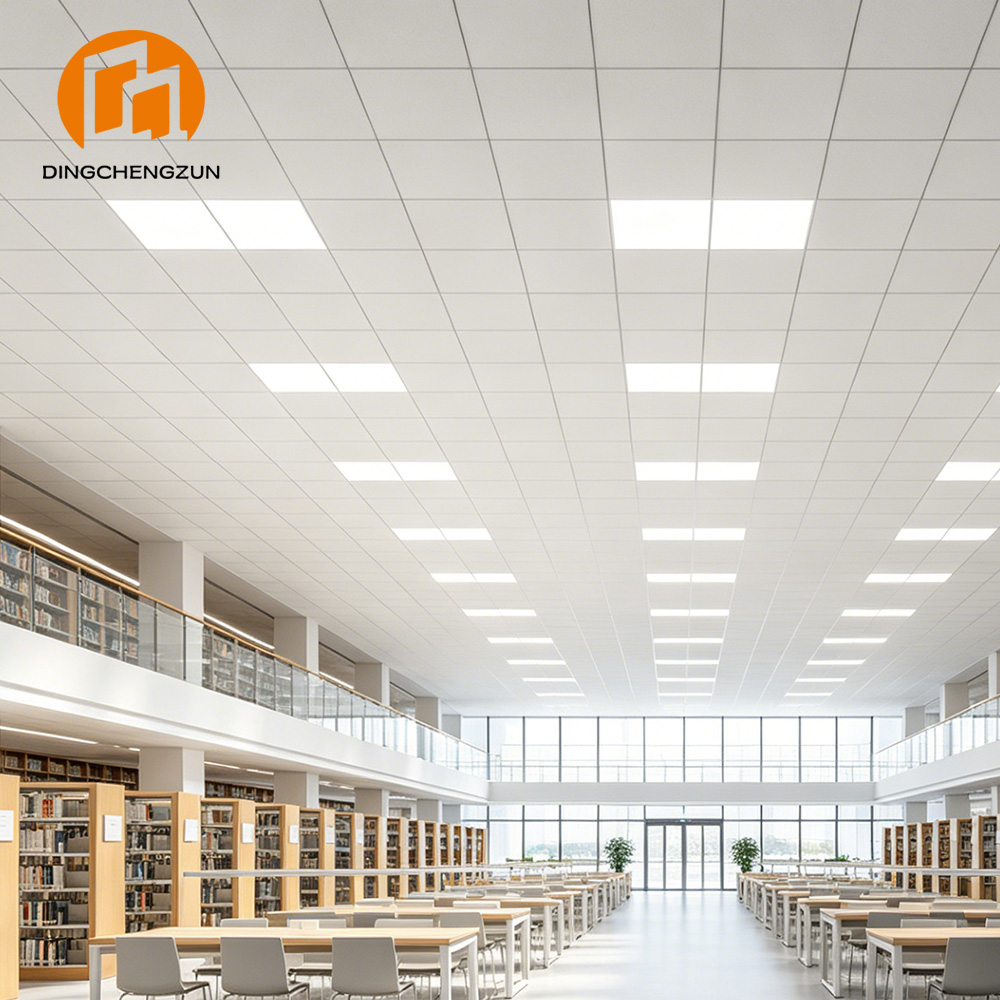
بلاط الأسقف الألومنيوم الصوتي لمشاريع أسقف المكتبات
Designed for modern libraries and educational spaces, these acoustic aluminum ceiling tiles provide excellent sound absorption, clean architectural aesthetics, and long-term durability. Ideal for reading rooms, study areas, and public learning environments.
- المادة: سبائك الألومنيوم
- نوع السقف: Acoustic Suspended Ceiling Tiles
- تشطيب السطح: Powder Coating / Perforated Finish
- الميزات: Sound Absorption, Fire Resistant, Easy Maintenance
- التطبيقات: Libraries, Reading Rooms, Educational Buildings
Understanding Clip In Ceiling System
A Clip In Ceiling system uses a concealed suspension framework that allows ceiling panels to securely clip into hidden carriers, creating a clean and seamless appearance. Unlike exposed grid ceiling systems, the supporting structure remains invisible after installation, making Clip In Ceilings a preferred solution for modern commercial interiors that require a premium architectural finish. The concealed design also improves panel alignment and reduces the risk of panel displacement in high-traffic environments.
Aluminum is the most commonly used material for Clip In Ceiling panels because of its lightweight structure, corrosion resistance, and long service life. For projects with higher acoustic requirements, perforated aluminum panels combined with sound-absorbing backing materials can help reduce noise levels in large commercial spaces. Different surface finishes, including powder coating, wood grain, and metallic finishes, allow architects to match the ceiling system with various interior design styles.
One of the biggest advantages of Clip In Ceilings is their balance between aesthetics and durability. The concealed system provides a modern and uniform ceiling appearance while maintaining strong panel stability over long-term use. In large projects such as airports and shopping malls, properly installed Clip In panels can maintain consistent alignment even under continuous airflow and vibration from HVAC systems. Compared with traditional exposed grid ceilings, Clip In systems are often selected for projects where architectural appearance and long-term performance are equally important.
Clip In Ceiling systems are widely used in airports, hospitals, office buildings, retail stores, and commercial lobbies. Hospitals and healthcare facilities often prefer aluminum Clip In panels because they are easy to clean and resistant to moisture and corrosion. Office reception areas and shopping malls frequently use perforated acoustic Clip In panels to improve both sound control and interior aesthetics.

Understanding Lay In Ceiling System
A Lay In Ceiling system, also known as a suspended T-grid ceiling, features visible grid lines that support removable panels, offering a practical solution for commercial buildings where accessibility and cost are priorities. Unlike Clip In Ceilings, panels rest on the exposed grid, allowing quick installation and easy removal for maintenance, repairs, or system upgrades without disrupting adjacent ceiling sections.
Material selection depends on project requirements. Mineral fiber panels are widely used for offices, schools, and utility spaces due to their fire resistance, acoustic performance, and cost-effectiveness. Metal Lay In panels offer enhanced durability and moisture resistance, suitable for retail stores or high-traffic areas. The modular design allows panels to be replaced individually, which reduces long-term maintenance costs and minimizes downtime during renovations or system adjustments.
The key advantages of Lay In Ceilings include fast installation, low labor cost, and convenient access for facility managers. In real-world office renovation projects, Lay In systems are often chosen because damaged or stained panels can be swapped out quickly without affecting other areas. Schools and hospitals benefit from their simple maintenance, while retail and commercial spaces value the combination of functionality and clean aesthetics.
Typical applications include office buildings, educational facilities, retail stores, utility rooms, and public service areas. In budget-sensitive projects, Lay In Ceilings provide a cost-efficient solution without compromising safety standards or acoustic performance. Facility managers often favor this system when ongoing access to electrical, lighting, or HVAC systems is required.

Key Differences: Clip In vs Lay In Ceilings
Choosing the right ceiling system for a commercial project depends on more than appearance alone. Maintenance requirements, installation efficiency, acoustic performance, lifecycle cost, and long-term durability all influence the final decision. While both Clip In and Lay In ceiling systems are widely used in commercial buildings, they are designed for different project priorities and operational needs.
Appearance and Design
Clip In Ceilings use a concealed suspension system that creates a smooth and seamless appearance. Hidden carriers reduce visible joints and provide a modern architectural finish, making the system popular in airports, office lobbies, hospitals, and premium retail projects. The clean ceiling surface also improves lighting continuity and gives commercial interiors a more refined look.
In contrast, Lay In Ceilings feature visible T-grid frameworks that create a traditional modular ceiling appearance. Although less visually seamless, the exposed grid allows individual panels to be removed easily without disturbing surrounding sections. This practical design is commonly used in schools, standard office spaces, and utility areas where maintenance accessibility is more important than architectural aesthetics.
Installation Method
Clip In Ceiling installation requires accurate alignment because panels must securely clip into concealed carriers. During large commercial projects, installers must carefully coordinate panel layout, lighting positions, and HVAC openings before installation begins. Improper alignment may lead to uneven joints or difficult panel removal later.
Lay In Ceilings are generally faster and easier to install. Panels are simply placed onto the exposed T-grid system, reducing installation time and labor costs. In office renovation projects, contractors often select Lay In systems because damaged panels can be replaced quickly without affecting adjacent ceiling areas. For projects with tight construction schedules, this installation efficiency becomes a significant advantage.
الصيانة وإمكانية الوصول
Maintenance accessibility is one of the biggest differences between the two systems.
Clip In panels are securely fixed to the concealed framework, improving long-term stability and reducing the risk of panel displacement in high-traffic environments. However, maintenance access is slightly more complicated because panels usually require special removal tools and careful handling during inspection or repairs.
Lay In systems provide easier access to HVAC, electrical, and fire protection systems. Facility managers can quickly lift individual panels for maintenance work, making the system highly practical for buildings requiring regular servicing or future system upgrades. This accessibility helps reduce long-term maintenance downtime and labor costs.
Durability and Stability
Clip In Ceilings generally provide better structural stability in commercial environments with strong airflow, vibration, or continuous public traffic. Airports and transportation hubs often prefer Clip In systems because concealed carriers hold panels securely in place, reducing movement caused by HVAC airflow or vibration. Properly installed aluminum Clip In panels also maintain alignment and appearance over long periods with minimal sagging.
Lay In Ceilings perform well in normal indoor commercial environments but are typically better suited for standard office buildings, classrooms, and utility spaces. In areas with strong air pressure changes or heavy vibration, exposed grid systems may require additional reinforcement to maintain panel stability.
الأداء الصوتي
Both ceiling systems can support acoustic solutions, but their performance depends on panel design and backing materials.
Clip In Ceilings commonly use perforated aluminum panels combined with acoustic insulation materials to improve sound absorption in airports, conference rooms, hospital corridors, and large commercial lobbies. The concealed structure also helps create a cleaner acoustic appearance.
Lay In Ceilings frequently use mineral fiber panels with good sound absorption performance at a lower cost. Schools, offices, and commercial buildings often choose mineral fiber Lay In panels because they provide acceptable acoustic control while remaining economical for large-scale installations.
Cost Comparison
| Comparison Item | مشبك في السقف | وضع في السقف |
|---|---|---|
| تكلفة المواد | أعلى | أدنى |
| Installation Labor | More precise installation | Faster installation |
| الوصول إلى الصيانة | معتدل | Very easy |
| Long-Term Durability | ممتاز | جيد |
| Typical Project Positioning | Premium commercial projects | Cost-efficient projects |
Clip In Ceilings usually involve higher upfront costs because of concealed suspension systems and more precise installation requirements. However, they often provide better long-term visual quality and durability in demanding commercial environments.
Lay In Ceilings are generally more budget-friendly and easier to maintain, making them a practical option for projects focused on cost control and operational efficiency.
Real Commercial Project Experience
| Project Type | متطلبات النظام الموصى بها | Practical Considerations |
|---|---|---|
| Airport Terminal | مشبك في السقف | Better stability under strong HVAC airflow |
| Hospital Corridor | مشبك في السقف | Hygienic aluminum surface and clean appearance |
| Office Renovation | وضع في السقف | Easier future maintenance and panel replacement |
| School Classroom | وضع في السقف | Lower installation cost and simple maintenance |
During airport ceiling installation projects, contractors often face alignment challenges caused by large open ceiling areas. Using pre-leveled suspension systems and accurate carrier spacing helps maintain consistent panel alignment.
In office renovation projects, Lay In systems are frequently selected because electrical and HVAC maintenance can be completed quickly by removing individual panels without affecting surrounding ceiling sections. This flexibility significantly reduces future maintenance disruption for commercial buildings.
Ultimately, the choice between Clip In and Lay In ceilings depends on project priorities. Commercial projects focused on premium appearance, durability, and long-term visual performance often prefer Clip In systems, while projects prioritizing maintenance convenience, faster installation, and lower initial cost may benefit more from Lay In ceilings.
Best Applications for Commercial Buildings
Different commercial buildings require different ceiling solutions based on maintenance needs, design goals, acoustic performance, and project budget. Both Clip In and Lay In ceiling systems are widely used in commercial projects, but each system performs better in specific environments.
مباني المكاتب
Modern office buildings often use Clip In Ceilings in reception areas, executive offices, and conference rooms because the concealed system creates a clean and professional appearance. Perforated acoustic panels can also help reduce noise in open office environments.
For standard office spaces, many contractors still prefer Lay In Ceilings because they allow easier access to lighting, HVAC systems, and network cabling. During office renovations, damaged panels can be replaced quickly without affecting surrounding ceiling areas, helping reduce future maintenance downtime.
المستشفيات ومرافق الرعاية الصحية
Hospitals usually prioritize hygiene, corrosion resistance, and easy cleaning. Aluminum Clip In Ceilings are commonly installed in hospital corridors, waiting areas, and healthcare offices because smooth metal surfaces are moisture-resistant and easy to disinfect. Perforated acoustic panels are also used to improve patient comfort by reducing noise reflection.
Maintenance rooms and utility areas may still use Lay In systems where frequent access to building services is required.
المطارات ومراكز النقل
Airports and transportation terminals often require ceiling systems with strong long-term stability across large open areas. Clip In Ceilings are widely used because concealed carrier systems provide better panel fixation under continuous HVAC airflow and vibration.
In large airport projects, contractors must carefully coordinate ceiling layouts with lighting, signage, and fire protection systems before installation to avoid alignment problems and costly rework.
Shopping Malls and Retail Spaces
Retail environments focus heavily on interior appearance and customer experience. Shopping malls and luxury stores frequently choose Clip In Ceilings because different perforation patterns, metallic finishes, and wood-grain coatings can support customized architectural designs.
For smaller retail renovation projects, Lay In Ceilings may still be selected because lighting fixtures and damaged panels can be replaced easily during store upgrades or layout adjustments.
Schools and Public Buildings
Schools, libraries, and public buildings often prioritize cost control and maintenance convenience. Lay In Ceiling systems are commonly used because they offer lower installation costs, fast panel replacement, and easy access to HVAC and electrical systems. Mineral fiber Lay In panels also provide good acoustic performance for classrooms and office spaces at an economical cost.
Projects focused on premium aesthetics and long-term durability often prefer Clip In Ceilings, while buildings prioritizing maintenance efficiency and budget control may benefit more from Lay In systems.

الأسئلة الشائعة
What is the main difference between Clip In and Lay In ceilings?
The primary difference is the ceiling structure and appearance. Clip In Ceilings use a concealed suspension system that creates a smooth and seamless finish, while Lay In Ceilings use visible T-grid frameworks that allow ceiling panels to rest on exposed supports. Clip In systems focus more on aesthetics and stability, whereas Lay In systems prioritize maintenance accessibility and cost efficiency.
Which ceiling system is easier to maintain?
Lay In Ceilings are generally easier to maintain because individual panels can be lifted quickly without special tools, allowing fast access to HVAC, lighting, and electrical systems. Clip In Ceilings provide better panel stability and appearance, but panel removal usually requires more careful handling during maintenance work.
Are Clip In Ceilings more expensive than Lay In Ceilings?
In most commercial projects, Clip In Ceiling systems have higher initial material and installation costs due to their concealed carrier structure and more precise installation requirements. However, they often provide better long-term durability, panel stability, and architectural appearance, making them a good investment for premium commercial environments.
Which ceiling system is better for office buildings?
Both systems are widely used in office projects, but they serve different purposes. Clip In Ceilings are commonly selected for reception areas, executive offices, and conference rooms where a modern and seamless appearance is important. Lay In Ceilings are often used in standard office spaces because they allow easier future access to lighting, cabling, and HVAC systems.


