اتصل بنا الآن للحصول على عرض أسعار سريع، ودعم العينات، وضمان الخدمة الهندسية.





Specifying Aluminum Curtain Wall for Coastal and High-Humidity Climates: Coating, Alloy, and Installation Requirements
On many coastal and high-humidity projects, aluminum curtain wall panels installed with the wrong alloy-coating combination begin showing visible chalking, edge corrosion, or color fade within just two to three years — long before the aluminum substrate itself shows any structural wear. For architects, contractors, and facade consultants, getting this specification right is what separates a curtain wall that performs reliably for 15–25 years from one that needs re-cladding within a decade.
Most curtain wall guides stop at “choose PVDF over powder coating.” That advice is incomplete. In salt-fog, monsoon, and typhoon-exposed regions, coating chemistry is only one variable in a longer chain — alloy selection, frame welding tolerance, fastener corrosion protection, and sealant compatibility all determine whether a facade actually reaches its rated service life. This guide walks through that full chain, using a real Greater Bay Area healthcare project as a working reference for the tolerances and verification steps that hold up in the field.
Alloy & Coating Basics — Quick Reference
Before getting into fabrication detail, it’s worth summarizing the baseline decisions.
| Parameter | Common Options | Coastal/High-Humidity Recommendation |
|---|---|---|
| Aluminum alloy | 3003, 3004, 5005 | 5005 or higher-magnesium 3004 series — better resistance to pitting corrosion in chloride-rich air |
| Coating system | Powder coating, PVDF (fluorocarbon) | PVDF, 2–3 coat system (primer + color coat + clear coat) |
| Typical PVDF film thickness | — | 25–30 microns total, with resin content ≥70% PVDF (e.g., Kynar 500 / Hylar 5000 equivalent) |
| Rated coating life | — | 15+ years color retention and anti-corrosion performance in salt-fog exposure |
Magnesium content is the key variable across the 3xxx/5xxx alloy families: it improves resistance to pitting and intergranular corrosion, which is the dominant failure mode for aluminum panels in chloride-heavy coastal air. Powder coating remains a valid choice for interior or low-exposure applications, but for exterior curtain wall facing direct salt spray, PVDF is the industry-standard specification.
For a full breakdown of powder coating vs. PVDF chemistry, application process, and cost comparison, see our detailed guide: Powder Coating vs PVDF for Aluminum Ceilings: Durability, Cost, and Project Selection. This article focuses specifically on curtain wall alloy and fabrication requirements that guide does not cover.
Standards That Actually Get Checked — With International Equivalents
Coating and alloy selection only matter if the finished assembly is verified against a recognized performance standard. The following are the core standards referenced in coastal curtain wall specifications, with approximate international equivalents for readers working outside China.
| Standard | Governs | Broadly Comparable International Reference |
|---|---|---|
| GB/T 21086 — Curtain Wall | Wind load deformation, water tightness, air tightness performance | ASTM E330 (structural), E331 (water penetration), E283 (air infiltration) |
| JGJ 133 — Technical Specification for Metal and Stone Curtain Wall Engineering | Fabrication and installation workmanship requirements | AAMA 501 series (field testing and installation practice) |
| Fire rating — Class A (non-combustible) | Facade fire performance | EN 13501-1 Class A2 / ASTM E84 Class A |
These are broadly comparable references, not direct substitutions — project teams working across jurisdictions should confirm the applicable local code before finalizing a specification. What matters for coastal projects specifically is that wind pressure resistance and water/air tightness testing are not optional line items; they are the tests that catch a facade before typhoon or monsoon-season failure, not after.
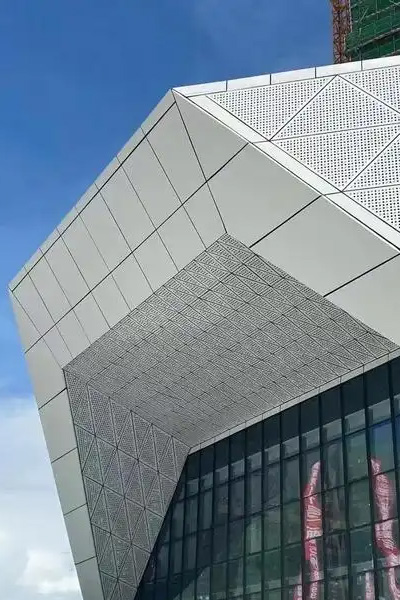
Fabrication Details That Determine Coastal Durability
This is where most coastal curtain wall failures actually originate — not in the coating chemistry, but in the fabrication tolerances and hardware decisions that never appear on a rendering.
Frame Cutting & Welding Tolerance
Sub-frame aluminum sections are CNC-cut with a verticality tolerance of ≤0.3° on the cutting face. This matters more in coastal environments than it does inland: any deviation at a cut or weld joint creates a micro-gap where moisture and chloride ions can collect, and that collection point becomes the first place visible pitting corrosion appears — often within the first two to three years of service, long before the coated panel face shows any sign of wear.
Bracket welding follows a controlled thermal cycle: components are preheated to 200°C ± 20°C before welding, and anti-rust treatment is applied immediately after the weld cools. Skipping the preheat step, or delaying post-weld treatment, is one of the most common causes of premature frame corrosion on projects that otherwise specified the correct coating.
Fastener Corrosion Protection
Coastal specifications frequently focus entirely on the panel finish while treating fasteners as a commodity item. This is a mistake: carbon-steel bolts and brackets are consistently the first failure point in salt-fog environments, well before the aluminum panel or its coating shows degradation.
Specification baseline for coastal projects:
- Stainless steel fasteners and connection brackets, with corrosion-resistant treatment applied prior to installation
- M12–M16 bolts installed to the specified torque value, with anti-loosening measures (e.g., locking washers or thread-locking compound) applied at every connection
- Adjustable connection fittings used between the sub-frame and main structure to accommodate structural movement without stressing the fastener over time
A curtain wall with a 25-year-rated PVDF coating and 15-year fasteners is, in practice, a 15-year curtain wall.
Sealant Compatibility & Application Control
Water penetration failures on coastal projects are rarely a defect in the panel itself — they trace back to sealant application. Two requirements should be non-negotiable in the specification:
- Compatibility testing is mandatory, not optional. Silicone weatherproofing sealant and structural sealant must be supported by a compatibility test report confirming they will not degrade the panel coating or each other over the service life of the joint.
- Application conditions are controlled. Joints must be cleaned of dust and oil residue before sealing, protected with masking tape to avoid staining the panel face, and sealed with continuous, uniform bead width and depth per the design drawing. Cured joints are protected from impact and contamination during the curing period.
None of these steps show up in a rendering or a product data sheet — they show up two years later, either as a clean, dry building envelope or as a maintenance ticket.
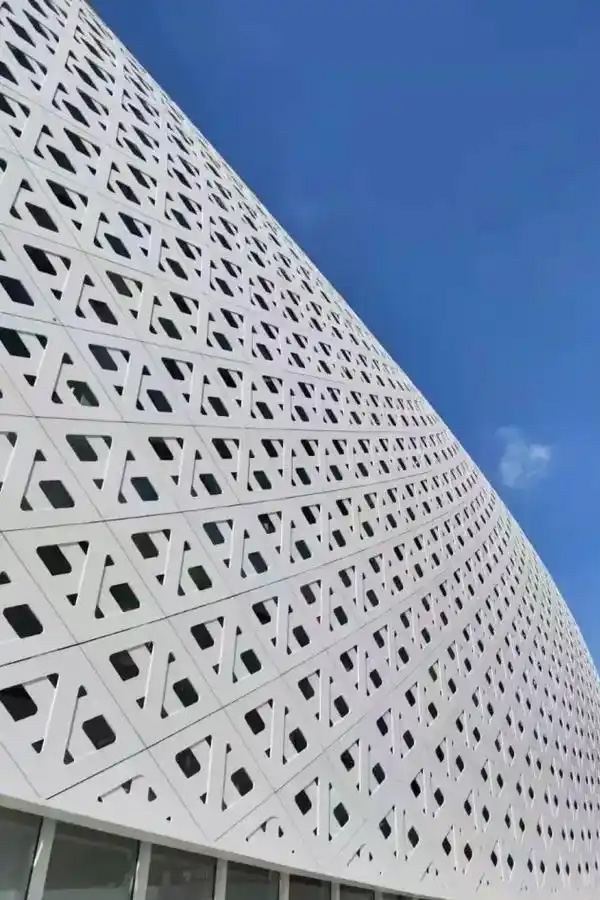
System-Level Coastal Performance: Fire, Lightning & Thermal Bridging
Beyond the panel and its fixings, three system-level details determine long-term coastal performance:
- Fire compartmentation. The gap between each floor slab and the curtain wall is filled with non-combustible material and edge-sealed with fireproof board, with each floor verified as a separate inspection point before the wall is closed up.
- Lightning protection continuity. The metal curtain wall frame is reliably welded into the building’s lightning protection system at each designated grounding point, with grounding resistance tested and recorded at ≤10Ω.
- Thermal bridging control. Insulation behind the panel must be fixed without gaps or sagging, with sealing details that avoid creating a thermal bridge. In high-humidity coastal climates, an unaddressed thermal bridge is not just an energy-code issue — it becomes a condensation point on the inner face of the panel, which accelerates corrosion from behind the coating where it can’t be visually inspected.
Case Study: Greater Bay Area Medical Complex, Guangzhou
A recent healthcare landmark project in Guangzhou’s Huangpu district provides a working reference for how these requirements come together in a real coastal-adjacent, high-humidity, typhoon-exposed application.
The project specified a fluorocarbon-coated aluminum curtain wall system designed to meet the Greater Bay Area’s combined wind-load, humidity, and salt-fog exposure conditions:
- Coating performance: 15+ years of rated color retention and anti-corrosion performance under PVDF specification
- Structural performance: Wind pressure deformation, water tightness, and air tightness rated to withstand regional typhoon conditions, with fire performance rated Class A (non-combustible)
- Governing standards: GB/T 21086 (Curtain Wall), GB 50210 (Quality Acceptance Standard for Decoration Engineering), and JGJ 133 (Metal and Stone Curtain Wall Technical Specification)
- Fabrication tolerance: Frame cutting verticality ≤0.3°, bracket preheat at 200°C ± 20°C prior to welding
- Quality verification process: A three-tier inspection system — self-inspection, cross-inspection, and specialized inspection — with 100% concealed-works verification at every critical stage, followed by a full-building water spray test before final acceptance to rule out leak paths before handover
This layered verification process — rather than any single material choice — is what the project’s technical brief identifies as the deciding factor in long-term envelope performance. A coating specification alone does not catch a welding defect, a torque error, or an incompatible sealant; only staged inspection does.
Pre-RFP Quality Control Checklist
Before issuing a curtain wall RFP for a coastal or high-humidity project, confirm the specification requires documentation — not just materials — at each stage:
Material intake
- Mill certificate and coating thickness report for each panel batch
- Coating weatherability/salt-fog test report (rated hours and standard referenced)
- Sealant compatibility test report for structural and weatherproofing sealants
Fabrication & installation
- Frame cutting verticality and welding preheat records
- Fastener torque and anti-loosening measure verification
- Concealed-works inspection sign-off at each floor (fire compartmentation, grounding, insulation)
- Grounding resistance test record (≤10Ω)
Completion
- Full-building or representative-zone water spray test report
- Final acceptance record covering flatness, verticality, and joint sealing quality
A specification that requires these records — not just a product data sheet — is the difference between a curtain wall that performs on paper and one that performs for 15 years in salt air.
Dingchengzun supplies fluorocarbon and powder-coated aluminum curtain wall systems for hospital, government, commercial, and hospitality projects across coastal and high-humidity markets, including completed installations in Southeast Asia, Central Asia, and Africa. To request a coating specification sheet, alloy test report, or project-specific quotation, contact our engineering team.