PÓNGASE EN CONTACTO CON NOSOTROS AHORA PARA RECIBIR UN PRESUPUESTO RÁPIDO, SOPORTE DE MUESTRAS Y GARANTÍA DE SERVICIO DE INGENIERÍA.








Productos
Paneles de techo de aluminio con revestimiento de polvo para pasillos de hospitales
Hospital corridors take a different kind of abuse than almost any other ceiling application, but people rarely think about it because the damage happens below eye level, not overhead — until a maintenance team notices scuffed panel edges from IV poles, gurneys, and equipment carts that clip the lower grid line during shift changes and emergency transport. A hospital corridor functions less like a hallway and more like a continuously operating logistics corridor, moving beds, trolleys, and mobile equipment around the clock, and the ceiling system needs to survive vibration and incidental contact from that traffic without the finish degrading in visible, patchy ways over time.
Dingchengzun's powder coated aluminum clip-in ceiling panels for hospital corridors are specified for exactly this wear profile — not the airtight, pressure-sealed requirements of an operating theater, but the more everyday challenge of a ceiling and suspension grid that stays structurally solid and visually consistent under constant low-level physical contact, equipment vibration, and the kind of round-the-clock foot and cart traffic that hospital circulation spaces see and general commercial corridors don't.
This system covers main hospital corridors, patient transport routes, emergency department circulation paths, service and supply corridors, and connector passages between hospital wings — spaces defined less by air pressure or infection control requirements and more by continuous mechanical wear, cleaning frequency, and the need for a ceiling that still looks presentable after years of being brushed, bumped, and wheeled past daily.

¿Busca techos y fachadas de aluminio a medida? Hablemos


Escaparate de aplicaciones de productos
Within the clip-in panel system, hospital corridor applications are specified with a powder coating chosen primarily for abrasion and impact resistance rather than the antimicrobial or gasket-sealing priorities of a clean room application — corridors are cleaned frequently but don’t typically require the pressure-sealed panel joints that operating theaters and isolation wards depend on. The coating is formulated to resist the scuffing and minor impact marks that build up from equipment contact over years of continuous corridor traffic, without requiring full panel replacement to keep the ceiling looking uniform.
Panel layout is coordinated with corridor wayfinding signage, overhead directional displays, nurse call system wiring, and standard corridor lighting runs, and individual panels remain removable for routine access even in corridors that stay in continuous use and are rarely, if ever, fully closed off for maintenance work.
Instalación del producto
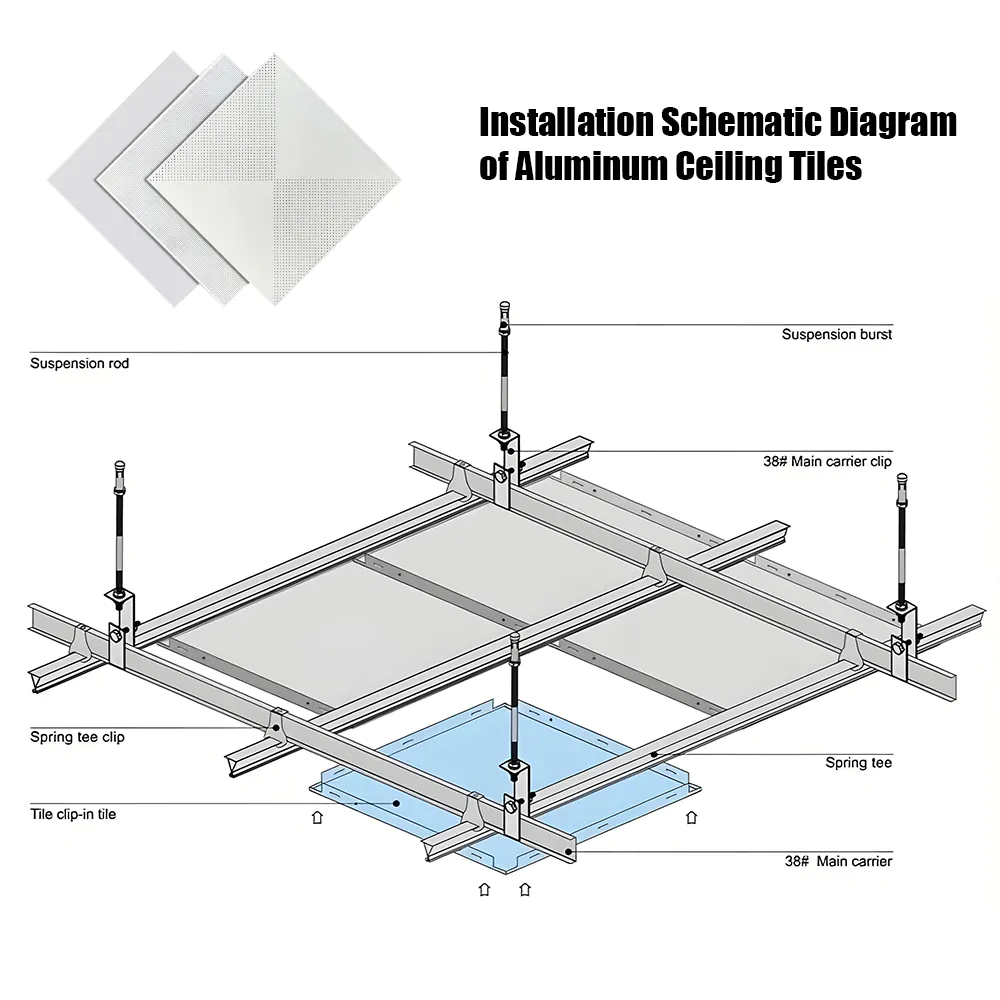
Instrucciones de instalación de techos de aluminio con clips
- Instale las barras de suspensión de acuerdo con la disposición del techo y asegúrese de que todos los puntos de suspensión se mantienen al mismo nivel horizontal.
- Fije firmemente las guías principales y, a continuación, instale los soportes acoplables en función del tamaño del panel del techo y de los requisitos de disposición. La separación del sistema de soporte debe ajustarse correctamente para garantizar un apoyo estable.
- Compruebe y ajuste todo el bastidor para asegurarse de que el sistema portante está nivelado y alineado antes de instalar los paneles.
- Enganche los paneles de techo de aluminio en el sistema de soporte uno a uno en el orden correcto. Asegúrate de que cada panel esté firmemente fijado y de que las juntas sean limpias y uniformes.
- Para las luces, difusores de aire, aspersores o aberturas de acceso, prepare los recortes necesarios y las posiciones reservadas antes o durante la instalación.
- Una vez instalados todos los paneles, inspeccione la superficie del techo, la alineación de los paneles y la estabilidad de las conexiones para garantizar un acabado plano, limpio y seguro.



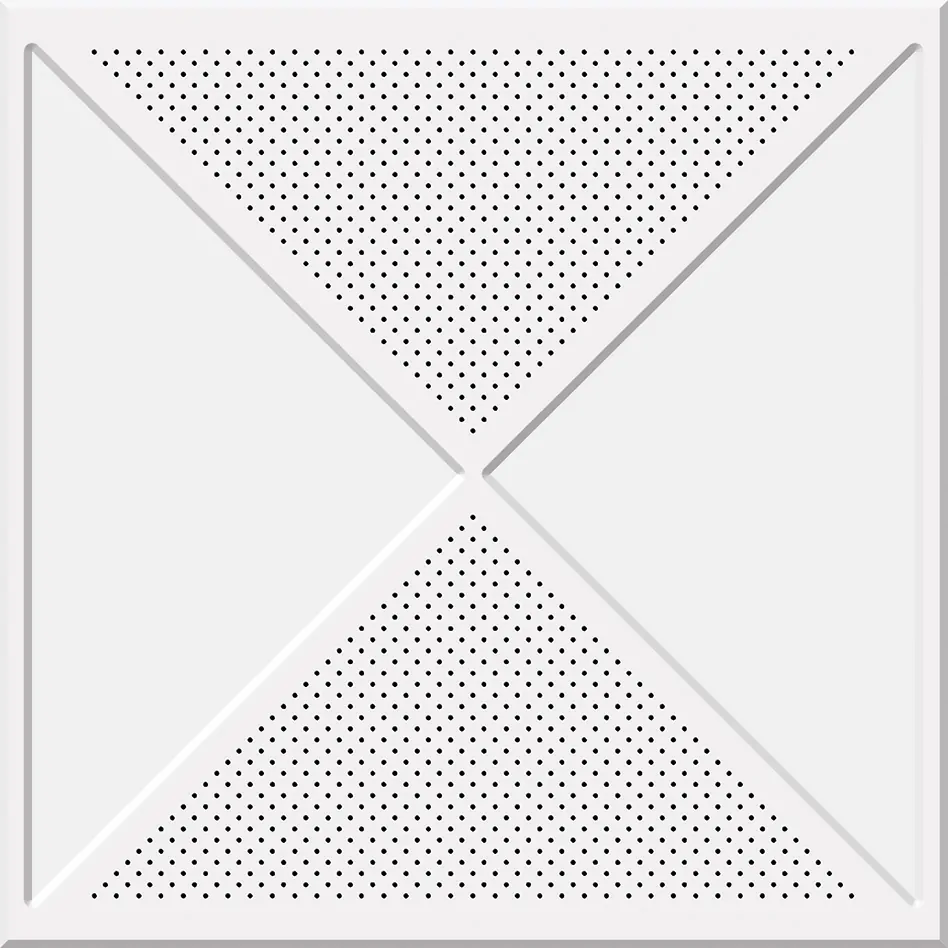


Los patrones que se muestran aquí son sólo una parte de lo que ofrece Dingchengzun. Nuestros paneles de techo de aluminio están disponibles en varias opciones de patrones, incluyendo paneles planos, paneles perforados, diseños microperforados, patrones cuadrados, patrones lineales, superficies en relieve, texturas decorativas, acabados metálicos y diseños de paneles personalizados.
Estas opciones pueden satisfacer las diferentes necesidades del proyecto en cuanto a decoración del techo, rendimiento acústico, ventilación, coordinación de la iluminación, facilidad de mantenimiento y estilo interior en general. Los paneles de techo de aluminio Dingchengzun pueden personalizarse en cuanto a tamaño del panel, patrón de perforación, color, acabado superficial, tipo de borde y sistema de instalación de acuerdo con los planos del proyecto y los requisitos de diseño.




Los colores que se muestran aquí representan sólo una parte de las opciones de color disponibles para los sistemas de paneles de techo de aluminio Dingchengzun. Ofrecemos una amplia gama de colores estándar y personalizados para adaptarse a diferentes estilos de diseño de interiores, desde oficinas modernas y limpias hasta espacios comerciales, públicos y decorativos.
Nuestros colores de paneles de aluminio para techos están diseñados para mejorar la apariencia visual, coordinar con los acabados de iluminación y pared, y satisfacer las necesidades prácticas de los diferentes proyectos de techos. Si el diseño requiere blanco clásico, negro, gris, tonos metálicos, acabados de grano de madera, o colores de proyectos personalizados, Dingchengzun puede proporcionar soluciones de color adecuadas para diversos escenarios de aplicación.
Haga clic en el botón de abajo para explorar más opciones de color. Dingchengzun admite la selección y personalización de colores basada en proyectos para paneles de techo de aluminio, lo que ayuda a diseñadores, contratistas y promotores a adaptarse a diferentes estilos arquitectónicos, diseños de techo y requisitos de diseño de interiores.
No. This specification is built for general hospital corridor traffic and impact resistance, not the pressure-sealed, gasketed system used in operating theaters or ISO-classified clean rooms. If your project includes both corridor and clean room areas, we can specify each separately to match their different requirements.
The powder coating is selected specifically for abrasion and impact resistance to minimize visible wear from this kind of incidental contact, which is common in hospital corridors given the volume of equipment and bed traffic moving through them daily.
Panels remain individually removable for routine maintenance access, which matters in hospital corridors that are rarely fully closed off, allowing facility teams to service lighting or wiring above the ceiling without disrupting corridor traffic for extended periods.
Yes. Panel layout is coordinated with corridor wayfinding signage and directional display mounting points at the specification stage, based on your hospital's signage and circulation plans.
Corridors are cleaned frequently but don't typically require the disinfection-grade or pressure-sealed specifications used in clean rooms, so the coating here is optimized for standard hospital cleaning routines and physical durability rather than chemical resistance to aggressive decontamination agents.
