СВЯЖИТЕСЬ С НАМИ ПРЯМО СЕЙЧАС, ЧТОБЫ ПОЛУЧИТЬ БЫСТРУЮ СМЕТУ, ПОДДЕРЖКУ ОБРАЗЦОВ И ГАРАНТИЮ ИНЖЕНЕРНОГО ОБСЛУЖИВАНИЯ.







Продукция
Алюминиевые потолочные панели с порошковым покрытием для больничных коридоров
Hospital corridors take a different kind of abuse than almost any other ceiling application, but people rarely think about it because the damage happens below eye level, not overhead — until a maintenance team notices scuffed panel edges from IV poles, gurneys, and equipment carts that clip the lower grid line during shift changes and emergency transport. A hospital corridor functions less like a hallway and more like a continuously operating logistics corridor, moving beds, trolleys, and mobile equipment around the clock, and the ceiling system needs to survive vibration and incidental contact from that traffic without the finish degrading in visible, patchy ways over time.
Dingchengzun's powder coated aluminum clip-in ceiling panels for hospital corridors are specified for exactly this wear profile — not the airtight, pressure-sealed requirements of an operating theater, but the more everyday challenge of a ceiling and suspension grid that stays structurally solid and visually consistent under constant low-level physical contact, equipment vibration, and the kind of round-the-clock foot and cart traffic that hospital circulation spaces see and general commercial corridors don't.
This system covers main hospital corridors, patient transport routes, emergency department circulation paths, service and supply corridors, and connector passages between hospital wings — spaces defined less by air pressure or infection control requirements and more by continuous mechanical wear, cleaning frequency, and the need for a ceiling that still looks presentable after years of being brushed, bumped, and wheeled past daily.

Ищете алюминиевые потолки и фасады на заказ? Давайте поговорим


Витрина применения продукции
Within the clip-in panel system, hospital corridor applications are specified with a powder coating chosen primarily for abrasion and impact resistance rather than the antimicrobial or gasket-sealing priorities of a clean room application — corridors are cleaned frequently but don’t typically require the pressure-sealed panel joints that operating theaters and isolation wards depend on. The coating is formulated to resist the scuffing and minor impact marks that build up from equipment contact over years of continuous corridor traffic, without requiring full panel replacement to keep the ceiling looking uniform.
Panel layout is coordinated with corridor wayfinding signage, overhead directional displays, nurse call system wiring, and standard corridor lighting runs, and individual panels remain removable for routine access even in corridors that stay in continuous use and are rarely, if ever, fully closed off for maintenance work.
Установка продукта
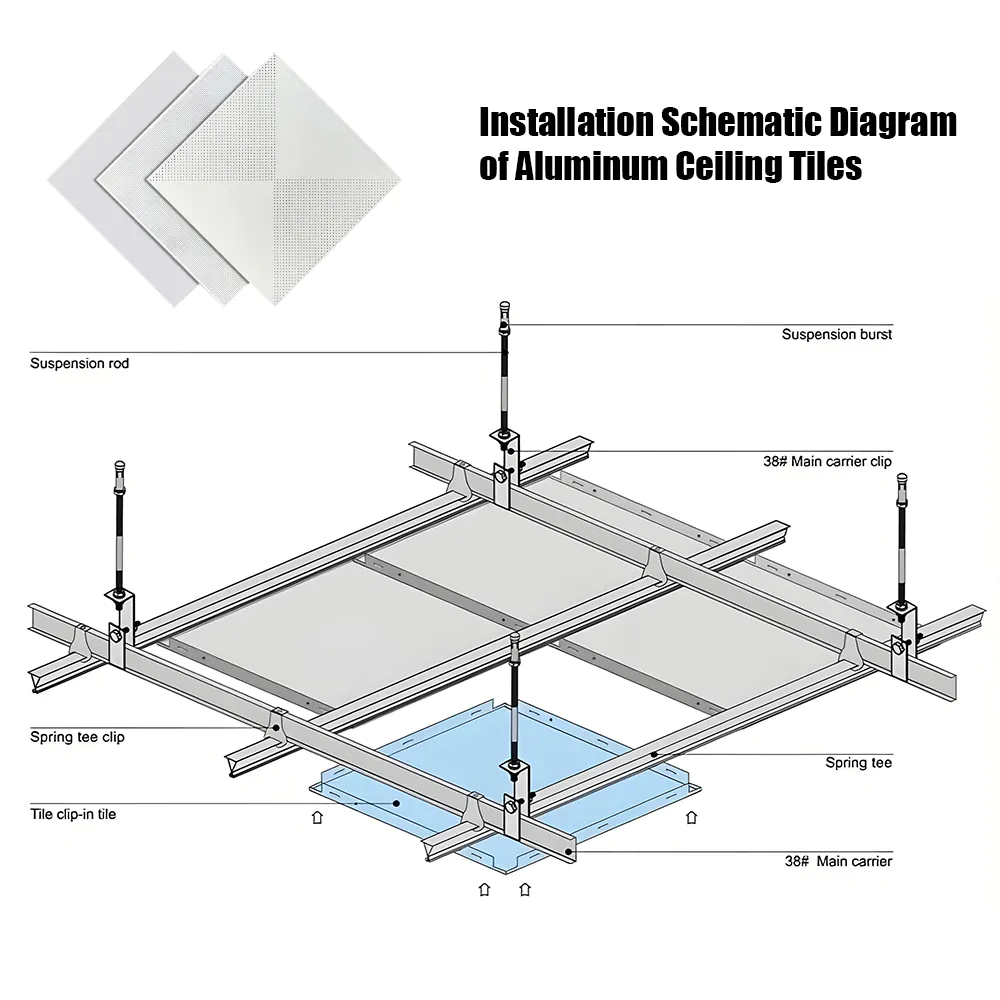
Инструкция по монтажу алюминиевых потолочных панелей с защелками
- Установите подвесные стержни в соответствии со схемой расположения потолка и убедитесь, что все точки подвески находятся на одном горизонтальном уровне.
- Надежно закрепите основные направляющие, а затем установите защелкивающиеся держатели с учетом размеров потолочных панелей и требований к расположению. Расстояние между элементами несущей системы следует отрегулировать надлежащим образом, чтобы обеспечить устойчивую опору.
- Перед установкой панелей проверьте и отрегулируйте всю раму, чтобы убедиться, что несущая система расположена ровно и выровнена.
- Закрепите алюминиевые потолочные панели в несущей системе по одной в правильном порядке. Убедитесь, что каждая панель прочно закреплена, а стыки выглядят аккуратно и ровно.
- Для светильников, воздухораспределителей, спринклеров или проёмов для доступа необходимо заранее или во время монтажа подготовить необходимые вырезы и места для их размещения.
- После установки всех панелей осмотрите поверхность потолка, проверьте выравнивание панелей и прочность соединений, чтобы убедиться в ровности, чистоте и надежности отделки.



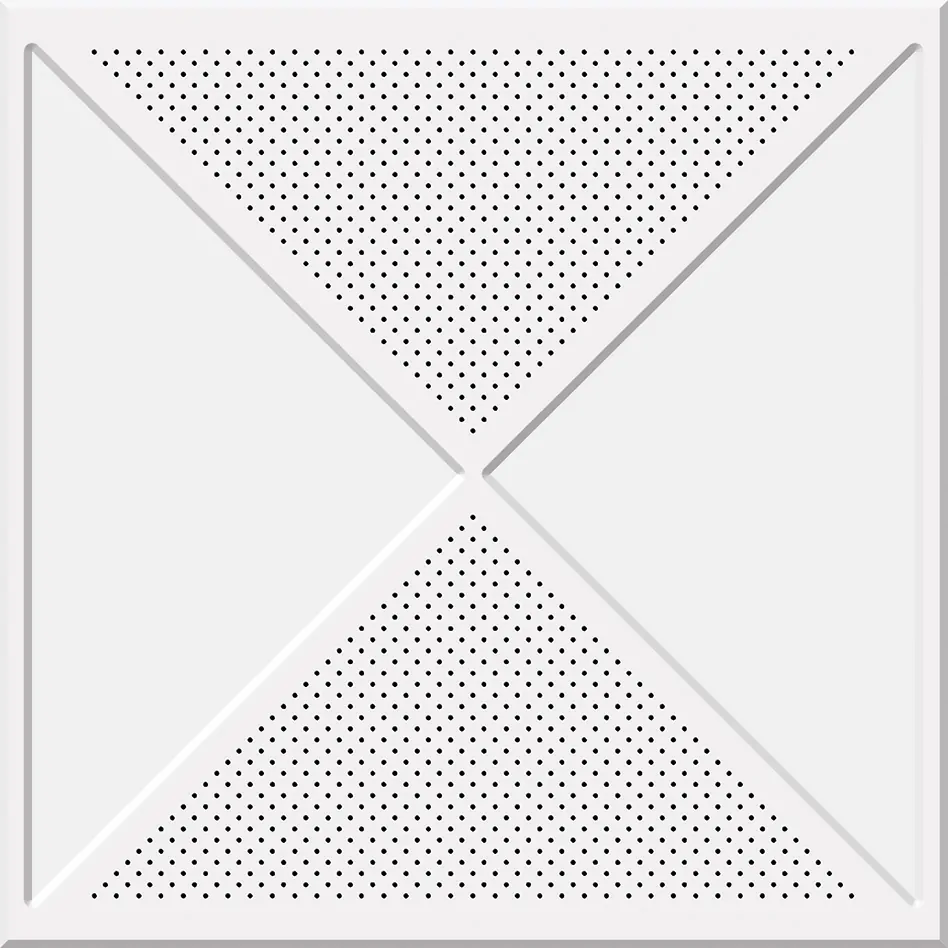

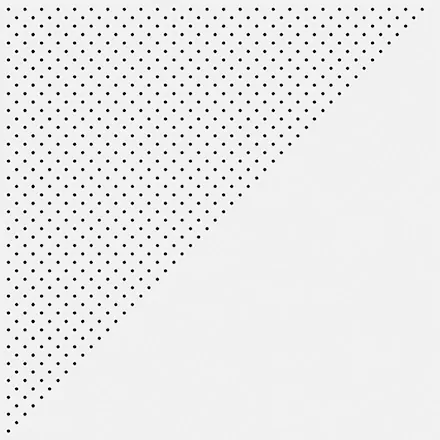
Представленные здесь образцы — лишь часть ассортимента компании Dingchengzun. Наши алюминиевые потолочные панели доступны в различных вариантах дизайна, включая гладкие панели, перфорированные панели, панели с микроперфорацией, квадратные узоры, линейные узоры, тисненые поверхности, декоративные текстуры, металлические покрытия, а также панели, изготовленные по индивидуальному заказу.
Эти варианты позволяют удовлетворить различные требования проектов в отношении отделки потолка, акустических характеристик, вентиляции, согласования освещения, простоты обслуживания и общего стиля интерьера. Алюминиевые потолочные панели Dingchengzun можно изготовить по индивидуальному заказу с учетом размеров панелей, рисунка перфорации, цвета, отделки поверхности, типа кромок и системы монтажа в соответствии с проектной документацией и требованиями дизайна.




Представленные здесь цвета отражают лишь часть доступных цветовых решений для систем алюминиевых потолочных панелей Dingchengzun. Мы предлагаем широкий ассортимент стандартных и индивидуальных цветов, подходящих для различных стилей интерьера — от лаконичных современных офисов до коммерческих, общественных и декоративных помещений.
Цветовая гамма наших алюминиевых потолочных панелей разработана с целью улучшения визуального восприятия, гармоничного сочетания с освещением и отделкой стен, а также для удовлетворения практических потребностей различных проектов по обустройству потолков. Независимо от того, требует ли проект классического белого, черного, серого цвета, металлических оттенков, отделки под дерево или индивидуальных цветовых решений, компания Dingchengzun готова предложить подходящие цветовые решения для самых разных сценариев применения.
Нажмите на кнопку ниже, чтобы ознакомиться с другими вариантами цветов. Компания Dingchengzun предлагает выбор и индивидуальную настройку цветов алюминиевых потолочных панелей с учетом конкретных проектов, что помогает дизайнерам, подрядчикам и застройщикам подобрать решения, соответствующие различным архитектурным стилям, схемам потолков и требованиям к дизайну интерьера.
No. This specification is built for general hospital corridor traffic and impact resistance, not the pressure-sealed, gasketed system used in operating theaters or ISO-classified clean rooms. If your project includes both corridor and clean room areas, we can specify each separately to match their different requirements.
The powder coating is selected specifically for abrasion and impact resistance to minimize visible wear from this kind of incidental contact, which is common in hospital corridors given the volume of equipment and bed traffic moving through them daily.
Panels remain individually removable for routine maintenance access, which matters in hospital corridors that are rarely fully closed off, allowing facility teams to service lighting or wiring above the ceiling without disrupting corridor traffic for extended periods.
Yes. Panel layout is coordinated with corridor wayfinding signage and directional display mounting points at the specification stage, based on your hospital's signage and circulation plans.
Corridors are cleaned frequently but don't typically require the disinfection-grade or pressure-sealed specifications used in clean rooms, so the coating here is optimized for standard hospital cleaning routines and physical durability rather than chemical resistance to aggressive decontamination agents.
