CONTACTEZ-NOUS DÈS MAINTENANT POUR RECEVOIR UN DEVIS RAPIDE, UN SUPPORT D'ÉCHANTILLONNAGE ET UNE GARANTIE DE SERVICE D'INGÉNIERIE.


Produits
Plafond à bandes d'aluminium pour aérogares
Walk far enough down an airport concourse and a gate announcement that was perfectly clear near the speaker becomes an indistinct wash of sound by the time it reaches the far end of the hall. This isn't a speaker placement problem you can solve by adding more volume — hard, reflective surfaces across a large, glazed, high-ceilinged terminal volume cause sound energy to bounce and stack on itself faster than it decays naturally, and the reverberant buildup degrades intelligibility over distance regardless of how loud the original announcement is. A strip ceiling with acoustic backing behind the groove addresses this directly, absorbing a meaningful portion of that reflected energy across the ceiling plane rather than letting it bounce indefinitely between the hard floor, glazed curtain wall, and an untreated ceiling above.
Dingchengzun's aluminum strip ceiling for airport terminal interiors is specified with this acoustic function as a primary driver in long concourses, departure halls, and gate seating areas — anywhere passengers need to reliably hear boarding calls, security instructions, or emergency announcements across a large, often crowded space with significant ambient noise from foot traffic, rolling luggage, and HVAC systems running at commercial-building scale. The strip's directional geometry, which naturally suits the linear layout of a concourse, ends up serving both a wayfinding function and an acoustic one simultaneously — the same design decision solves two separate problems.

Vous recherchez des plafonds et des façades en aluminium sur mesure ? Parlons-en


Vitrine d'application des produits


Groove width and acoustic backing density are specified against the space’s actual reverberation time and PA speaker layout, not applied as a fixed generic treatment — a gate seating area with speakers spaced closely for even coverage needs a different acoustic treatment than a long transit corridor with speakers spaced further apart, where sound has more distance to decay before reaching a listener. Coordinating strip ceiling acoustic treatment with your PA system’s actual speaker layout and coverage plan generally produces better real-world intelligibility than specifying ceiling acoustics and audio system layout independently of each other.
Beyond acoustic performance, strip material and coating follow the same durability requirements common to other airport terminal ceiling zones — corrosion resistance, structural stability under long-span conditions, and integration points for the flight information displays, wayfinding signage, and lighting that run throughout terminal ceiling plans.
Installation du produit
Instructions d'installation des bandes d'aluminium pour plafond
- Installez les tiges de suspension en respectant la disposition du plafond, en veillant à ce que tous les points de suspension se trouvent au même niveau horizontal afin d'éviter que la ligne de bande ne s'affaisse ou ne se torde sur toute sa longueur.
- Fixez solidement les rails principaux, puis positionnez les rails de support (ou traverses) en respectant l'espacement entre les bandes et la largeur des modules indiqués sur le plan d'implantation.
- Vérifiez et ajustez l'ensemble de l'ossature afin que le système de fixation soit à niveau, droit et d'équerre avant de poser les lames, car tout désalignement à ce stade sera clairement visible sur toute la longueur d'une ligne continue.
- Insérez les bandes d'aluminium dans le rail de support une par une, en respectant l'ordre indiqué, de manière à ce que chaque bande s'emboîte parfaitement contre la suivante et que la largeur de l'espace reste constante sur toute la longueur.
- Préparez les découpes et les emplacements réservés pour les luminaires, les diffuseurs d'air, les sprinklers ou les trappes d'accès avant ou pendant la pose, et utilisez des moulures ou des bandes de finition assorties au niveau de ces ouvertures afin de préserver l'uniformité du revêtement.
- Une fois toutes les bandes posées, inspectez l'ensemble de la longueur pour vérifier que les écarts entre les bandes sont réguliers, que l'alignement est droit et que les fixations sont solides, afin de vous assurer que la ligne de plafond est plane, continue et correctement finie.
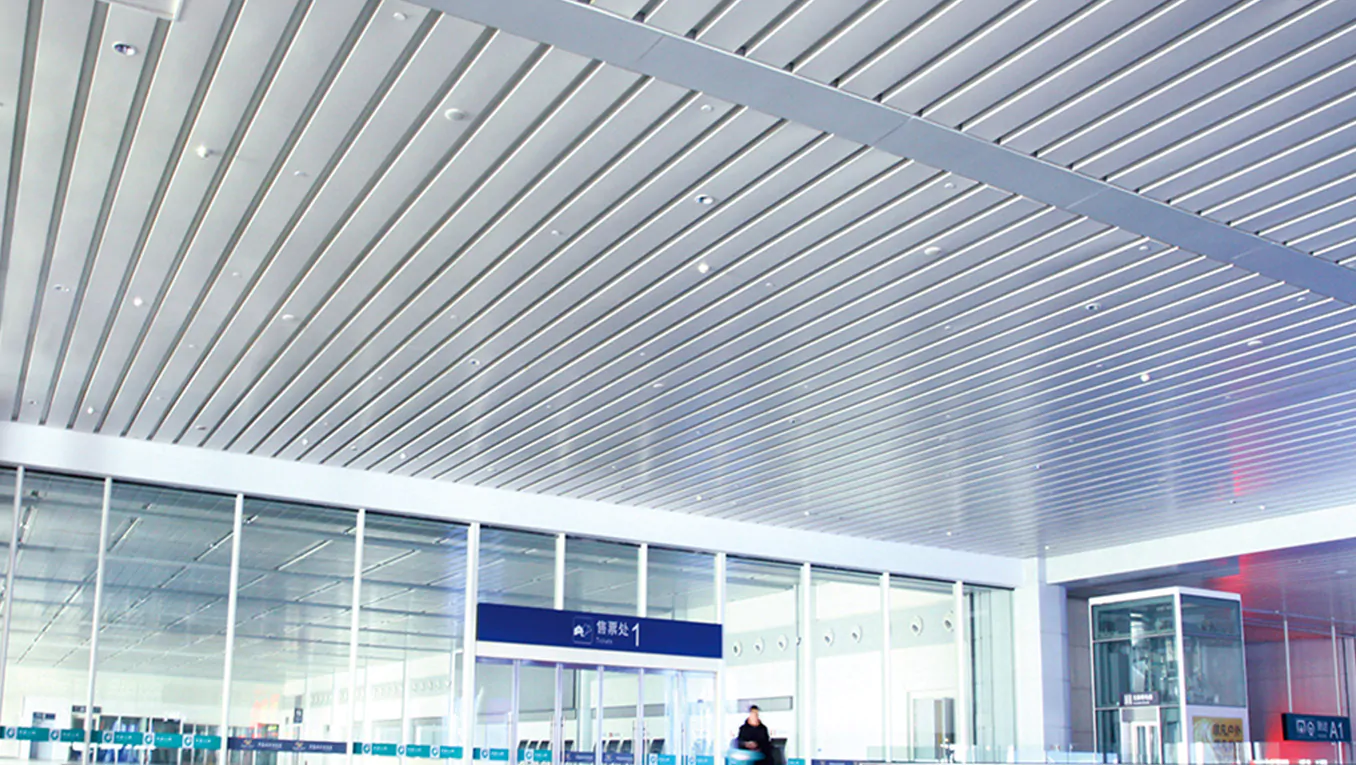
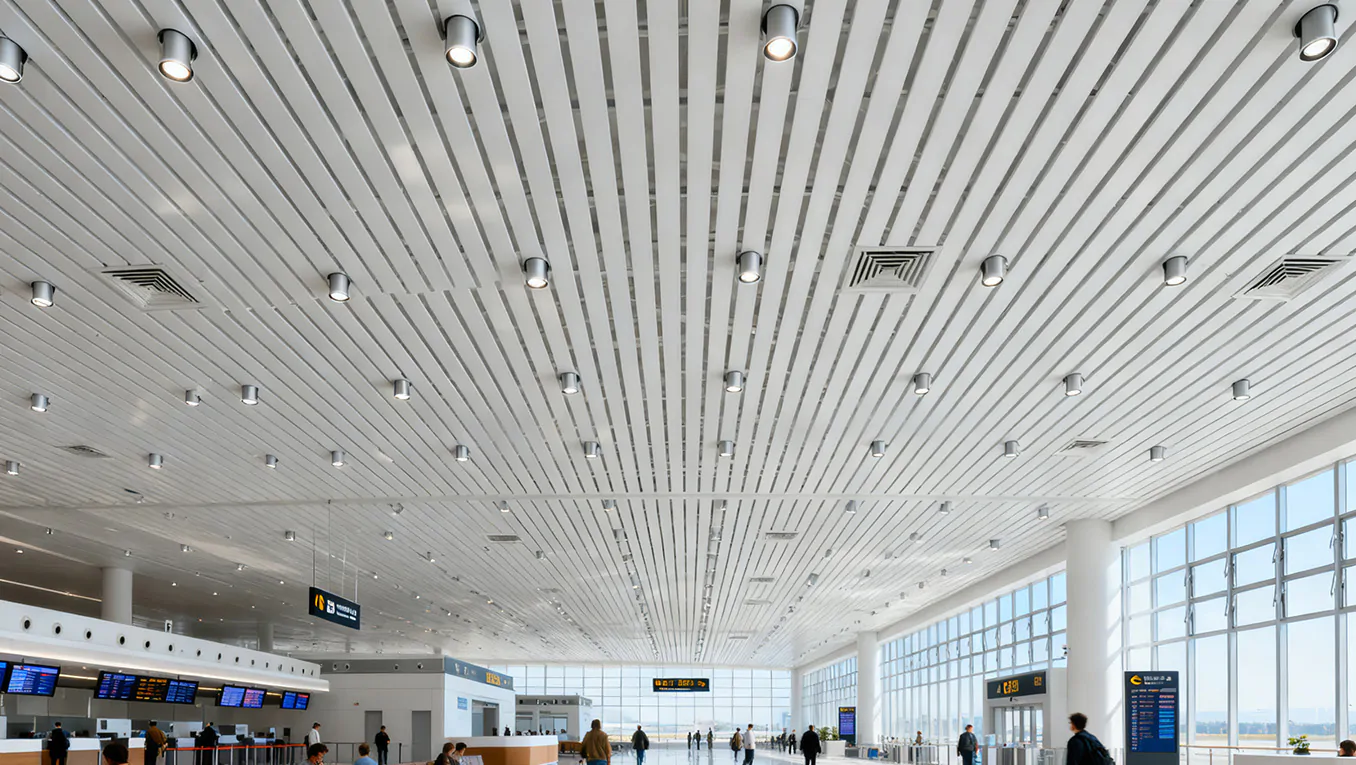
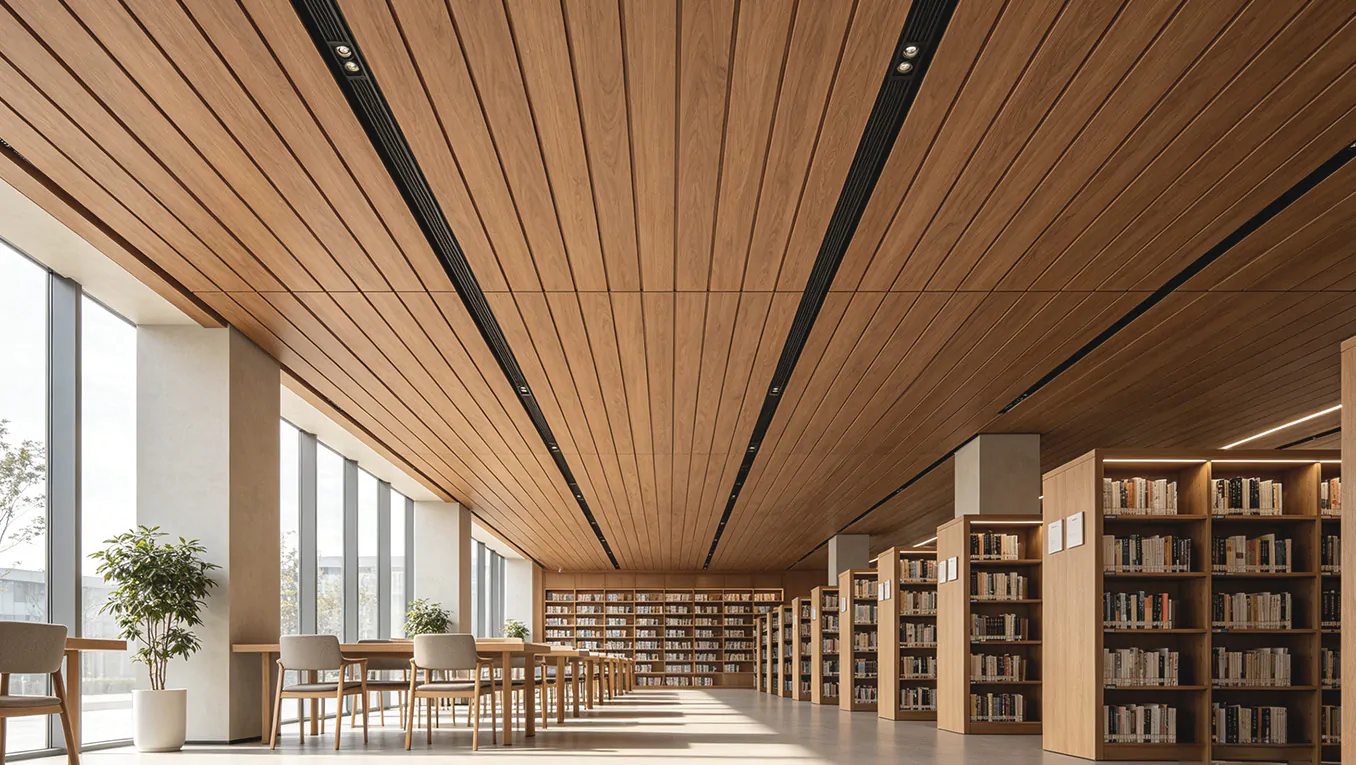
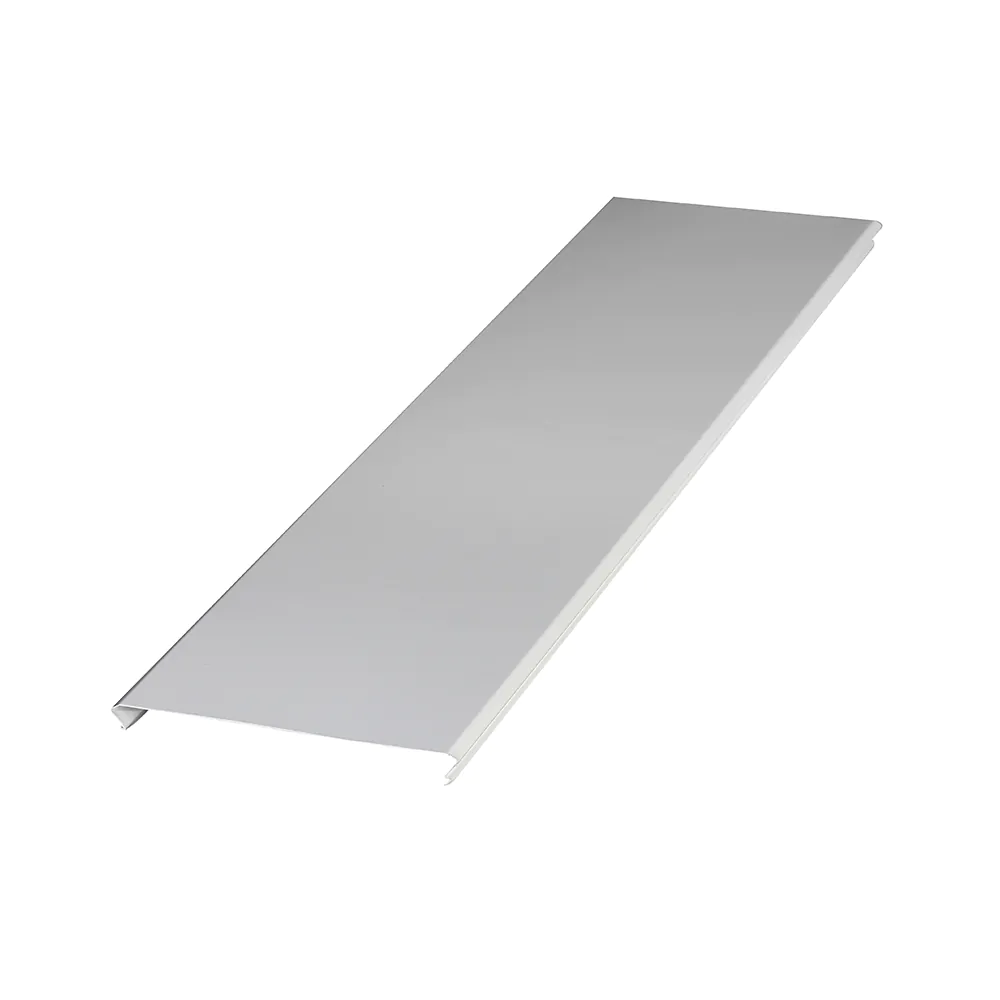
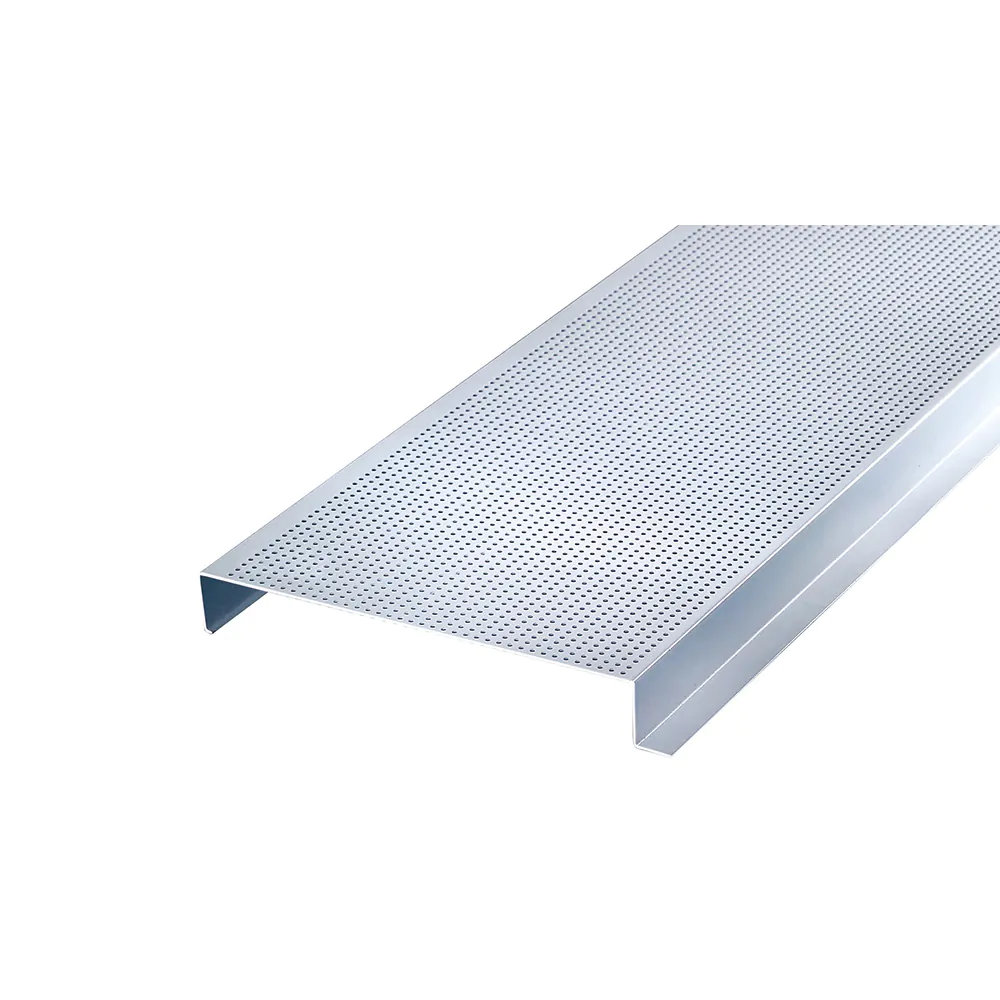
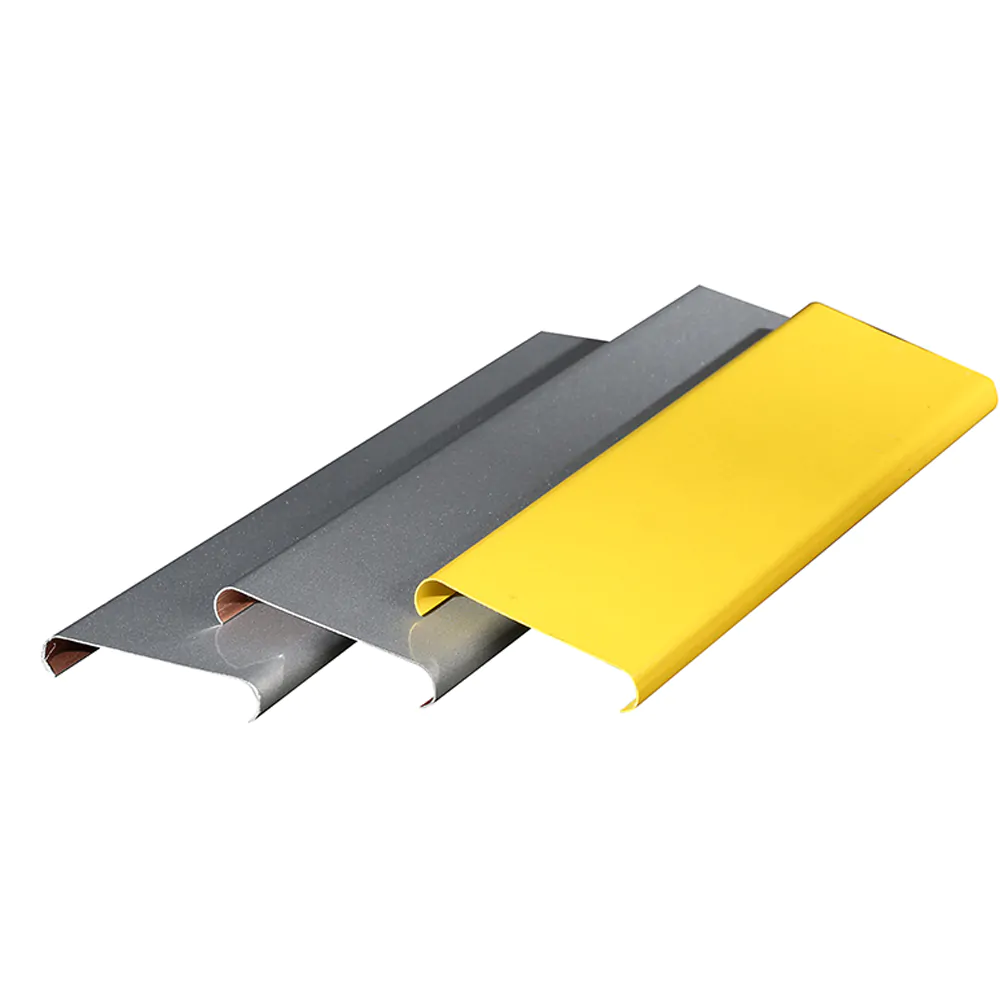
Les modèles présentés ici ne constituent qu'une partie de la gamme disponible pour les systèmes de plafonds à bandes d'aluminium. Les bandes peuvent être choisies sous forme de profilés plats, perforés, micro-perforés ou rainurés, avec des configurations à fentes ouvertes ou fermées, avec ou sans feutre acoustique derrière les perforations.
Ces options sont adaptées aux besoins du projet en matière de contrôle acoustique, de circulation d'air, de coordination de l'éclairage, de facilité d'accès au plénum et de rythme visuel global du plafond. Le profilé, la largeur, le motif de perforation, la taille des interstices et le rabattement des bords peuvent être personnalisés en fonction des plans du projet et des exigences de conception.





Les couleurs présentées ici ne représentent qu'une partie des finitions disponibles pour les systèmes de plafond à lamelles en aluminium. Une large gamme de couleurs standard et sur mesure est proposée pour s'adapter à différents styles d'intérieur, des environnements épurés des transports en commun et des bureaux aux espaces commerciaux et hôteliers décoratifs.
Les finitions sont choisies pour mettre en valeur la conception de l'éclairage, s'harmoniser avec les matériaux des murs et des sols, et répondre aux exigences pratiques des espaces publics très fréquentés. Que le projet nécessite un blanc classique, du noir, de l'argenté, un aspect bois ou une couleur personnalisée propre à la marque, les options de finition peuvent être adaptées à la conception souhaitée pour l'espace.
La sélection des couleurs en fonction du projet et la personnalisation des teintes sont prises en charge pour les systèmes de plafonds à bandes en aluminium, ce qui permet aux concepteurs, aux entrepreneurs et aux promoteurs immobiliers d'harmoniser la finition du plafond avec la palette architecturale globale.
The acoustic backing behind the strip groove absorbs reflected sound energy that would otherwise bounce between hard floors, glazed walls, and an untreated ceiling, reducing the reverberant buildup that makes announcements sound washed out over distance — this matters more in large, hard-surfaced terminal volumes than in smaller or more acoustically absorbent spaces.
Ideally yes. Groove spacing and acoustic backing density are more effective when coordinated with your actual speaker layout and coverage plan, rather than applying a generic acoustic treatment independently of how your PA system is distributed through the space.
No. Areas with closely spaced speakers for even coverage, like gate seating zones, often need different treatment than long transit corridors with more widely spaced speakers, where sound has further to travel and decay before reaching a listener.
Yes. The strip's linear geometry still reinforces the directional flow of a concourse the same way it would without acoustic backing — the acoustic function is added to the existing directional and durability specification, not a tradeoff against it.
Yes. Integration points for flight information displays, wayfinding signage, and terminal lighting are planned into the strip layout at the drawing stage, consistent with other airport terminal ceiling specifications.

 English English
  Russian
 French
 Spanish
 Portuguese
 Arabic