

Produtos
Teto de tira de alumínio para terminal de aeroporto
Walk far enough down an airport concourse and a gate announcement that was perfectly clear near the speaker becomes an indistinct wash of sound by the time it reaches the far end of the hall. This isn't a speaker placement problem you can solve by adding more volume — hard, reflective surfaces across a large, glazed, high-ceilinged terminal volume cause sound energy to bounce and stack on itself faster than it decays naturally, and the reverberant buildup degrades intelligibility over distance regardless of how loud the original announcement is. A strip ceiling with acoustic backing behind the groove addresses this directly, absorbing a meaningful portion of that reflected energy across the ceiling plane rather than letting it bounce indefinitely between the hard floor, glazed curtain wall, and an untreated ceiling above.
Dingchengzun's aluminum strip ceiling for airport terminal interiors is specified with this acoustic function as a primary driver in long concourses, departure halls, and gate seating areas — anywhere passengers need to reliably hear boarding calls, security instructions, or emergency announcements across a large, often crowded space with significant ambient noise from foot traffic, rolling luggage, and HVAC systems running at commercial-building scale. The strip's directional geometry, which naturally suits the linear layout of a concourse, ends up serving both a wayfinding function and an acoustic one simultaneously — the same design decision solves two separate problems.

Procura tectos e fachadas de alumínio personalizados? Vamos conversar


Apresentação da aplicação do produto


Groove width and acoustic backing density are specified against the space’s actual reverberation time and PA speaker layout, not applied as a fixed generic treatment — a gate seating area with speakers spaced closely for even coverage needs a different acoustic treatment than a long transit corridor with speakers spaced further apart, where sound has more distance to decay before reaching a listener. Coordinating strip ceiling acoustic treatment with your PA system’s actual speaker layout and coverage plan generally produces better real-world intelligibility than specifying ceiling acoustics and audio system layout independently of each other.
Beyond acoustic performance, strip material and coating follow the same durability requirements common to other airport terminal ceiling zones — corrosion resistance, structural stability under long-span conditions, and integration points for the flight information displays, wayfinding signage, and lighting that run throughout terminal ceiling plans.
Instalação do produto
Instruções de instalação de tectos de tiras de alumínio
- Instale as barras de suspensão de acordo com a disposição do teto, mantendo todos os pontos de suspensão ao mesmo nível horizontal, para evitar que a linha de fita fique flácida ou torcida ao longo do seu percurso.
- Fixar bem as calhas principais e, em seguida, posicionar as calhas de suporte (ou travessas) de forma a corresponder ao espaçamento entre as faixas e à largura do módulo especificados no desenho de disposição.
- Verifique e ajuste toda a estrutura de modo a que o sistema de suporte fique nivelado, alinhado e perpendicular antes de pendurar qualquer tira, uma vez que qualquer desalinhamento nesta fase ficará claramente visível ao longo de um traço linear contínuo.
- Insira as tiras de alumínio no trilho de suporte, uma secção de cada vez, seguindo a sequência correta para que cada tira encaixe perfeitamente na seguinte e a largura da folga se mantenha constante ao longo de todo o comprimento.
- Prepare os recortes e os espaços reservados para luminárias, difusores de ar, aspersores ou painéis de acesso antes ou durante a instalação e utilize guarnições ou faixas de fecho a condizer nessas aberturas, para manter a linha ininterrupta.
- Depois de todas as tiras estarem instaladas, observe ao longo de todo o comprimento para verificar se o espaçamento entre as juntas é uniforme, se o alinhamento é reto e se as ligações estão bem fixadas, confirmando que a linha do teto está plana, contínua e com um acabamento adequado.
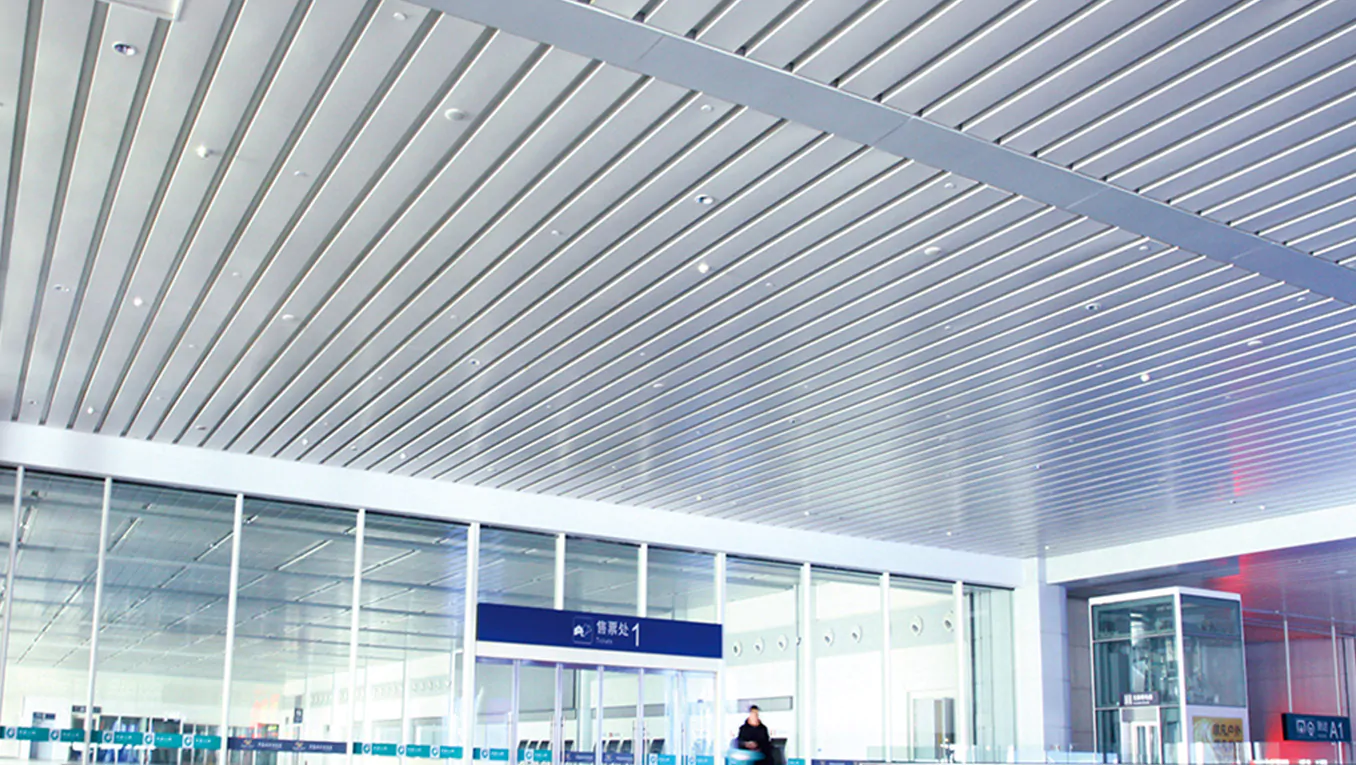
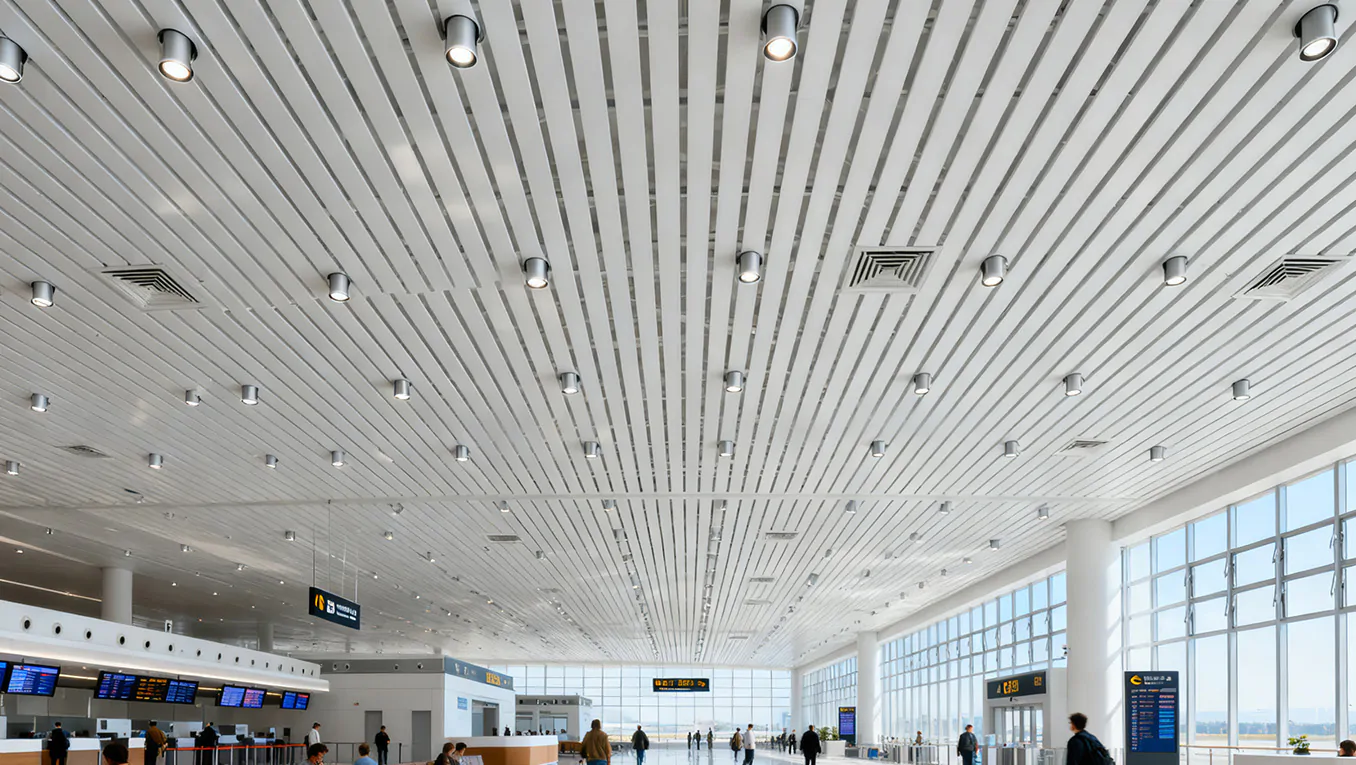
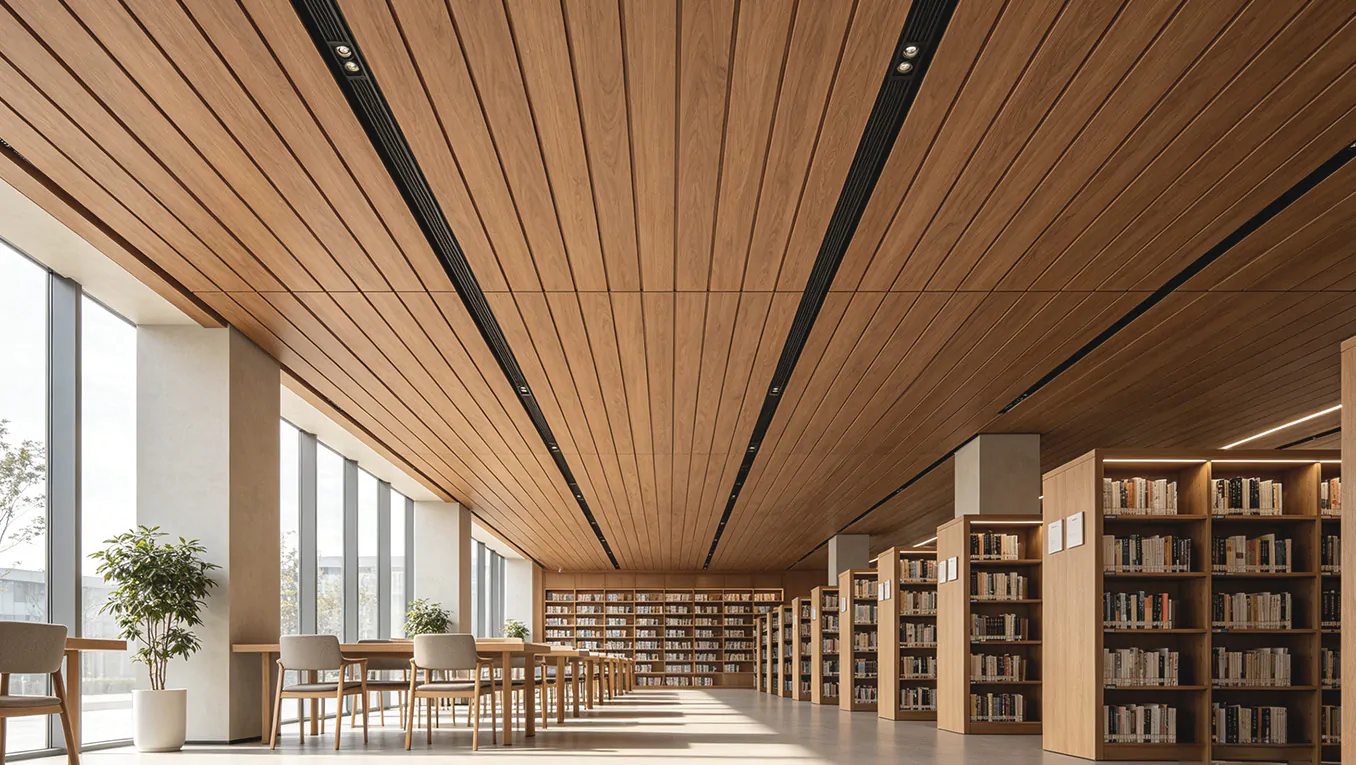
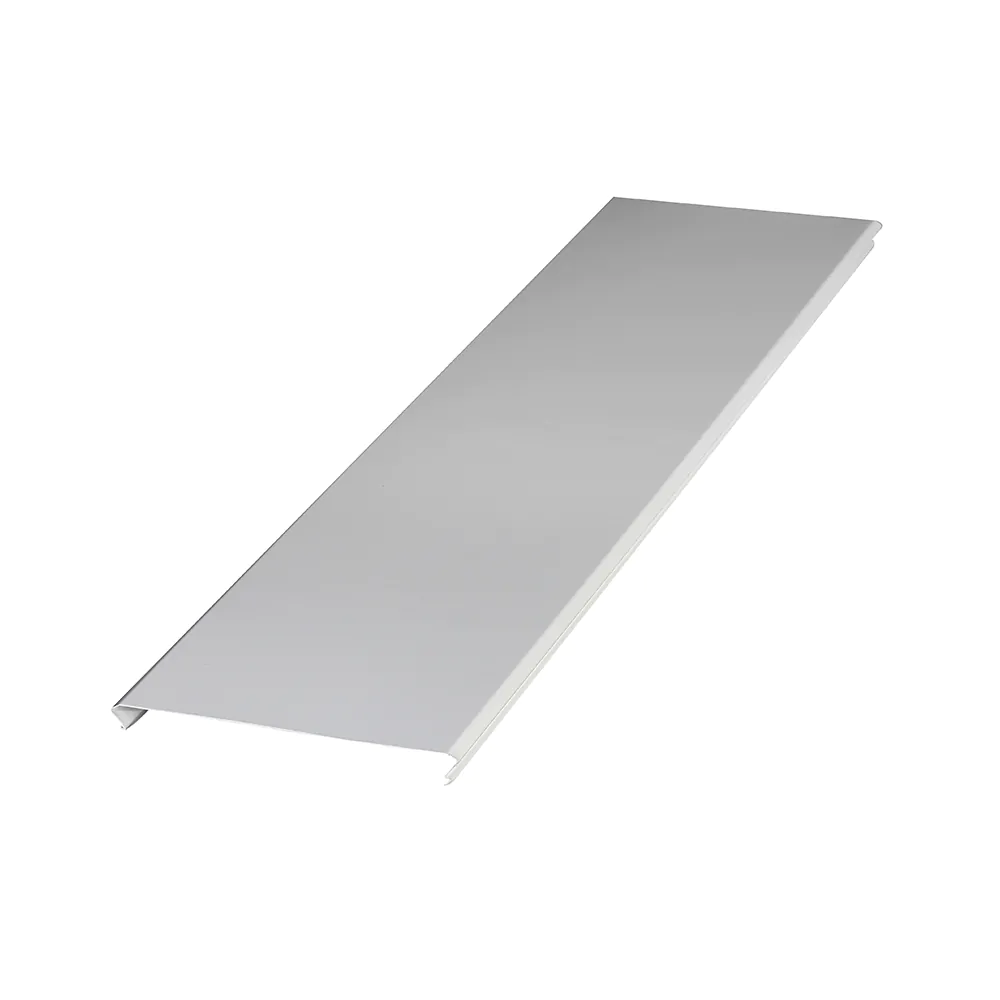
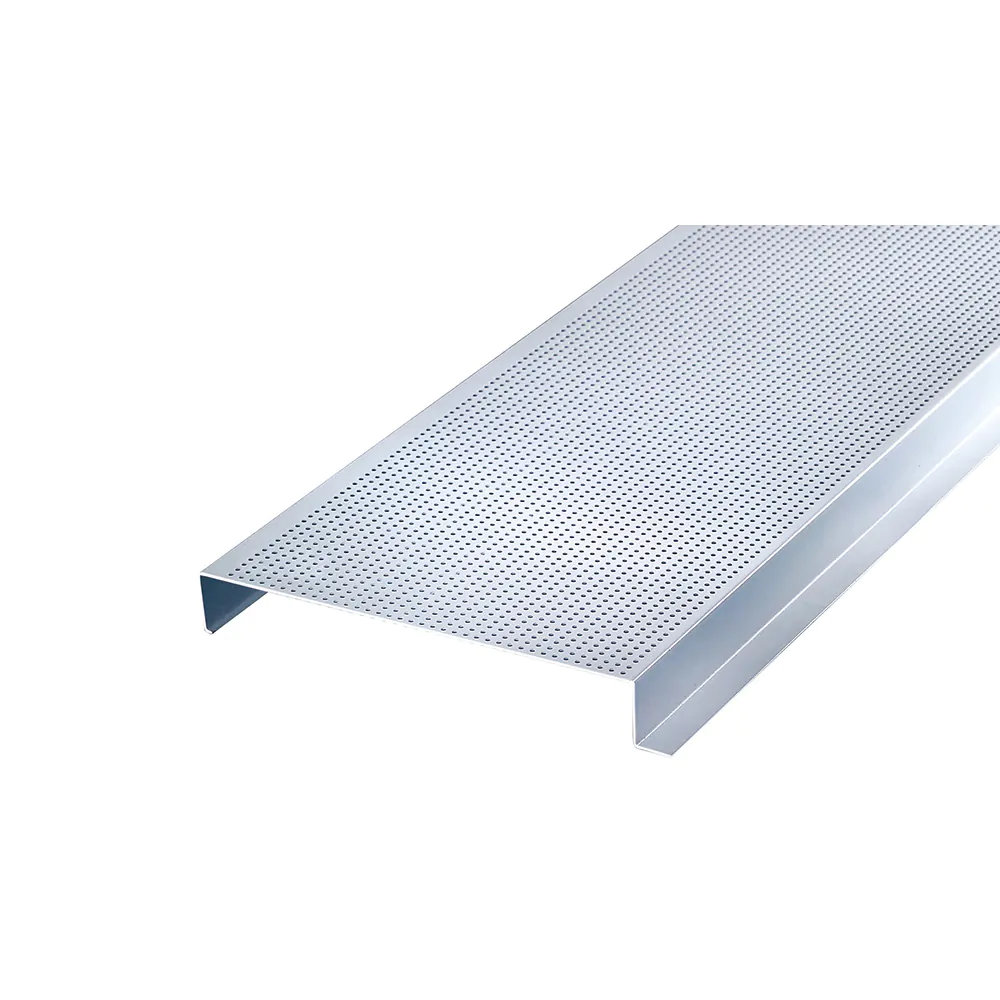
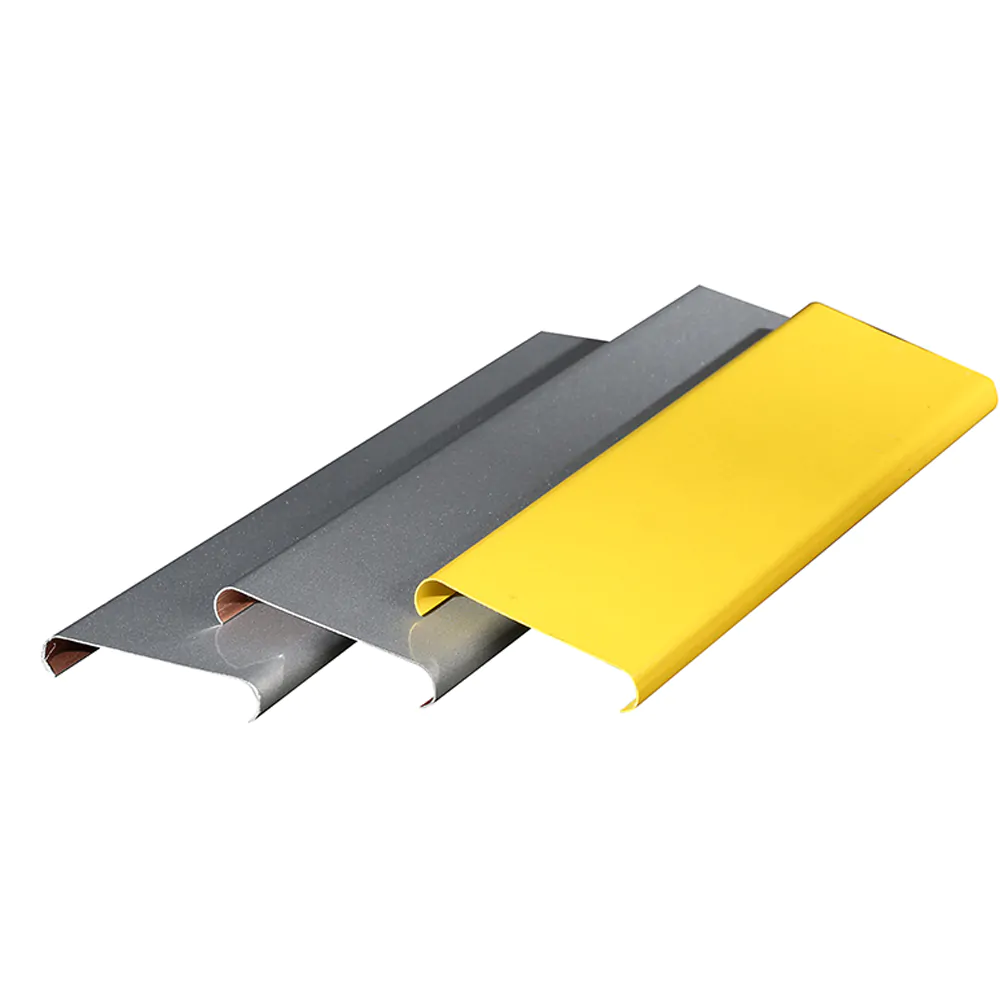
Os padrões aqui apresentados constituem apenas uma parte do que está disponível nos sistemas de teto com tiras de alumínio. As tiras podem ser especificadas como perfis planos, perfurados, microperfurados ou ranhurados, em configurações com espaços abertos ou fechados, com ou sem um revestimento acústico em velo por trás da perfuração.
Estas opções são adaptadas às necessidades do projeto em termos de controlo acústico, fluxo de ar, coordenação da iluminação, facilidade de acesso ao plenum e ritmo visual geral do teto. O perfil da faixa, a largura, o padrão de perfuração, o tamanho da abertura e o rebordo podem ser personalizados de acordo com os desenhos do projeto e os requisitos de conceção.





As cores aqui apresentadas representam apenas uma parte das opções de acabamento disponíveis para os sistemas de teto com tiras de alumínio. Está disponível uma vasta gama de cores padrão e personalizadas para se adequar a diferentes estilos de interiores, desde ambientes minimalistas de transportes e escritórios até espaços comerciais e hoteleiros decorativos.
Os acabamentos são selecionados para complementar o projeto de iluminação, harmonizar-se com os materiais das paredes e do pavimento e satisfazer as exigências práticas dos espaços públicos de elevado tráfego. Quer o projeto exija um branco clássico, preto, prateado, acabamento em madeira ou uma cor personalizada da marca, as opções de acabamento podem ser adaptadas à intenção de design do espaço.
A seleção de cores com base no projeto e a correspondência personalizada são suportadas para sistemas de teto com tiras de alumínio, ajudando designers, empreiteiros e promotores imobiliários a harmonizar o acabamento do teto com a paleta arquitetónica mais ampla.
The acoustic backing behind the strip groove absorbs reflected sound energy that would otherwise bounce between hard floors, glazed walls, and an untreated ceiling, reducing the reverberant buildup that makes announcements sound washed out over distance — this matters more in large, hard-surfaced terminal volumes than in smaller or more acoustically absorbent spaces.
Ideally yes. Groove spacing and acoustic backing density are more effective when coordinated with your actual speaker layout and coverage plan, rather than applying a generic acoustic treatment independently of how your PA system is distributed through the space.
No. Areas with closely spaced speakers for even coverage, like gate seating zones, often need different treatment than long transit corridors with more widely spaced speakers, where sound has further to travel and decay before reaching a listener.
Yes. The strip's linear geometry still reinforces the directional flow of a concourse the same way it would without acoustic backing — the acoustic function is added to the existing directional and durability specification, not a tradeoff against it.
Yes. Integration points for flight information displays, wayfinding signage, and terminal lighting are planned into the strip layout at the drawing stage, consistent with other airport terminal ceiling specifications.

 English English
  Russian
 French
 Spanish
 Portuguese
 Arabic