CONTACT US NOW TO RECEIVE A QUICK QUOTE, SAMPLE SUPPORT, AND ENGINEERING SERVICE GUARANTEE.








Why Architects Choose Baffle Ceilings and Real Applications
Baffle Ceilings vs Other Acoustic Ceiling Systems
Baffle Ceiling vs Acoustic Tile Ceiling
Acoustic tile ceilings are practical for enclosed spaces like classrooms, hospitals, and administrative offices, providing high sound absorption and a uniform surface. Baffle ceilings, by contrast, offer an open, modern aesthetic and better integration with building services while maintaining strong acoustic performance.
| Feature | Baffle Ceiling | Acoustic Tile Ceiling |
|---|---|---|
| Acoustic Performance | High | High |
| Design Flexibility | Excellent | Moderate |
| Access to Building Services | Excellent | Limited |
| Visual Openness | Excellent | Low |
| Suitable for Open Ceilings | Yes | No |
Baffle Ceiling vs Open Cell Ceiling
Open cell ceilings are often chosen for airflow and visual effect in retail and exhibition spaces. Baffle ceilings provide superior sound absorption due to vertical panels and acoustic backing. While both support open-ceiling designs, baffle ceilings are preferred when acoustic control is critical.
| Feature | Baffle Ceiling | Open Cell Ceiling |
|---|---|---|
| Sound Absorption | Excellent | Moderate |
| Reverberation Control | Excellent | Moderate |
| Architectural Impact | High | High |
| Maintenance Access | Excellent | Excellent |
| Open Ceiling Effect | High | High |
| Acoustic Optimization | Excellent | Limited |
Which System Is Best for Different Projects?
- Offices, conference centers, and educational facilities → Baffle ceilings for speech clarity and noise control.
- Healthcare and administrative buildings → Acoustic tile ceilings for enclosed high-performance sound absorption.
- Retail, exhibition, and transportation hubs → Open cell ceilings for openness and airflow.
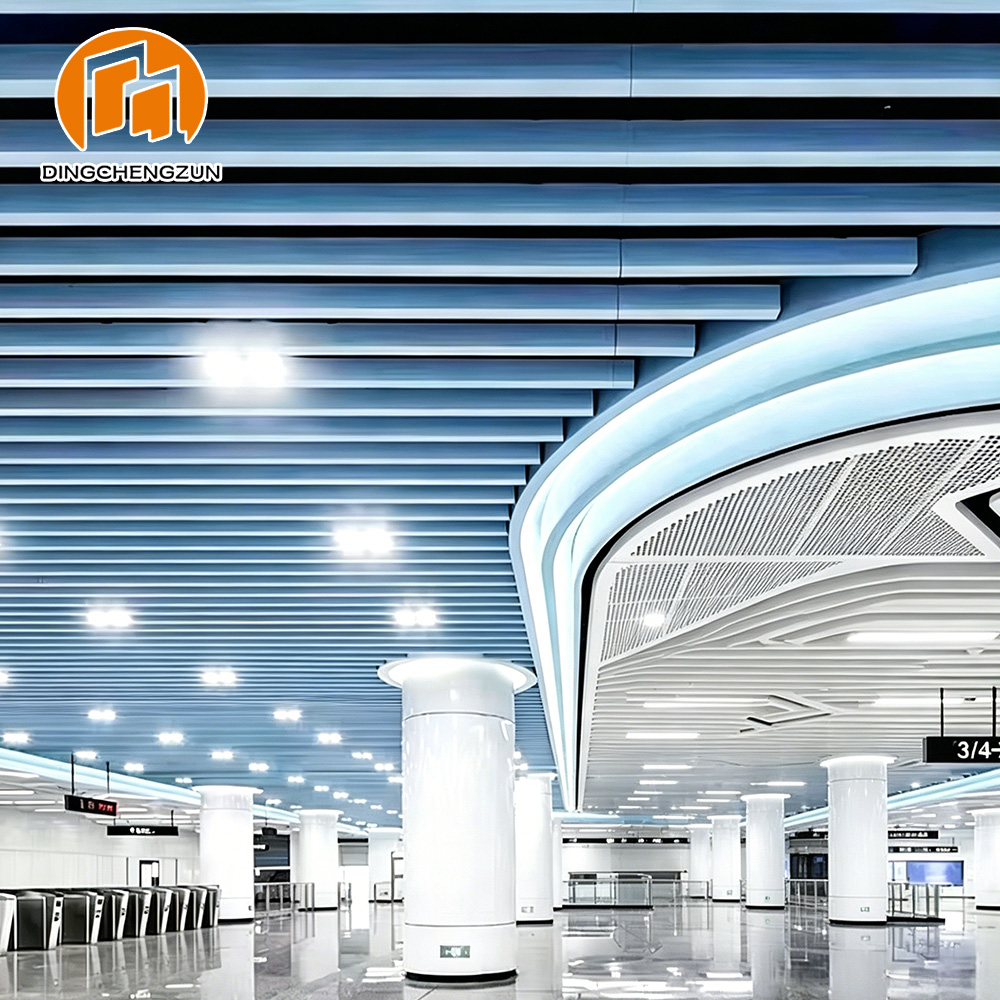
Architectural Ceiling Baffles System for Metro Station Interiors
Designed for modern metro and transit station environments, this architectural ceiling baffles system offers exceptional acoustic control, modern aesthetics, and seamless integration with lighting, ventilation, and station signage. Ideal for platforms, concourses, waiting areas, and passenger circulation spaces.
- Material: High‑Quality Aluminum Alloy
- Ceiling Type: Architectural Baffles Ceiling System
- Surface Finish: Powder Coating / PVDF / Custom Colors
- Features: Acoustic Performance, Fire Resistant, Corrosion Resistant
- Applications: Metro Stations, Transit Hubs, Public Transport Interiors
Real Project Applications
Corporate Office Buildings
Modern offices benefit from Office Baffle Ceiling Projects for open-plan layouts, controlling background noise while maintaining contemporary design. Vertical panels improve speech clarity and comfort without blocking lighting or ventilation access.
Airport Terminals
Large terminals have high noise and echo levels. Transit Hub Ceiling Projects show how perforated baffles and acoustic backing reduce reverberation and improve public announcement clarity while keeping ceilings visually open.
Hotel Lobbies and Conference Centers
Hospitality environments use Convention Center Ceiling Projects to reduce background noise and maintain aesthetics. Custom panel sizes and finishes ensure both acoustic performance and a visually appealing environment.
Educational Facilities
Schools, lecture halls, and libraries incorporate School Classroom Ceiling Projects to enhance speech intelligibility and reduce distractions. Baffle panels with acoustic backing balance sound performance with modern interior design.
Choosing the Right Acoustic Baffle Ceiling for Your Project
Ceiling Height Considerations
High ceilings increase reverberation. Baffle panels can be suspended at varying heights to optimize absorption. In lower spaces, spacing and perforation adjustments maximize efficiency without reducing openness.
Acoustic Targets
Determine whether the focus is on reducing background noise, improving speech clarity, or controlling reverberation. Different spaces require different panel types, perforations, and backing materials.
Lighting and HVAC Coordination
Baffle ceilings allow easy integration with mechanical, electrical, and plumbing systems. Panels can be arranged around lighting and HVAC elements without compromising performance.
Budget and Maintenance Planning
Aluminum baffle panels are durable and easy to clean, reducing long-term costs. Planning panel accessibility ensures inspections, repairs, and upgrades can be performed efficiently.


