CONTACTEZ-NOUS DÈS MAINTENANT POUR RECEVOIR UN DEVIS RAPIDE, UN SUPPORT D'ÉCHANTILLONNAGE ET UNE GARANTIE DE SERVICE D'INGÉNIERIE.








Produits
Dalles de plafond en aluminium perforé pour plafonds intérieurs de musées
A museum ceiling has one job that overrides almost everything else: get out of the way of the art. Visitors aren't supposed to notice it, curators don't want it competing with the exhibits, and conservators care about it mainly for what it enables — controlled lighting, stable climate conditions, and a dust-free environment that protects fragile or light-sensitive objects over decades, not just years. Dingchengzun's perforated aluminum clip-in ceiling tiles for museum interiors are specified around this quiet, background role rather than any decorative ambition of their own.
This system is used across permanent collection galleries, rotating exhibition halls, archival display rooms, museum lobbies, and object conservation areas — spaces where lighting requirements can shift dramatically from one exhibit to the next. Track lighting and adjustable spotlight systems are standard in gallery ceilings because artwork gets rehung and rotated regularly, and the panel layout is built to accommodate that kind of recurring reconfiguration without requiring ceiling rework every time a curator changes an exhibit.
Because many museum objects are sensitive to dust accumulation and airborne particulates, the ceiling surface also plays a quiet role in the building's overall conservation strategy — a non-porous, easily wiped panel surface contributes to maintaining the clean-air conditions that textile, paper, and photographic collections in particular depend on.

Vous recherchez des plafonds et des façades en aluminium sur mesure ? Parlons-en


Vitrine d'application des produits
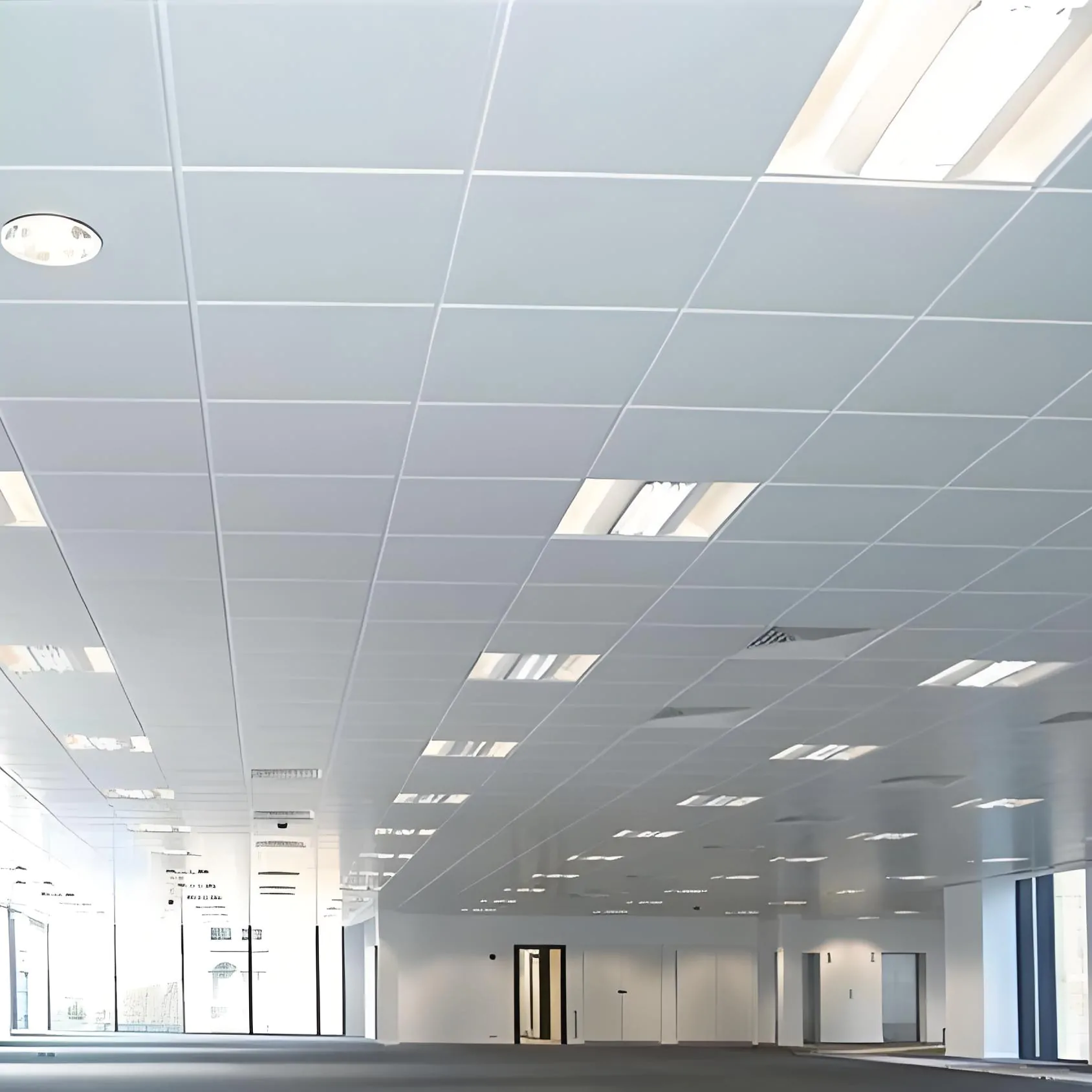
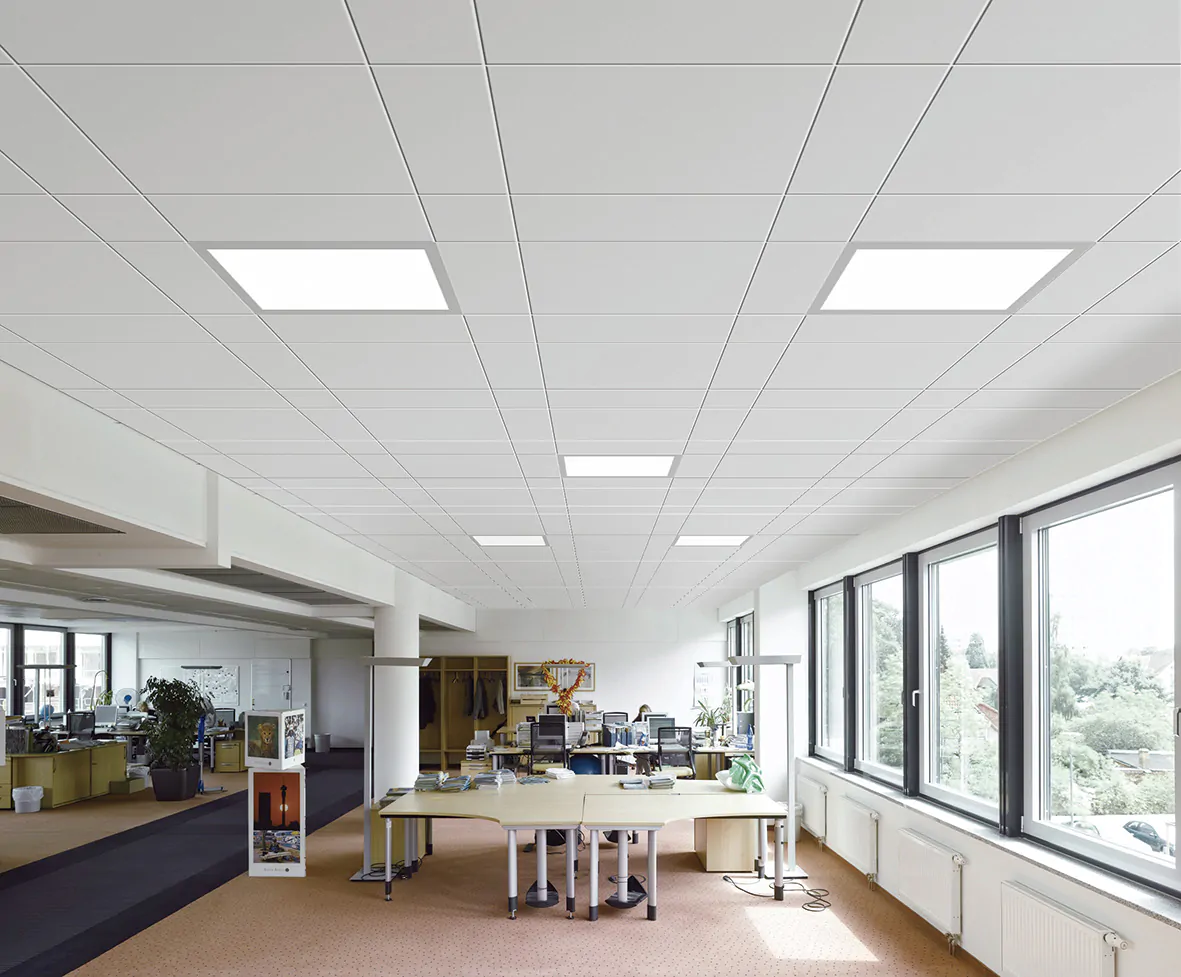
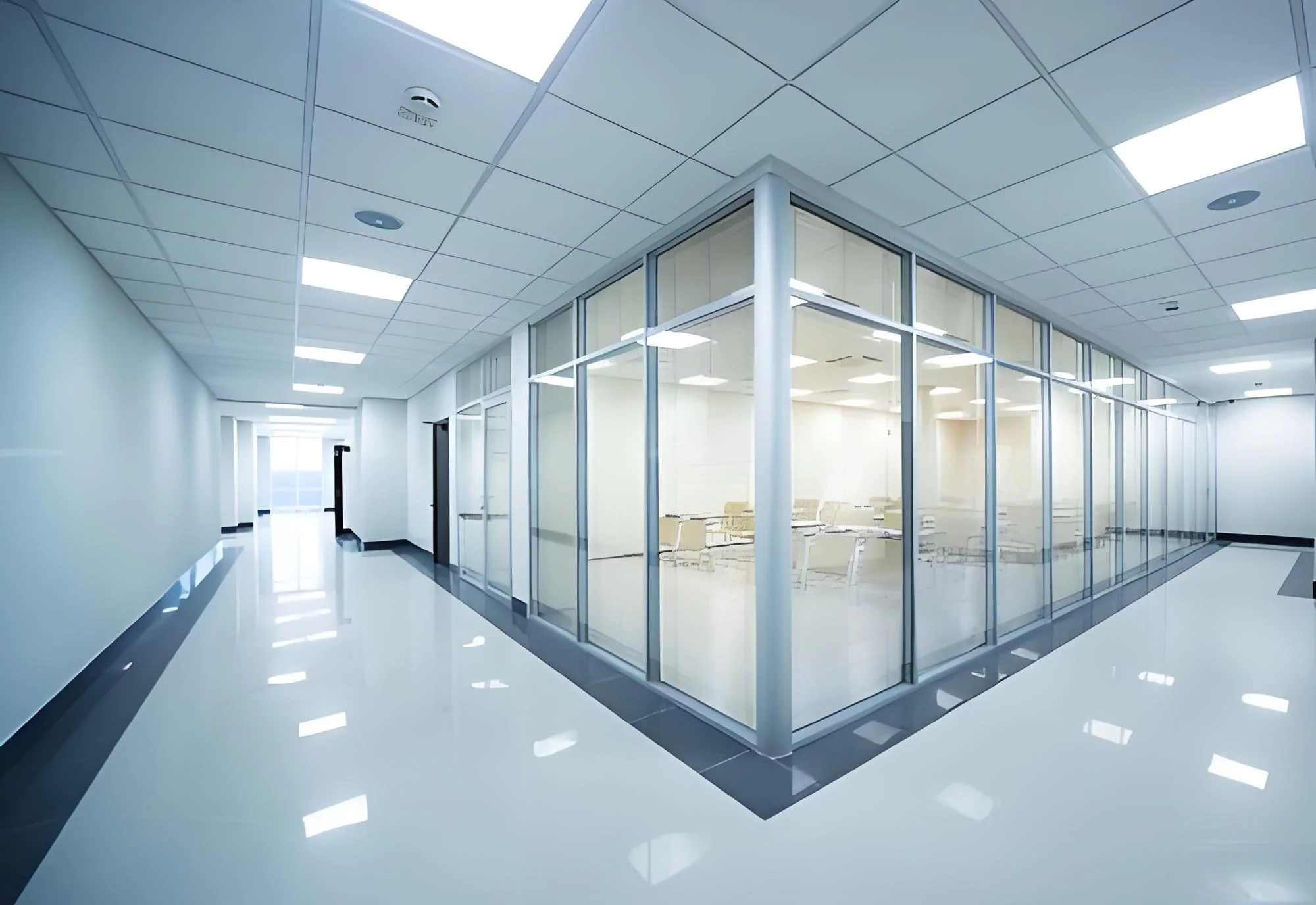
Within the clip-in panel system, museum applications are typically specified in matte, low-reflectance finishes that avoid glare and light bounce onto sensitive artwork, since even indirect reflected light can affect how a painting or object is lit and, over time, how much UV and heat exposure it receives. Perforation is used selectively — heavier in HVAC-dense zones where climate control airflow needs to pass through the ceiling plane, and lighter or solid in gallery areas where a cleaner, quieter surface better suits the display.
Panel layout is coordinated with track lighting systems, humidity and climate sensors, and fire suppression appropriate to museum collections (often requiring specific system types for archival or fine art spaces), and cutout positions are typically finalized alongside the exhibition design team rather than fixed early, since gallery layouts change more often than the building itself.
Installation du produit
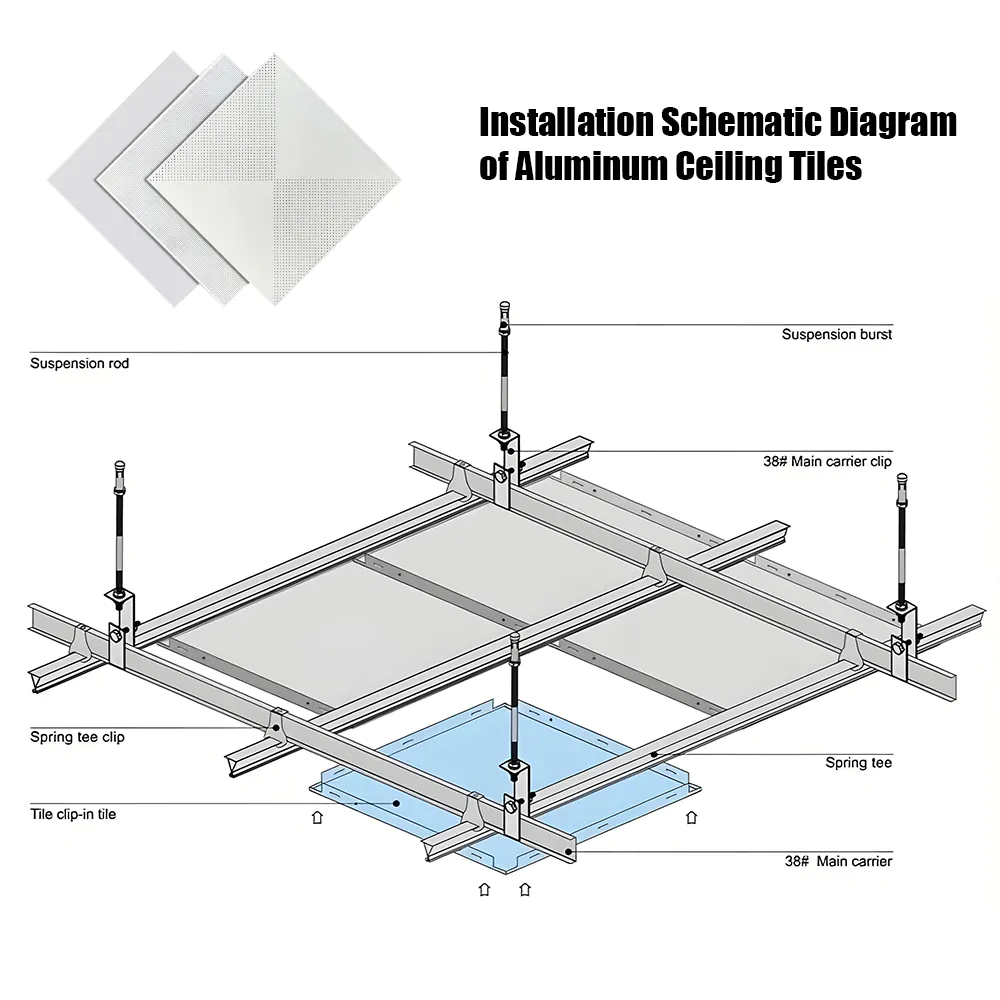
Instructions d'installation du plafond aluminium à clipser
- Installez les tiges de suspension en fonction de la disposition du plafond et veillez à ce que tous les points de suspension soient maintenus au même niveau horizontal.
- Fixez solidement les rails principaux, puis installez les supports à clipser en fonction de la taille des panneaux de plafond et des exigences de disposition. L'espacement du système de support doit être ajusté correctement pour assurer un support stable.
- Vérifiez et ajustez l'ensemble du cadre pour vous assurer que le système porteur est de niveau et aligné avant d'installer les panneaux.
- Clipsez les panneaux de plafond en aluminium dans le système de support, un par un et dans le bon ordre. Veillez à ce que chaque panneau soit solidement fixé et que les joints soient nets et réguliers.
- Pour les éclairages, les diffuseurs d'air, les sprinklers ou les ouvertures d'accès, préparez les découpes nécessaires et les positions réservées avant ou pendant l'installation.
- Une fois tous les panneaux installés, vérifiez la surface du plafond, l'alignement des panneaux et la stabilité des raccordements afin de garantir une finition plane, propre et sûre.





Les motifs présentés ici ne sont qu'une partie de l'offre de Dingchengzun. Nos panneaux de plafond en aluminium sont disponibles dans différentes options de motifs, y compris des panneaux plats, des panneaux perforés, des motifs micro-perforés, des motifs carrés, des motifs linéaires, des surfaces gaufrées, des textures décoratives, des finitions métalliques et des motifs de panneaux personnalisés.
Ces options peuvent répondre aux différents besoins du projet en matière de décoration du plafond, de performance acoustique, de ventilation, de coordination de l'éclairage, de facilité d'entretien et de style intérieur général. Les panneaux de plafond en aluminium de Dingchengzun peuvent être personnalisés en ce qui concerne la taille des panneaux, les motifs de perforation, la couleur, la finition de surface, le type de bord et le système d'installation en fonction des dessins du projet et des exigences de la conception.




Les couleurs présentées ici ne représentent qu'une partie des options de couleurs disponibles pour les systèmes de panneaux de plafond en aluminium Dingchengzun. Nous proposons une large gamme de couleurs standard et personnalisées pour répondre aux différents styles d'aménagement intérieur, des bureaux modernes et épurés aux espaces commerciaux, publics et décoratifs.
Les couleurs de nos panneaux de plafond en aluminium sont conçues pour améliorer l'aspect visuel, s'harmoniser avec l'éclairage et les finitions murales, et répondre aux besoins pratiques de différents projets de plafond. Que le projet nécessite un blanc classique, un noir, un gris, des tons métalliques, des finitions en grain de bois ou des couleurs personnalisées, Dingchengzun peut fournir des solutions de couleurs adaptées à divers scénarios d'application.
Cliquez sur le bouton ci-dessous pour découvrir d'autres options de couleurs. Dingchengzun prend en charge la sélection et la personnalisation des couleurs des panneaux de plafond en aluminium en fonction du projet, aidant ainsi les concepteurs, les entrepreneurs et les développeurs à harmoniser les différents styles architecturaux, les dispositions des plafonds et les exigences en matière d'aménagement intérieur.
Museum applications are typically specified with matte, low-reflectance finishes specifically to avoid glare and light bounce onto sensitive artwork, since reflected light can affect both the visual presentation and long-term light exposure of an object.
Yes. Panel layout is designed to work with track lighting and adjustable spotlight systems that are standard in gallery ceilings, supporting the frequent rehanging and exhibit rotation typical of museum programming.
The non-porous panel surface is easy to wipe down and doesn't shed particulates the way some other ceiling materials can, which supports the clean-air conditions that textile, paper, and photographic collections typically require.
It typically varies. Heavier perforation is often used in HVAC-dense zones where climate control airflow needs to pass through the ceiling, while gallery display areas often use lighter or solid panels for a cleaner, quieter surface.
Both, ideally. While base structural and climate coordination follows the architectural drawings, cutout positions and lighting integration are often finalized alongside the exhibition design team, since gallery layouts and lighting needs tend to change more frequently than the building envelope itself.
